FDE openings rose to 932, yet real hiring added just four roles
Newly tracked job boards supplied 37 of the 41 extra roles, while Amazon grew fastest and Salesforce pulled 22 listings.
23 Nov 2026
The newspaper of the Forward Deployed Engineer
In-depth pieces for working FDEs: original data, primary sources, lessons you can use.
Newly tracked job boards supplied 37 of the 41 extra roles, while Amazon grew fastest and Salesforce pulled 22 listings.
23 Nov 2026
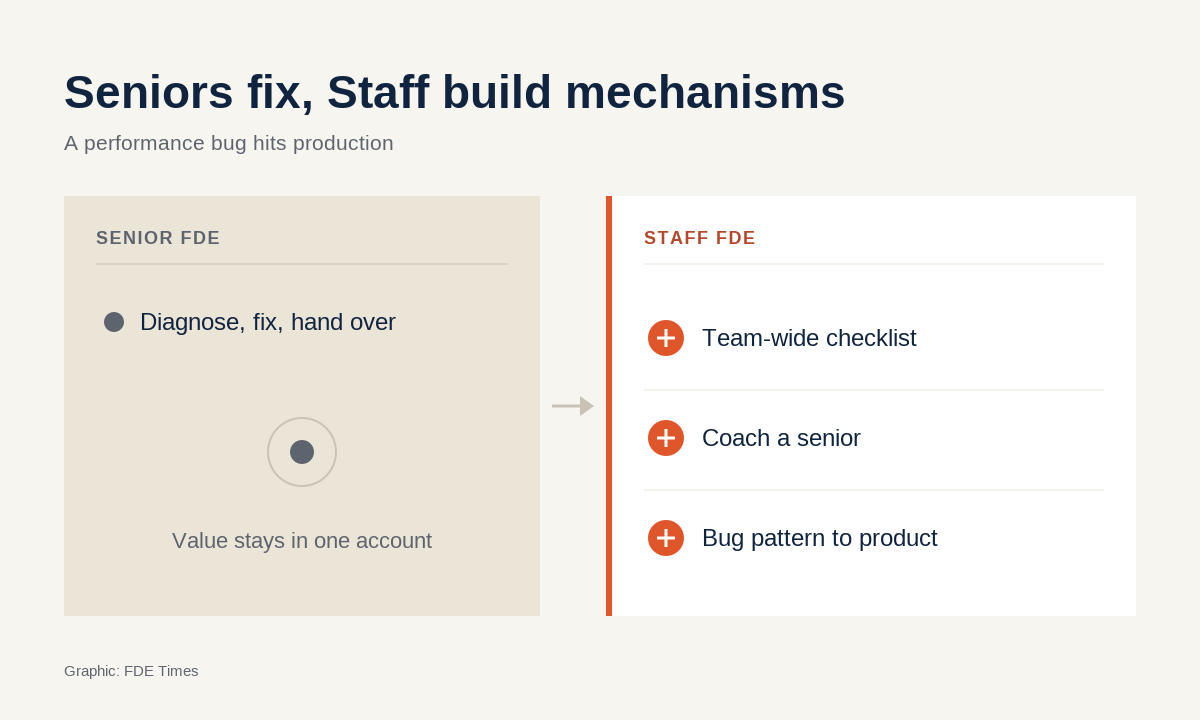
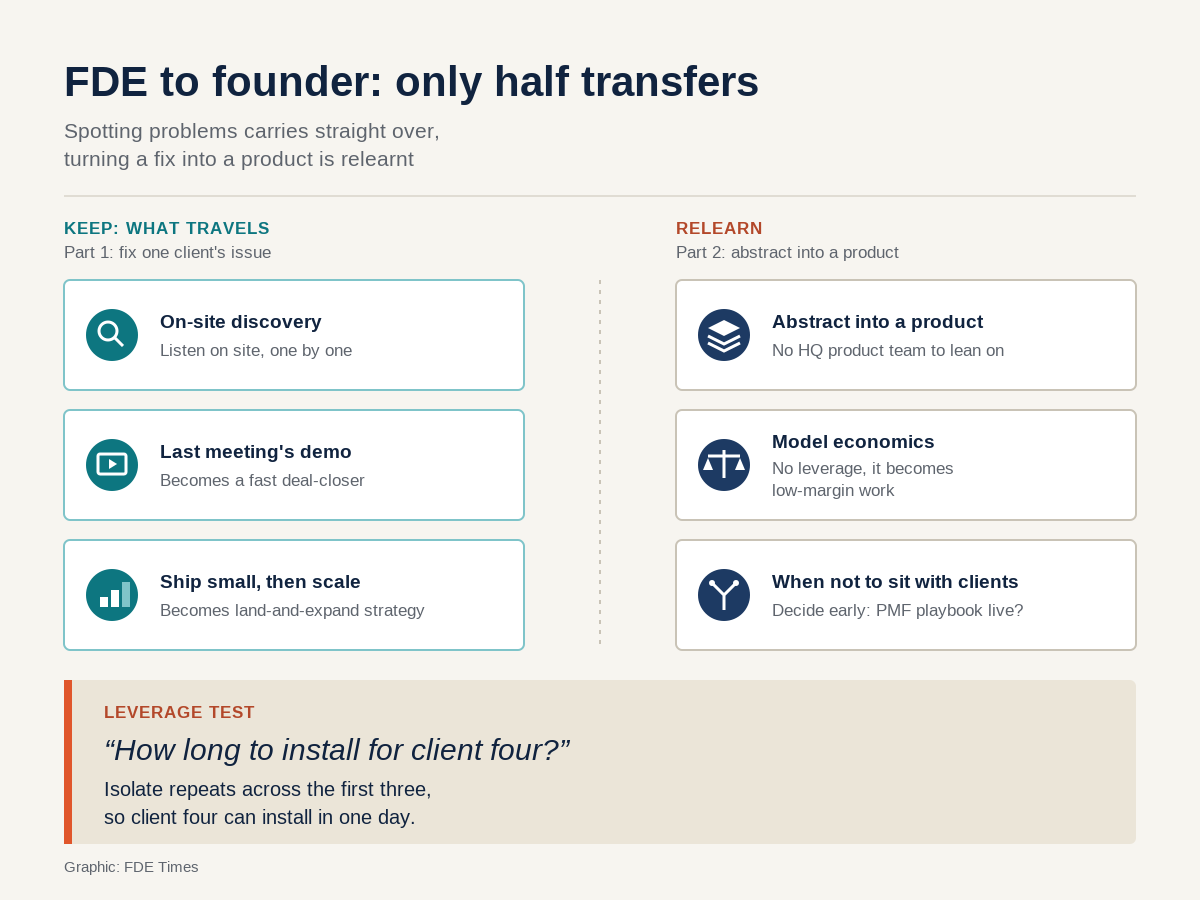
The role contracts as a company grows, but the skill of turning lessons from the field into product goes with you.
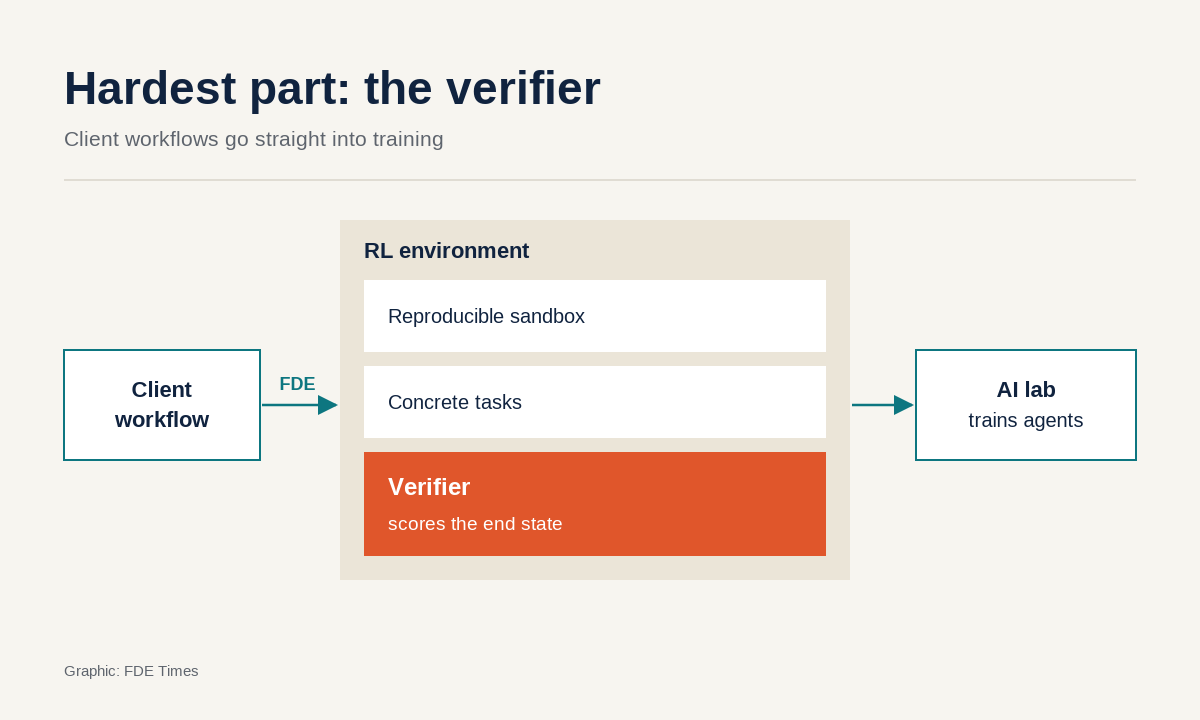
Prime Intellect and Labelbox are hiring forward deployed engineers to turn customers' real workflows into RL environments and automated verifiers.
Hospital-side roles want people who understand HL7 and FHIR, while Optum asks for eight-plus years of engineering and seven-plus of consulting.
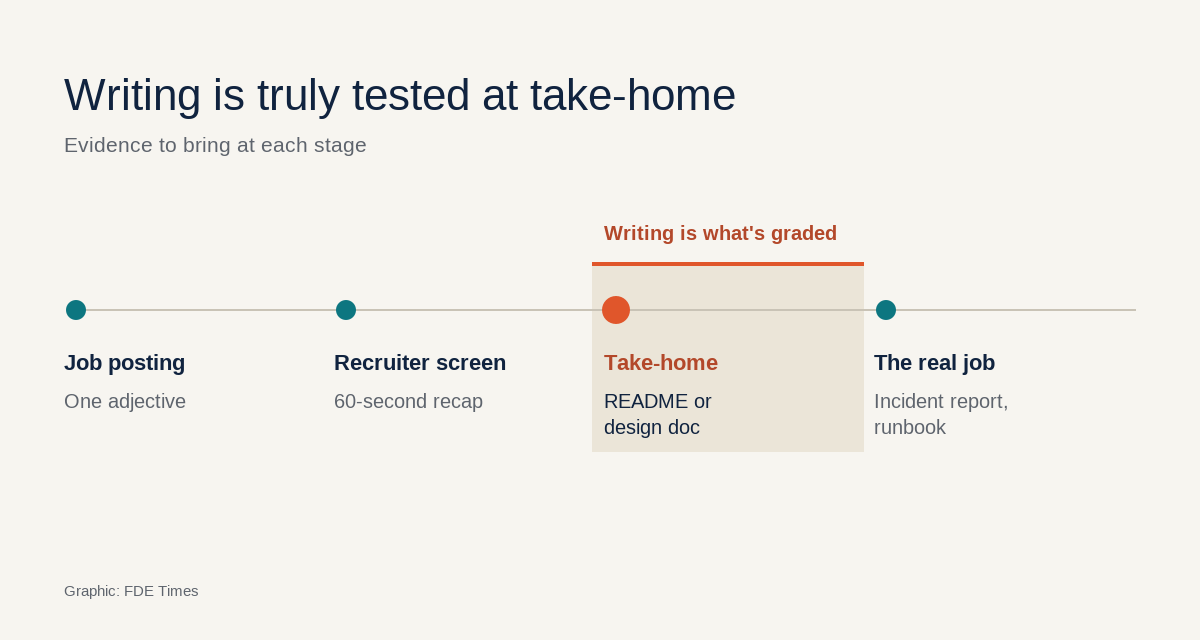
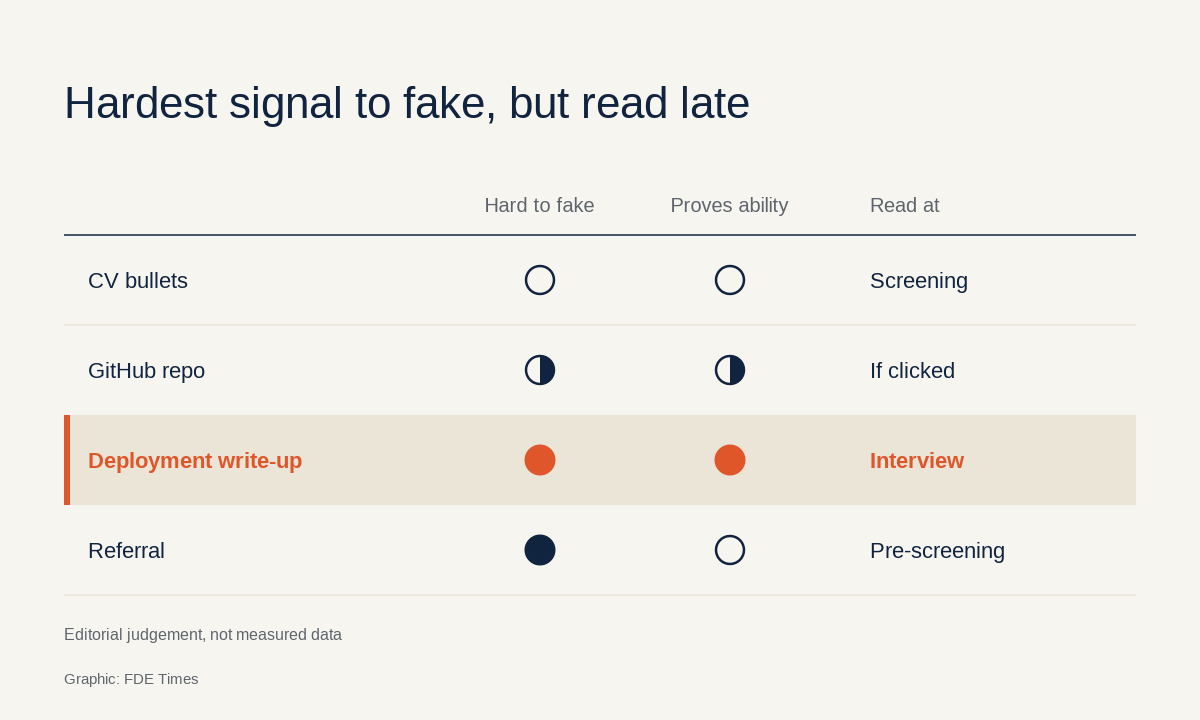
The most convincing evidence is a piece of writing that a stranger on the client's side can read and put to use straight away.
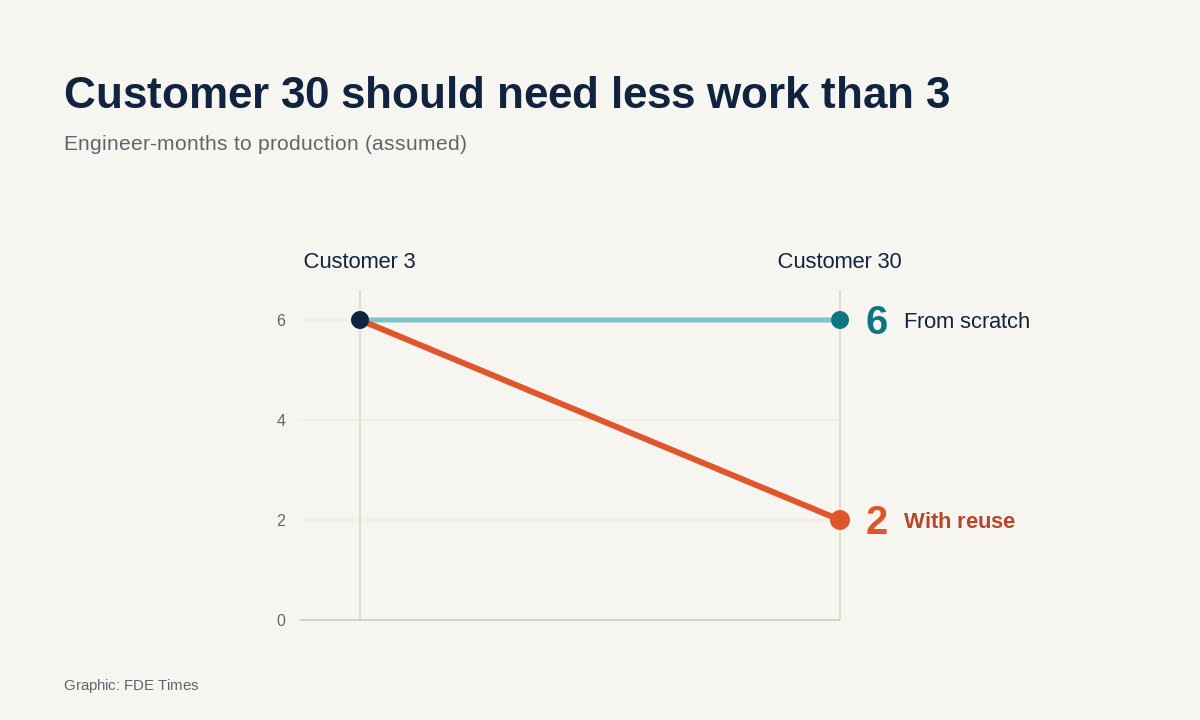
Hours logged and project counts cannot answer that question; only time-to-value, tracked cohort by cohort, shows whether an FDE team is compounding or drifting into services.
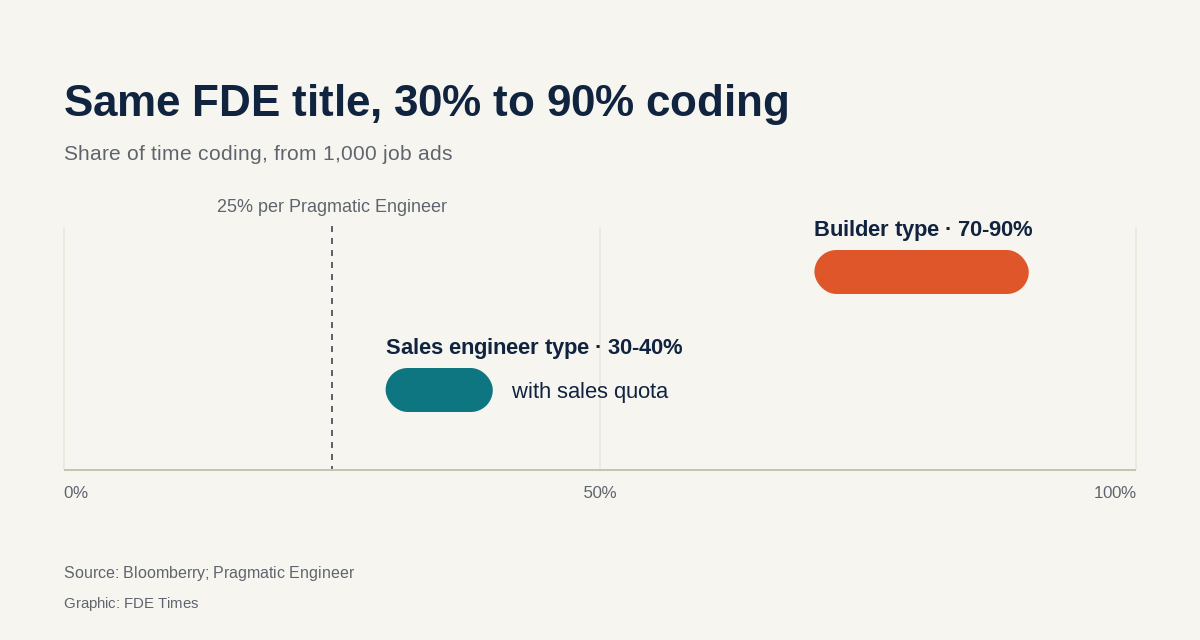
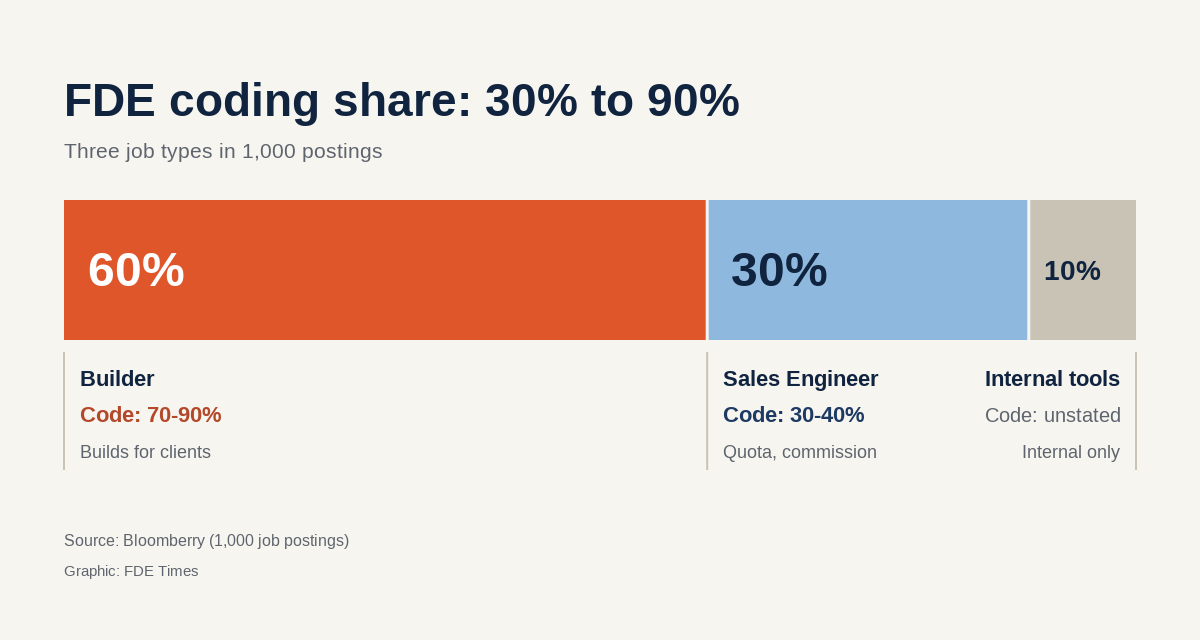
Under the same Forward Deployed Engineer title, coding can fill anywhere from 30% to 90% of the week, and some roles involve no software development at all.
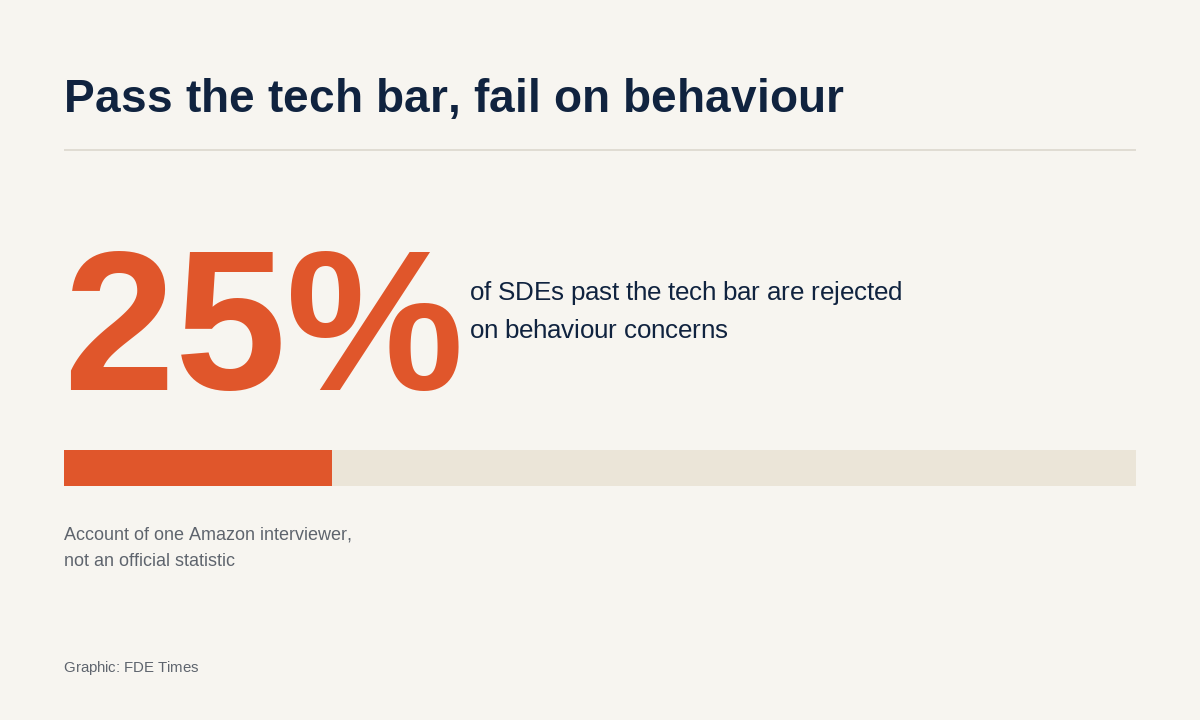
Candidates who scrape through Ramp's coding round still become outstanding FDEs, and the company has spelled out where it actually does its scoring.
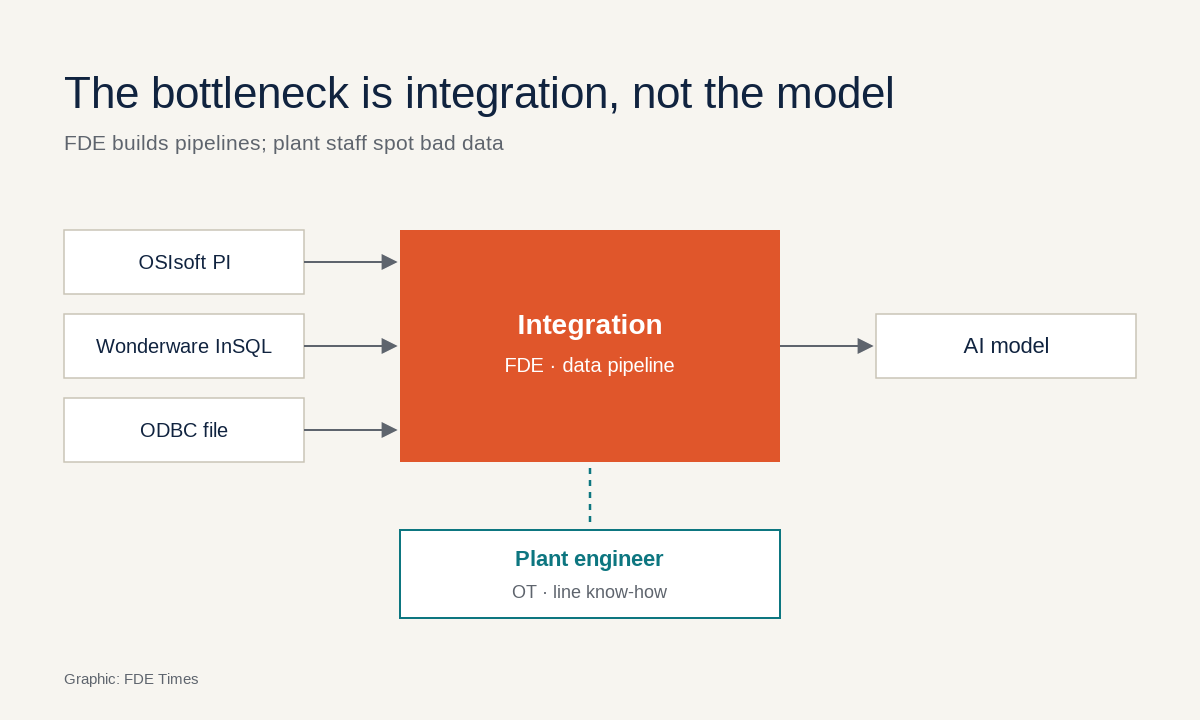
Forward deployed engineers in manufacturing end up doing the data engineering themselves, while the plant's own engineers still hold what matters about the production line.
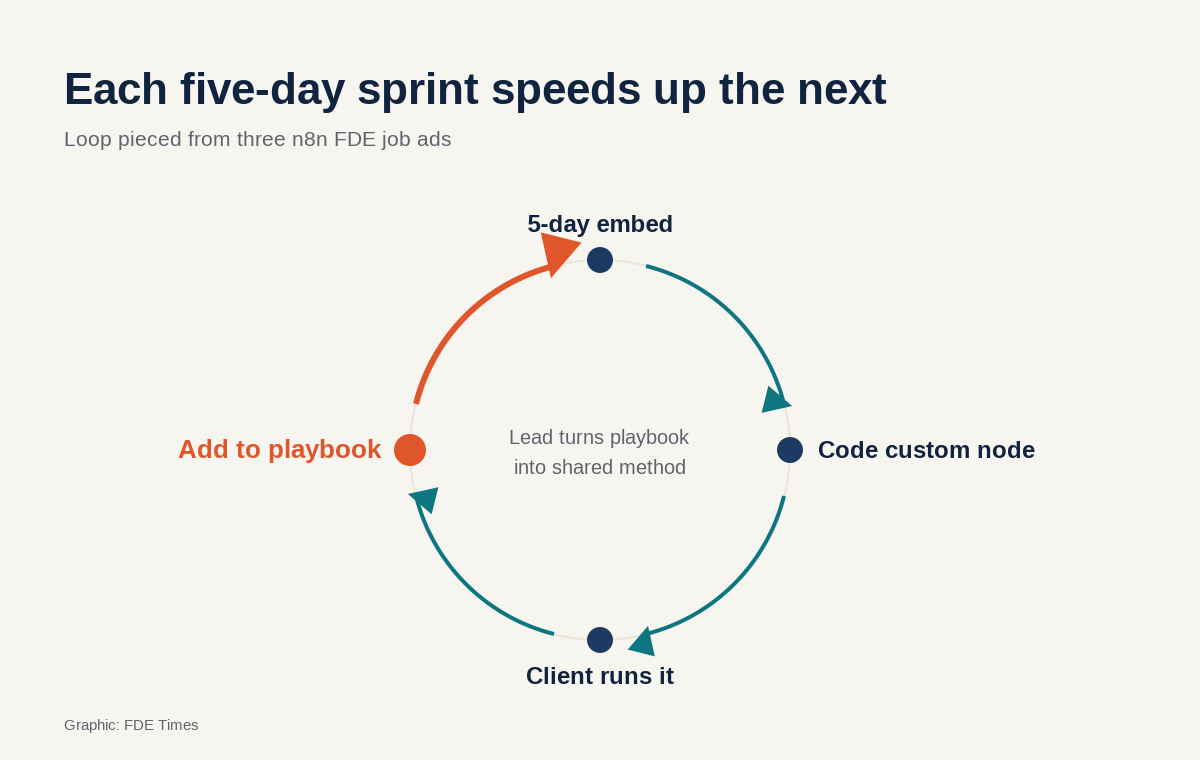
Its engineers get five days on site, and they are judged by what the customer can run alone once they have left.
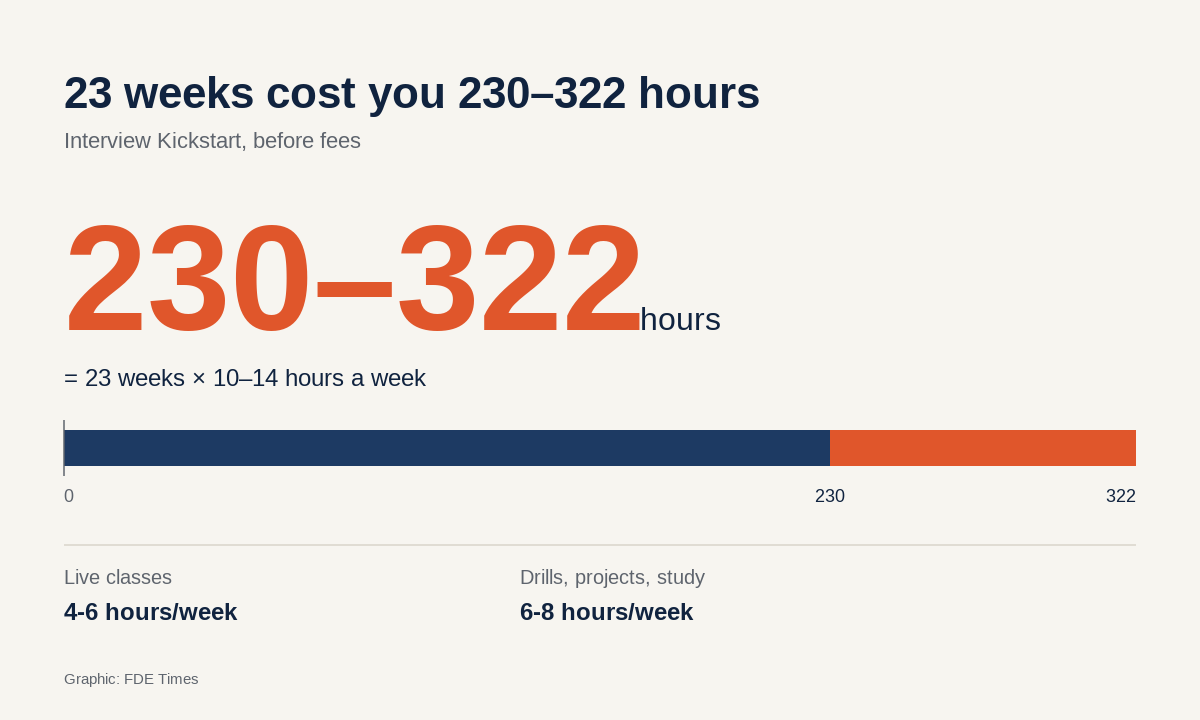
Courses run to 138 lessons or 23 weeks, yet the scarce thing is a real person playing a difficult customer, and they need not be a paid coach.
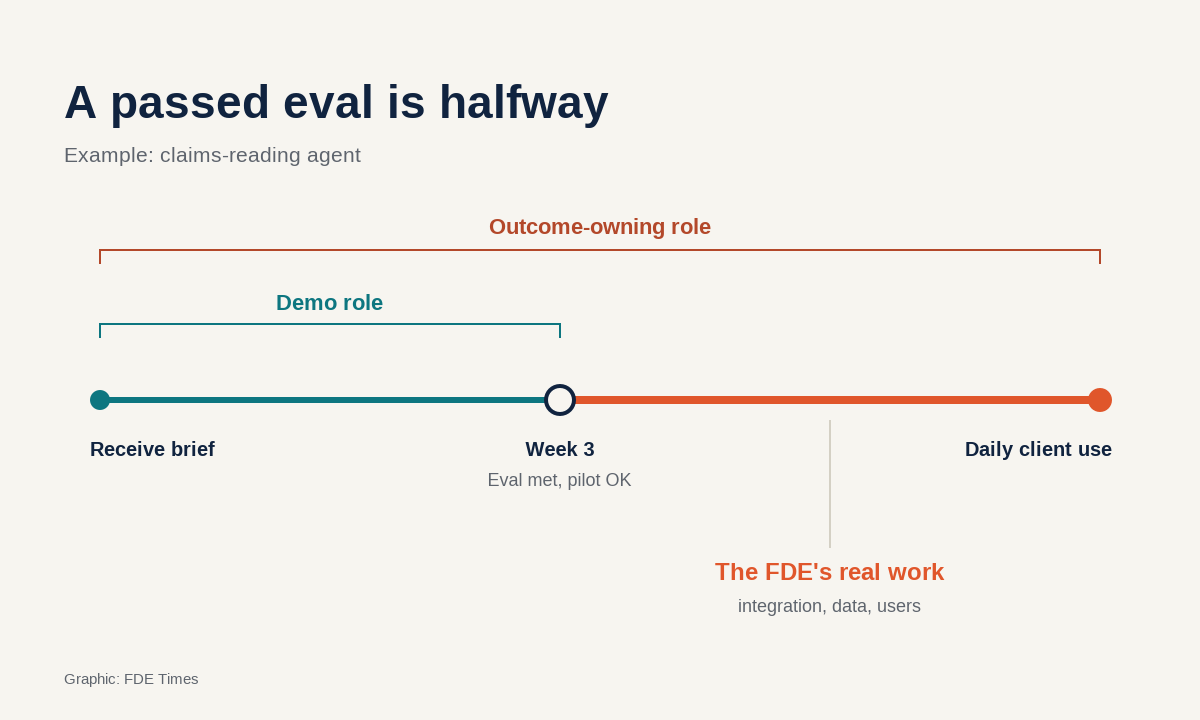
The same label can cover three different jobs, and the real test is who keeps the system running once the demo is over.
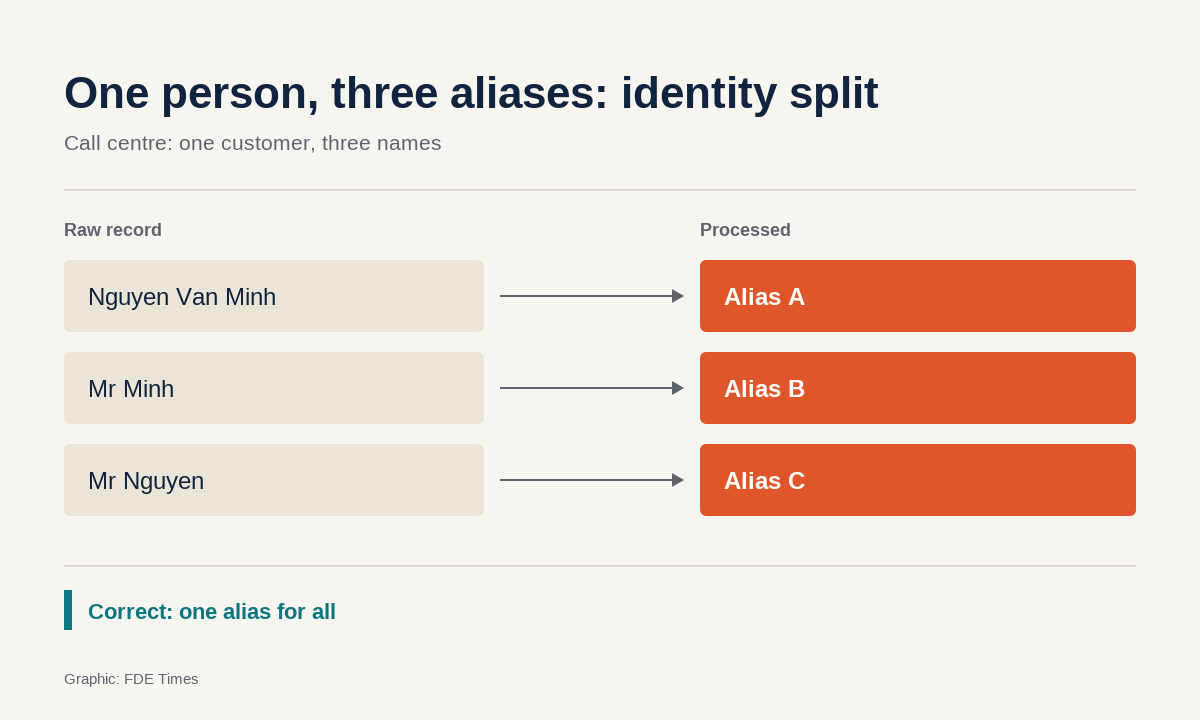
The listings disagree on whether the role needs three years' experience or five, but the job itself is mapping, reconciliation and data pipelines.
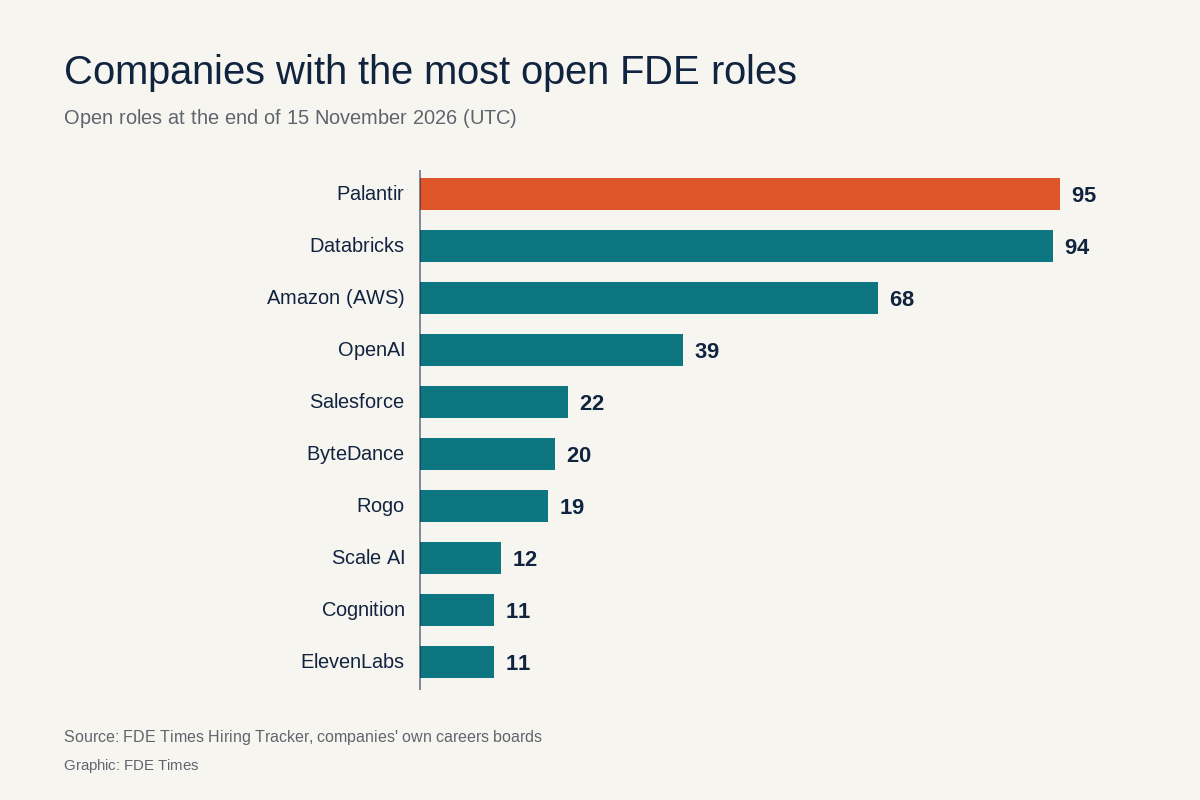
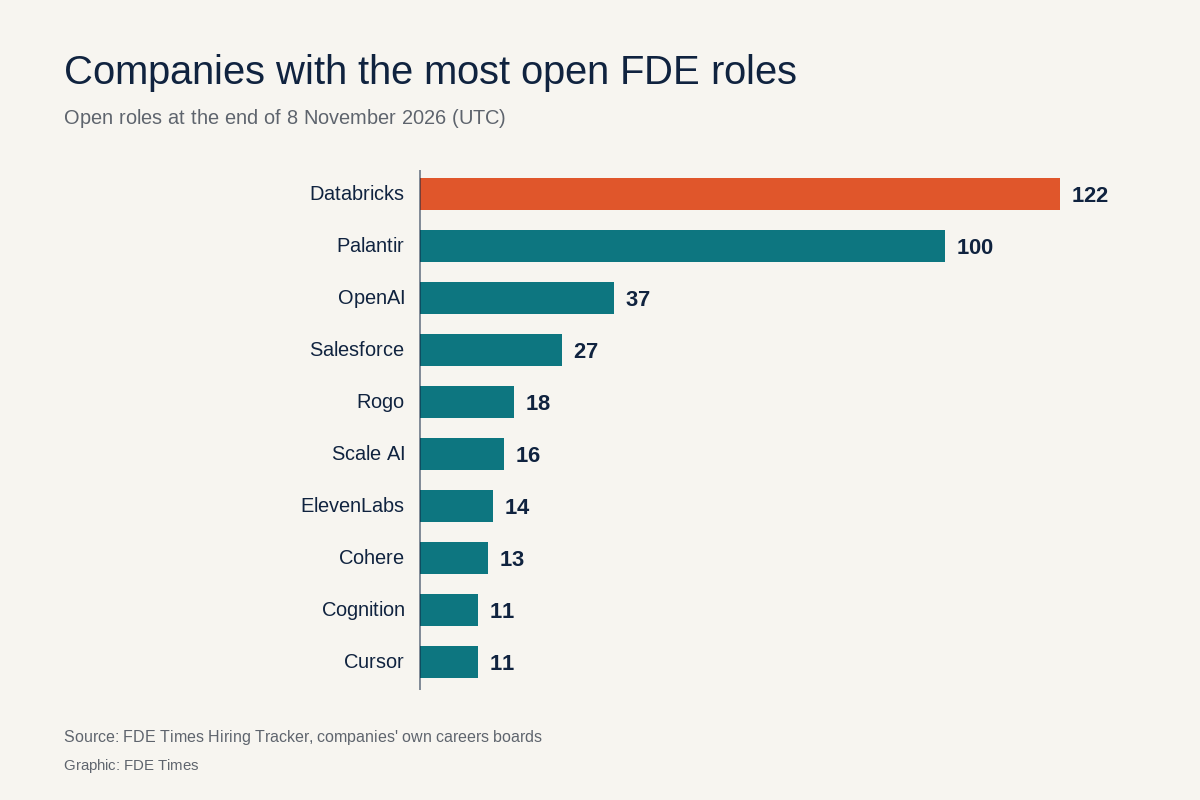
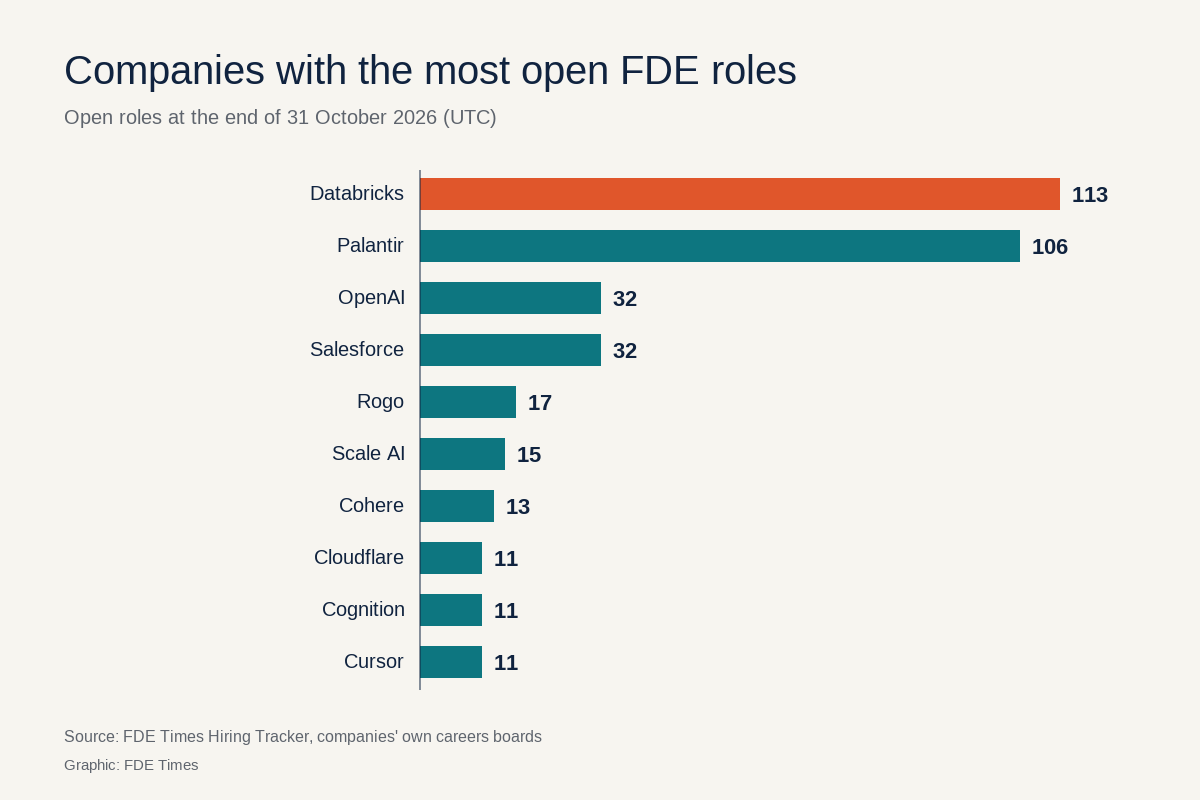
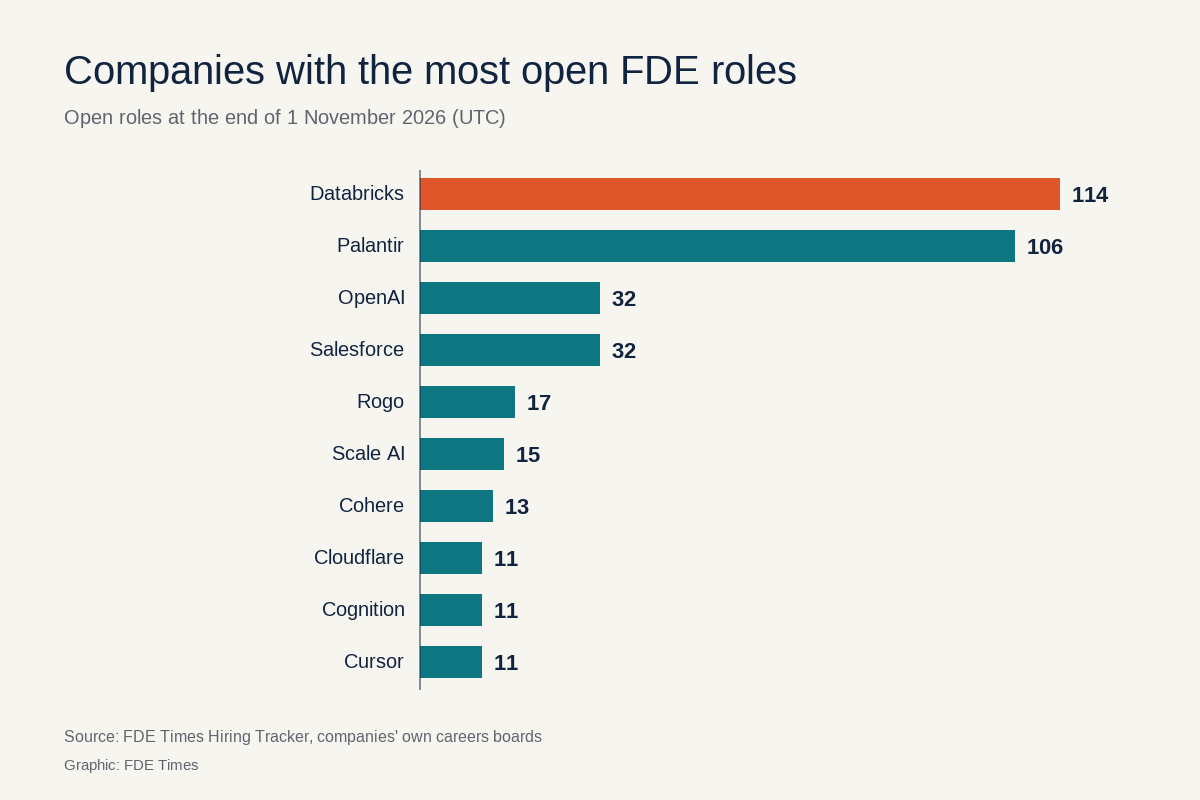
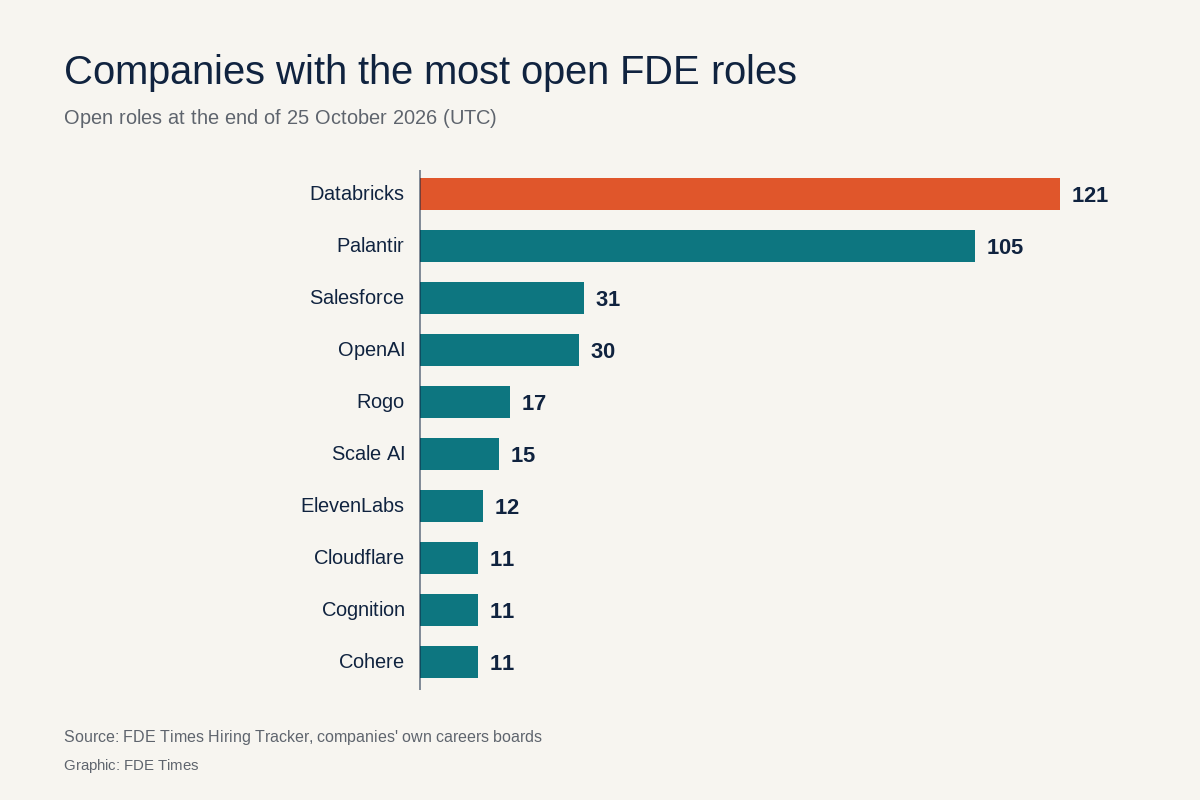
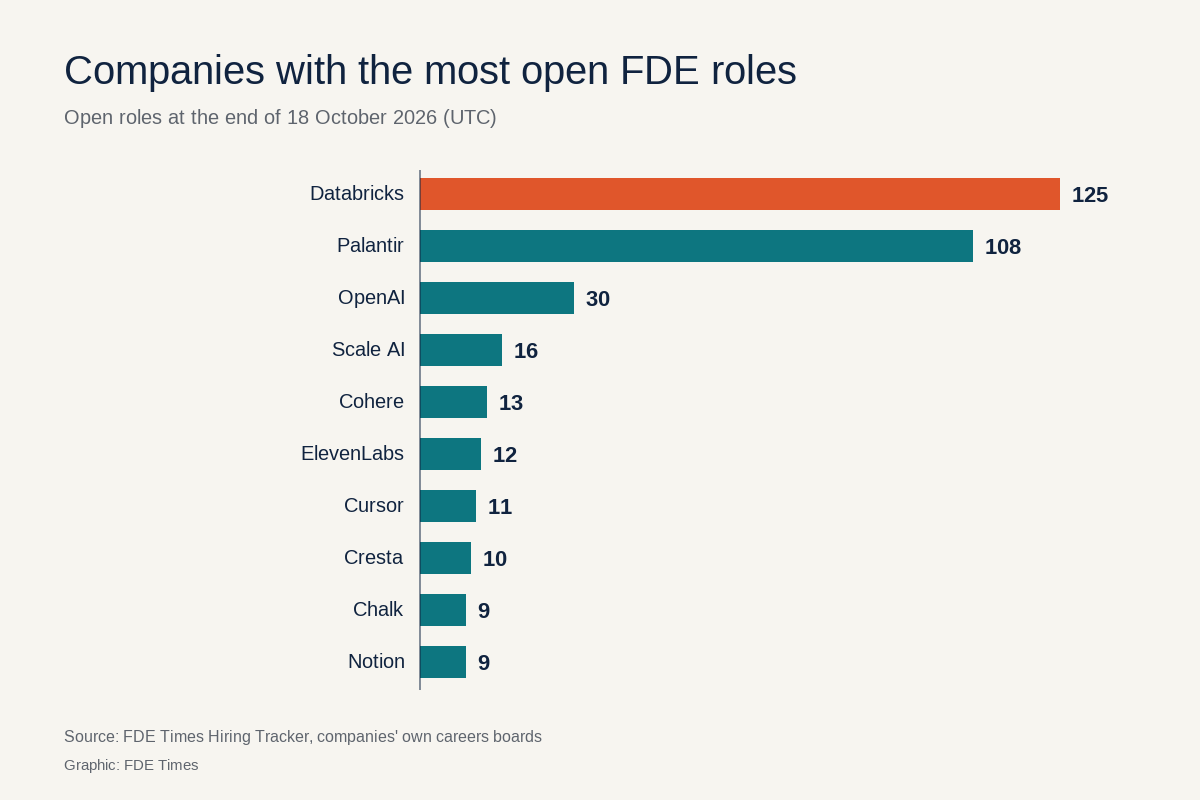
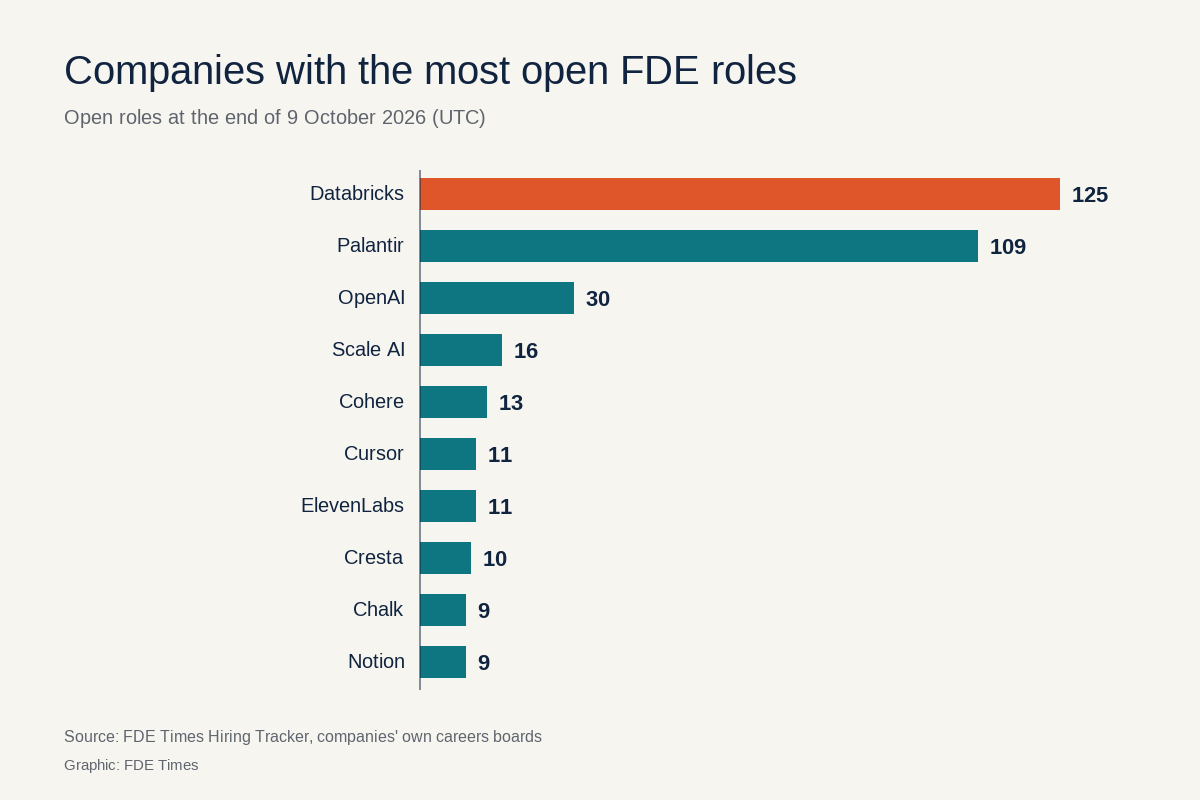
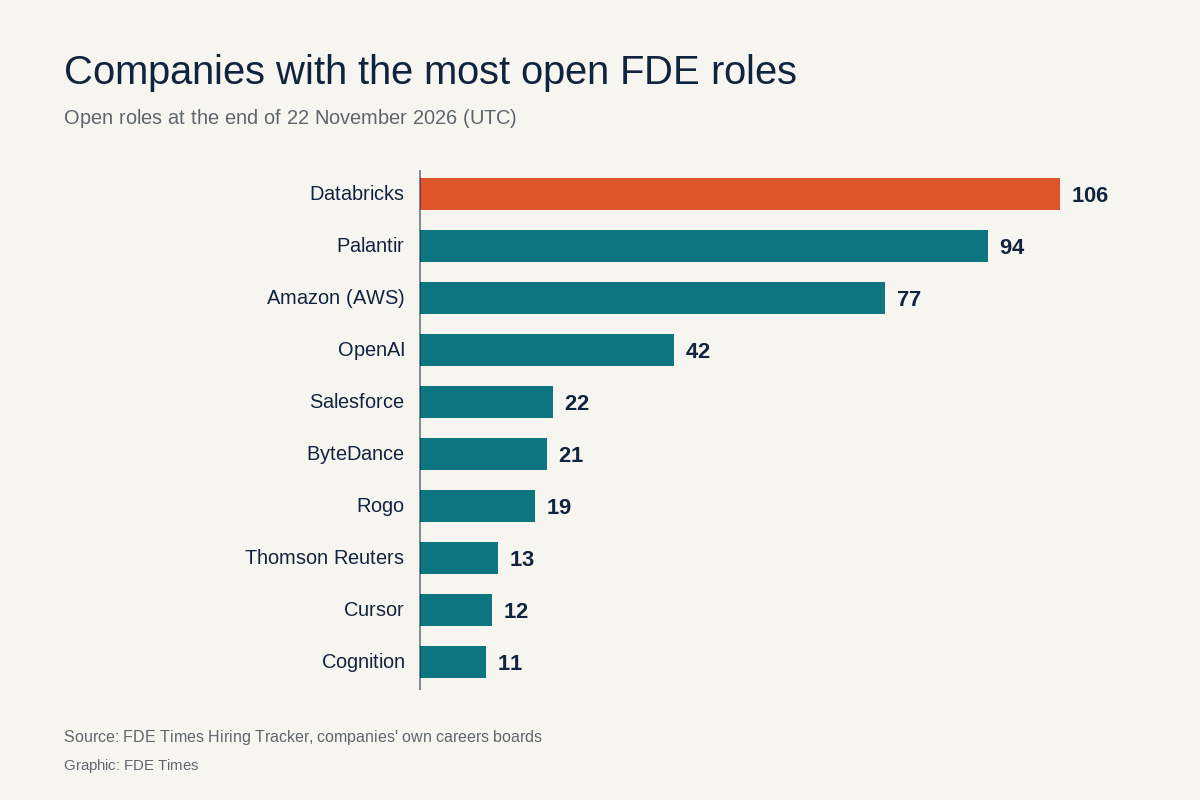
Databricks shed the most, from 124 to 94, as companies pulled 113 listings and posted only 53 new ones on boards already tracked.
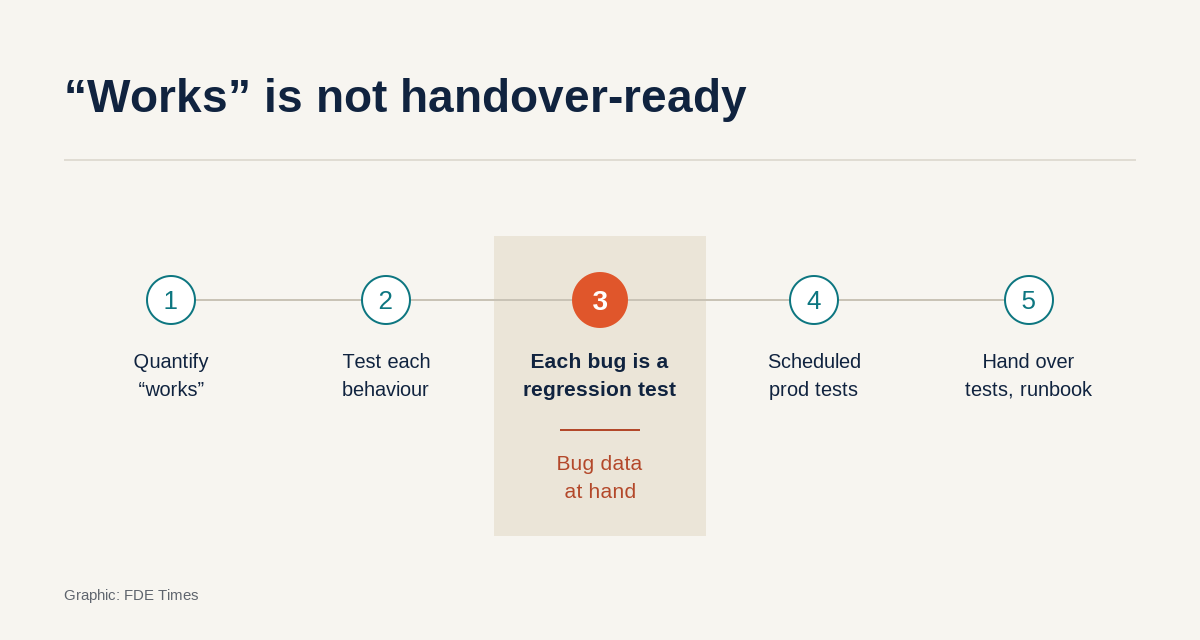
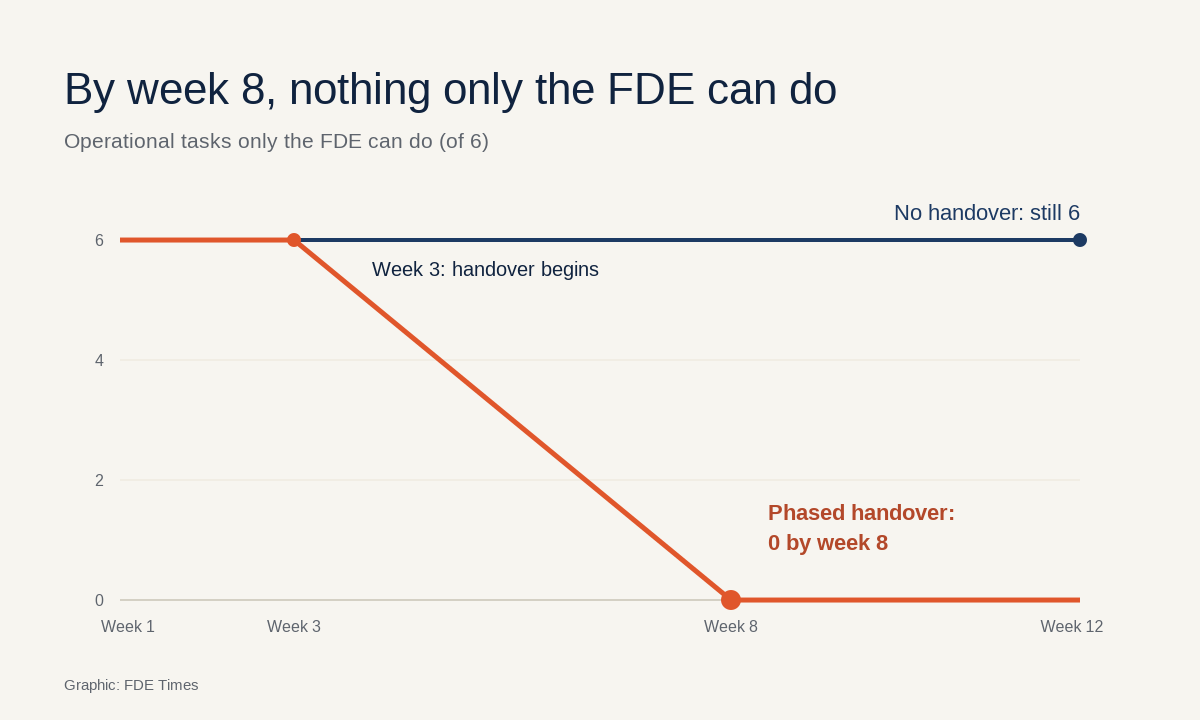
Google's SRE book treats the untested as broken; a real handover leaves tests, measurable acceptance criteria and a runbook the client's team can trust.
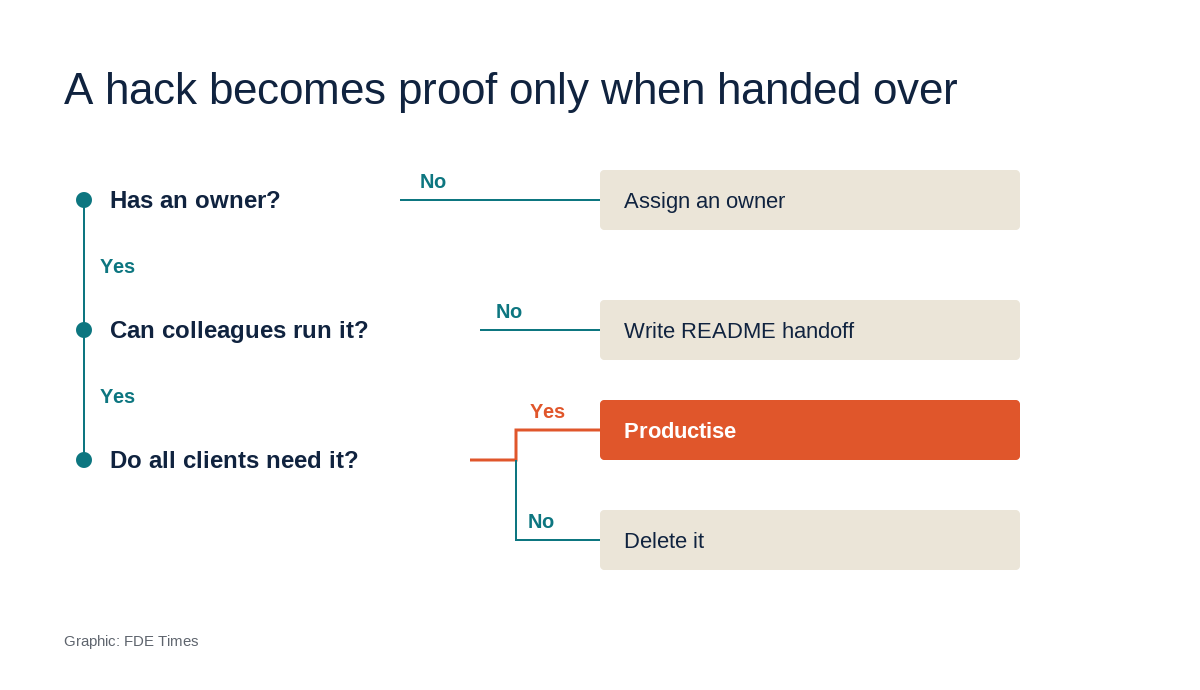
They only count if someone owns them, their lifespan has been decided, and other people can still run them after you have moved on to the next customer.
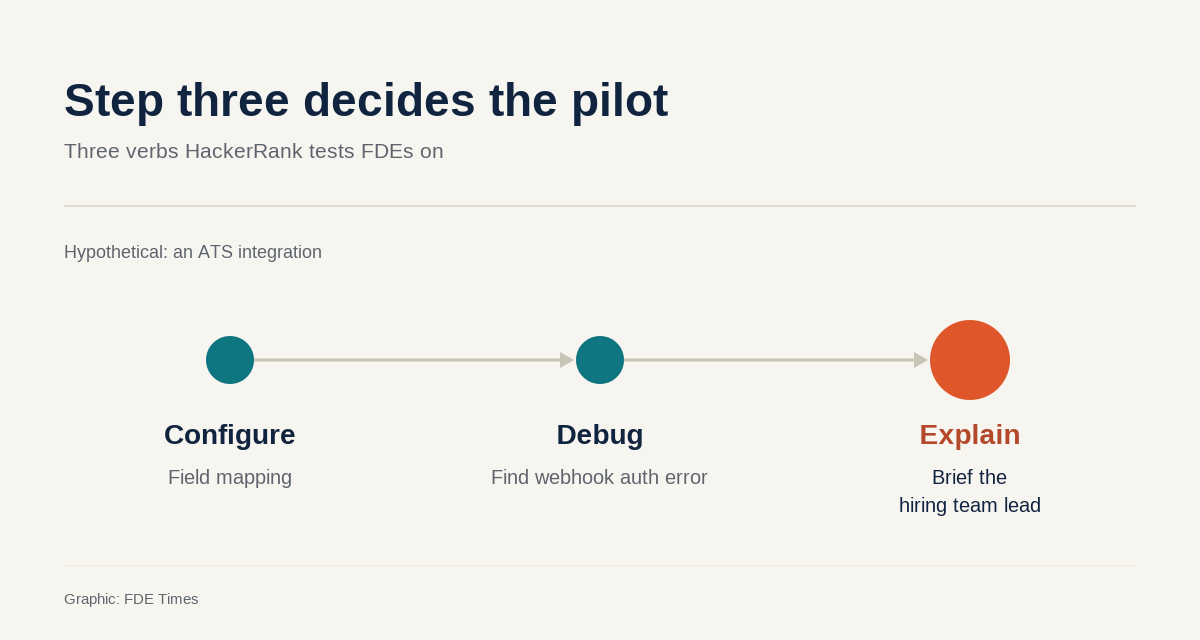
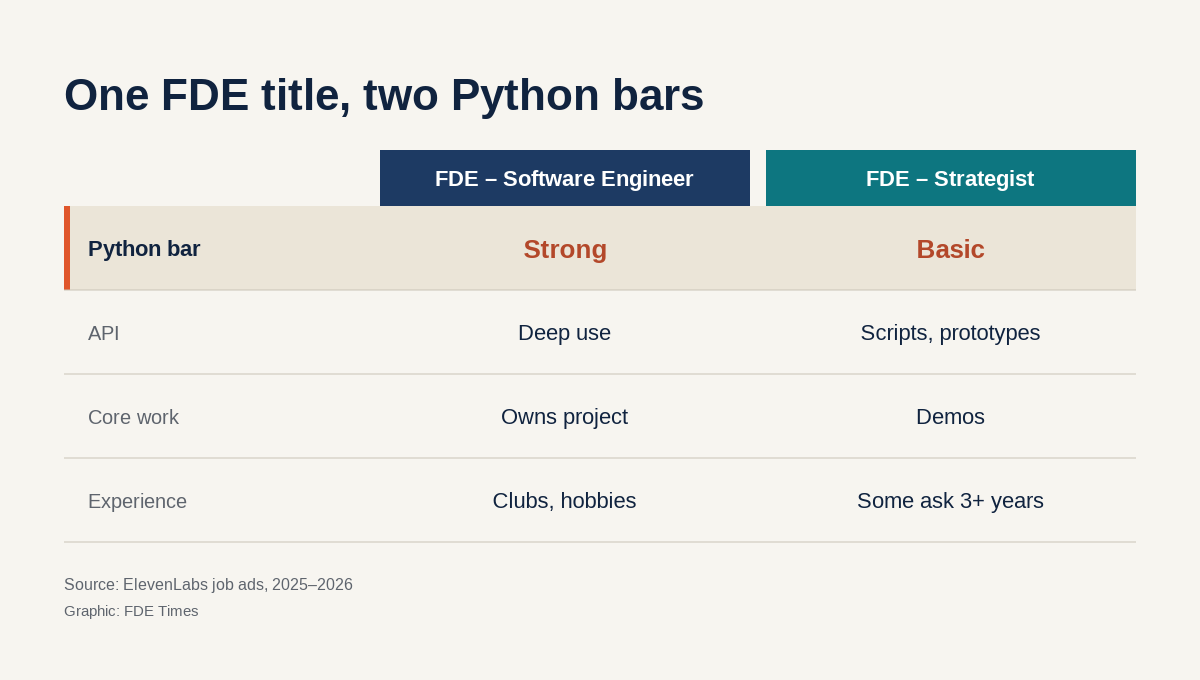
Its London and Bengaluru ads ask only for light Ruby or Python scripting; the harder skill is doing the work in front of a customer mid-pilot.
Cohere argues the lock-in risk peculiar to forward deployed work is operational: clients who own the system an engineer built but cannot run it alone.
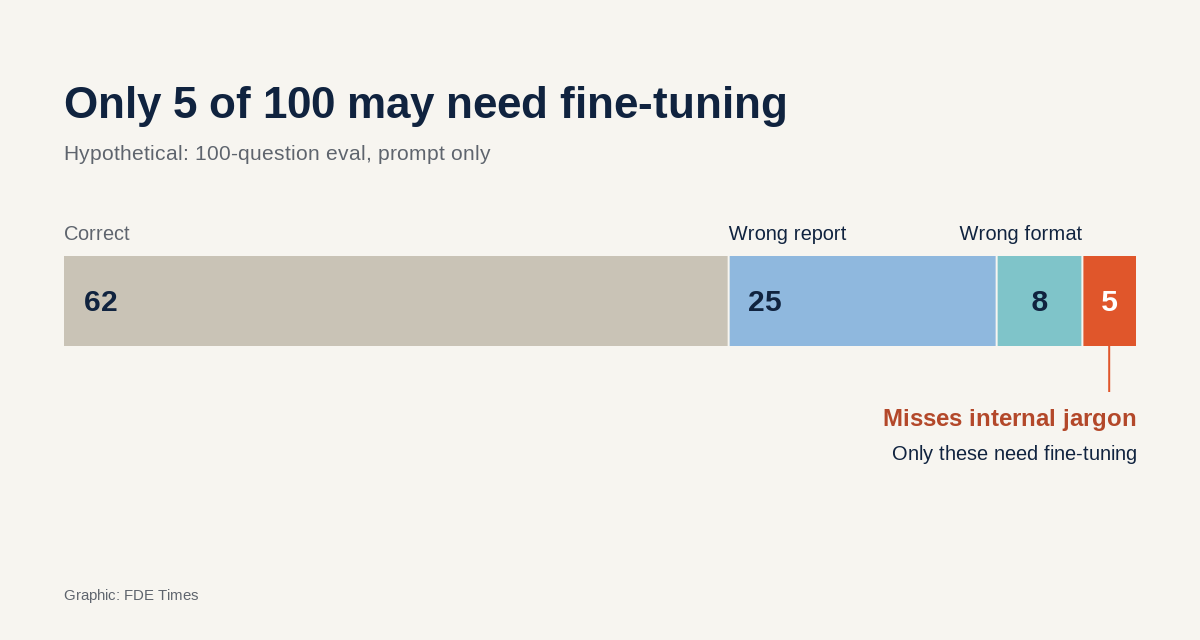
In the FDE job ads compared here, only an AI infrastructure company asks for deep fine-tuning, and the decision to fine-tune usually starts with an eval set.
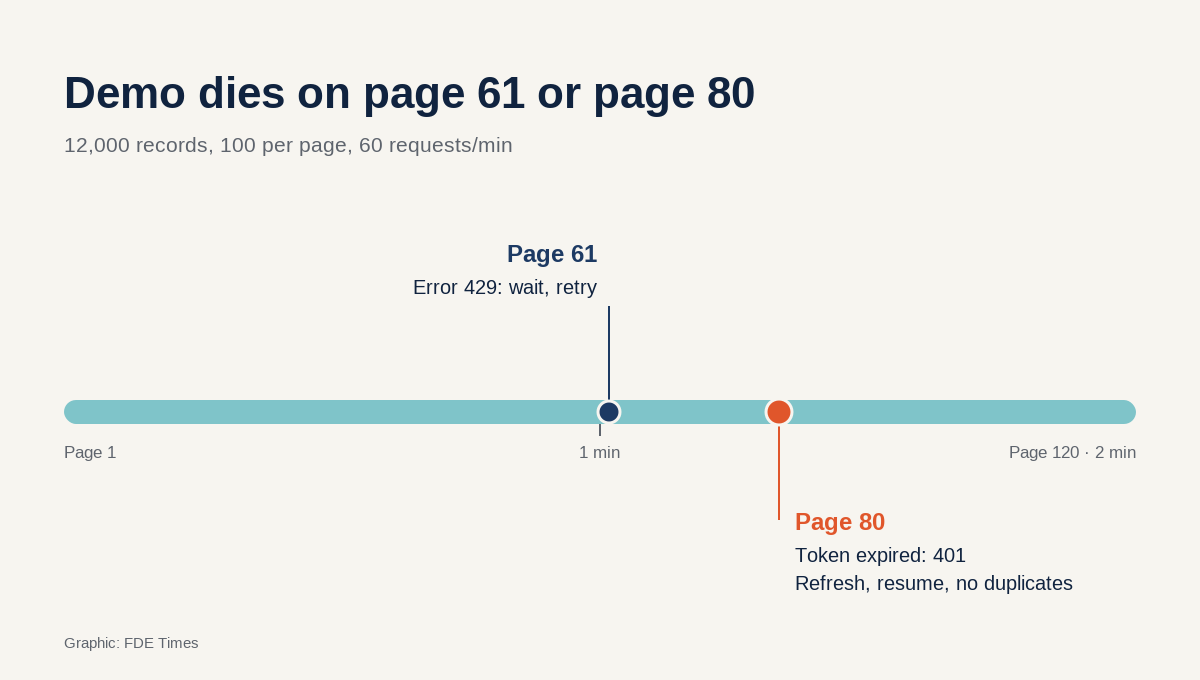
The evidence that persuades recruiters is a project with real authentication that survives errors, pagination and rate limits.
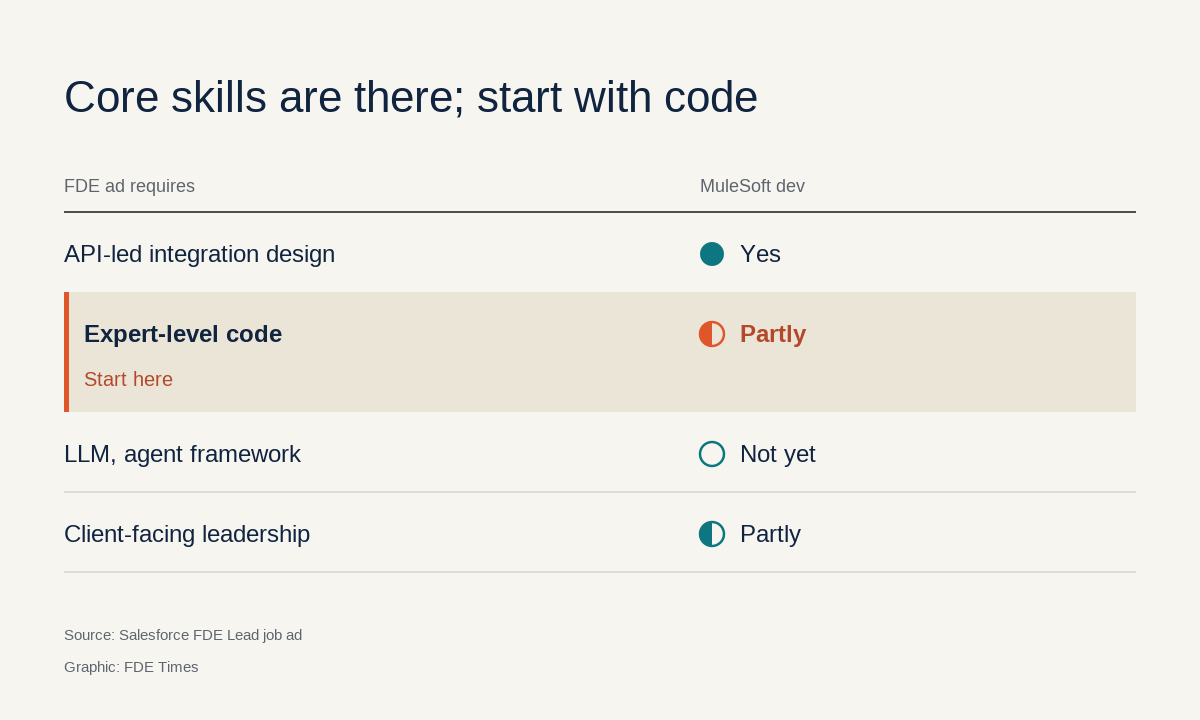
Integration is the core of the job; what MuleSoft developers lack is real code, LLM skills and client leadership, and no certificate covers that.
Three of five Tokyo listings screen candidates out at the start over Japanese, residency or a US security clearance, before pay ever comes up.
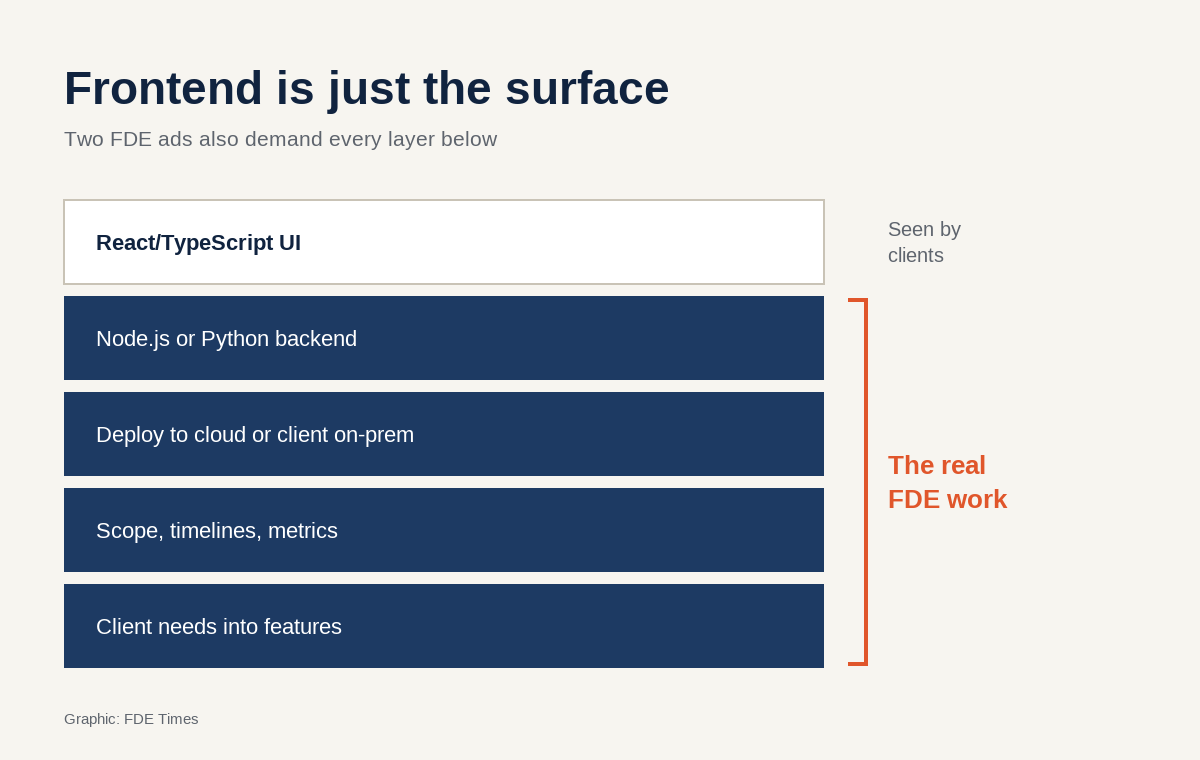
Engineers who build interfaces on site with clients must also own scoping, deployment and the job of feeding lessons back into the product.
At Cognition the exercise needs almost no code; at OpenAI, every design decision has to trace back to a specific customer need.
Three experience bars, one line about on-call and the word "ambiguous" show where an Invisible Technologies interview is likely to press hardest.
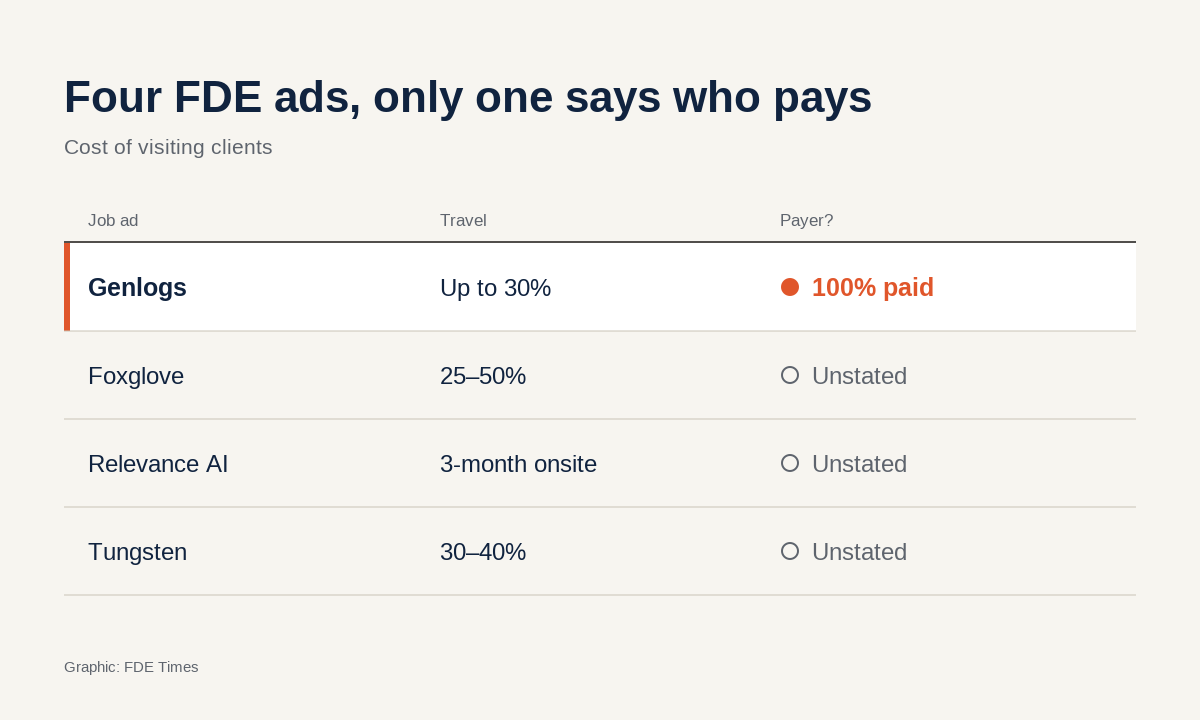
Before comparing two offers, pin down the travel expense policy, because every cost the company does not reimburse comes out of your own pocket.
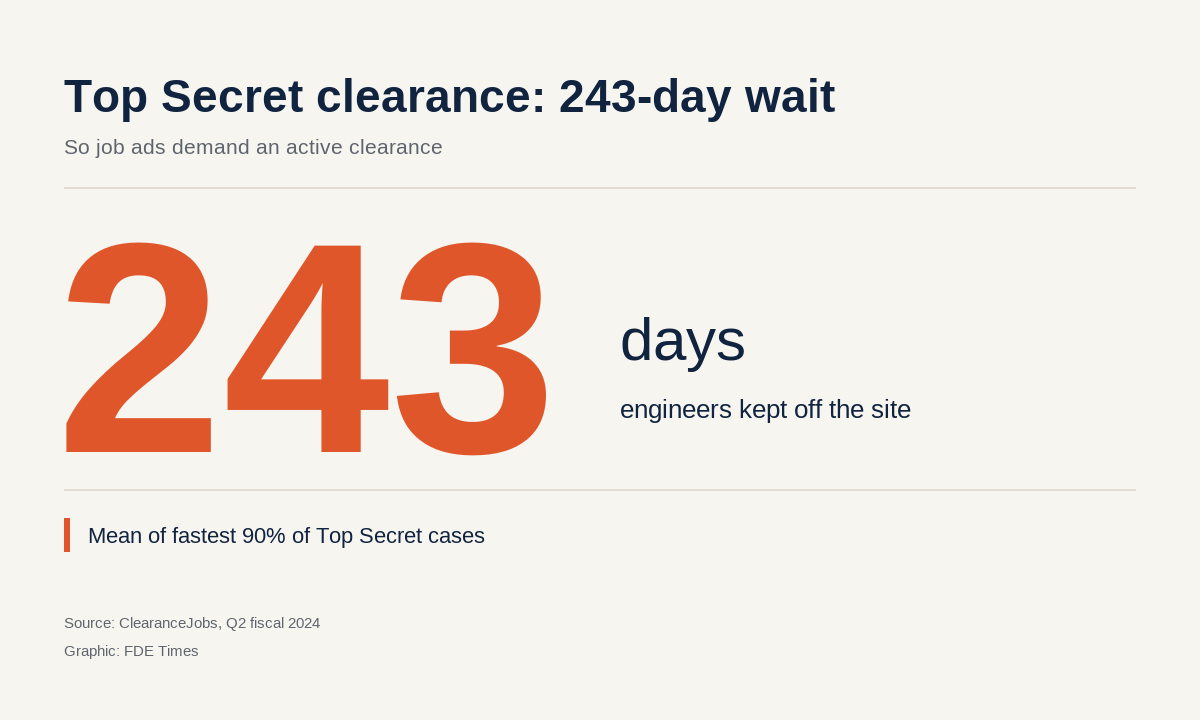
The way in is an active clearance, and at Top Secret level even the fastest 90 per cent of cases took an average of 243 days.
Its manager tracks win rates and POC cycle time, yet candidates must prove they shipped production software, so ask which metric you will answer to.
It is the consultancy's third vendor FDE deal in under six months, and a Gemini certificate says nothing about who owns results at the client.
Open roles fell to 641 in the week to 8 November, and the net fall was 10 once newly tracked boards are excluded.
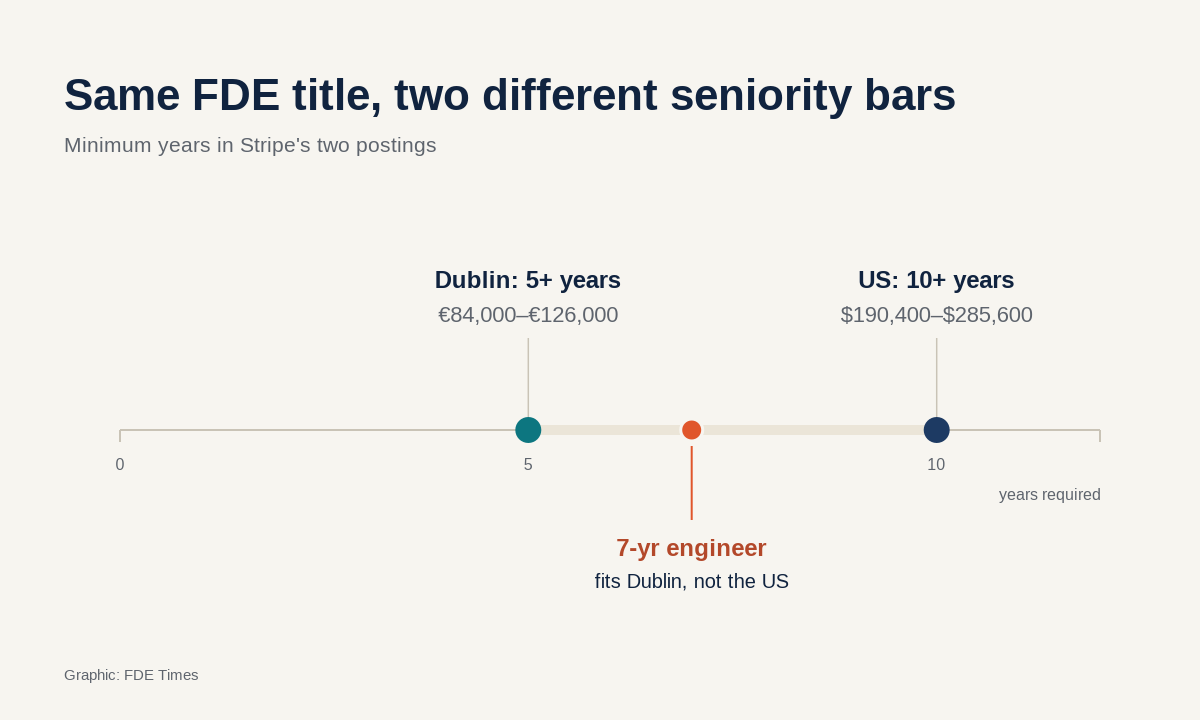
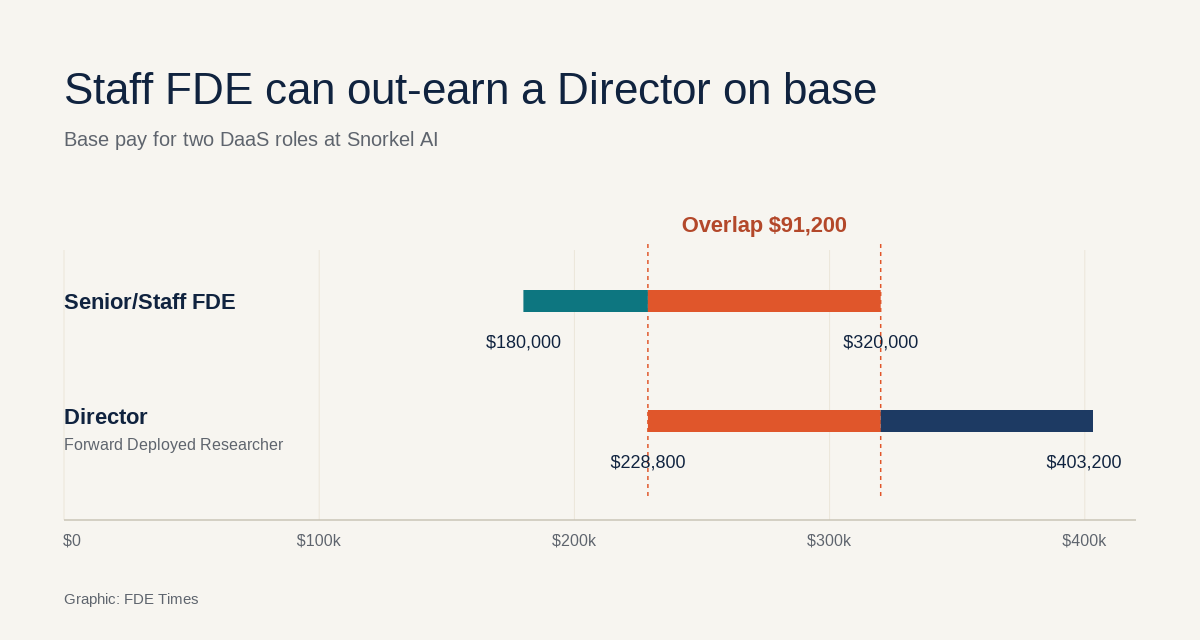
The pay gap draws the eye, but the more telling detail is that Stripe places its forward deployed engineers inside Professional Services, its consulting arm.
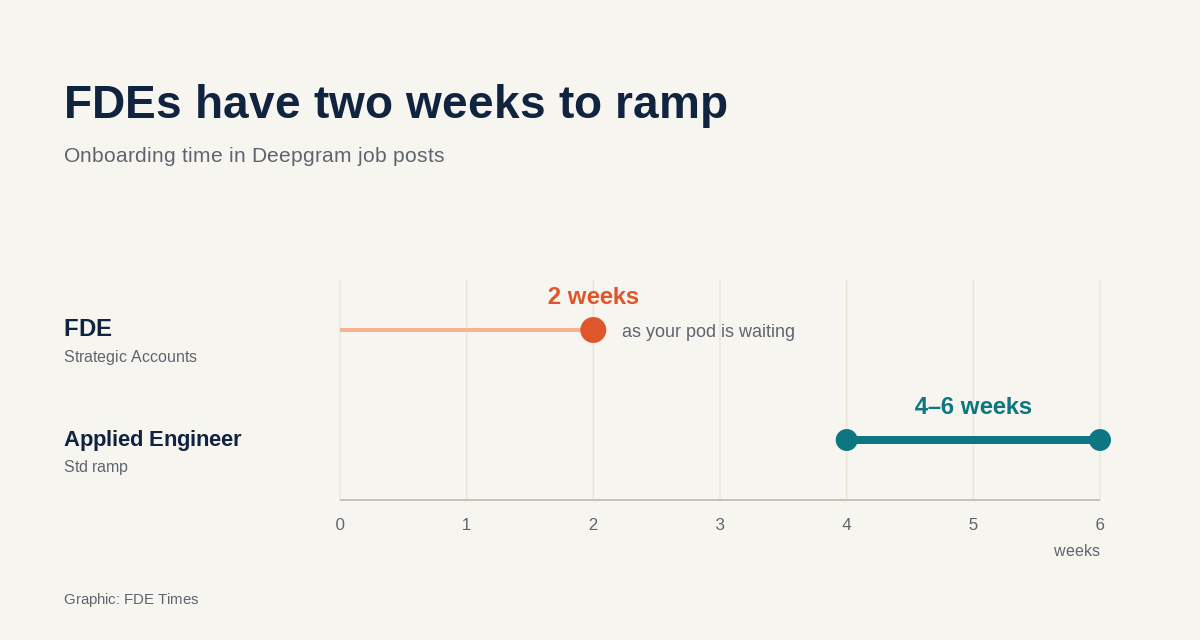
The Strategic Accounts posting expects something in production by day 60, with stretches when 80% of the week is spent on site.
Its forward deployed lawyers need four years of practice and sit in Product, not Engineering, a sign of who defines 'correct' in regulated industries.
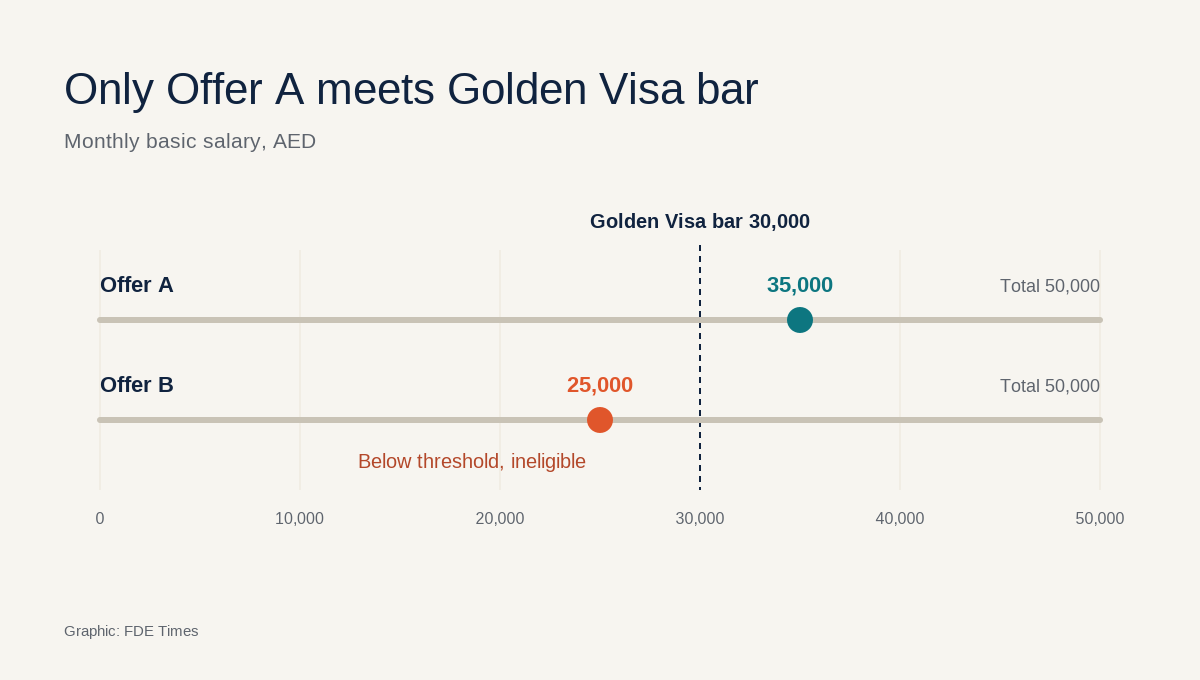
How an AED 50,000 monthly offer is split can decide Golden Visa eligibility and move five-year end-of-service gratuity by AED 35,000.
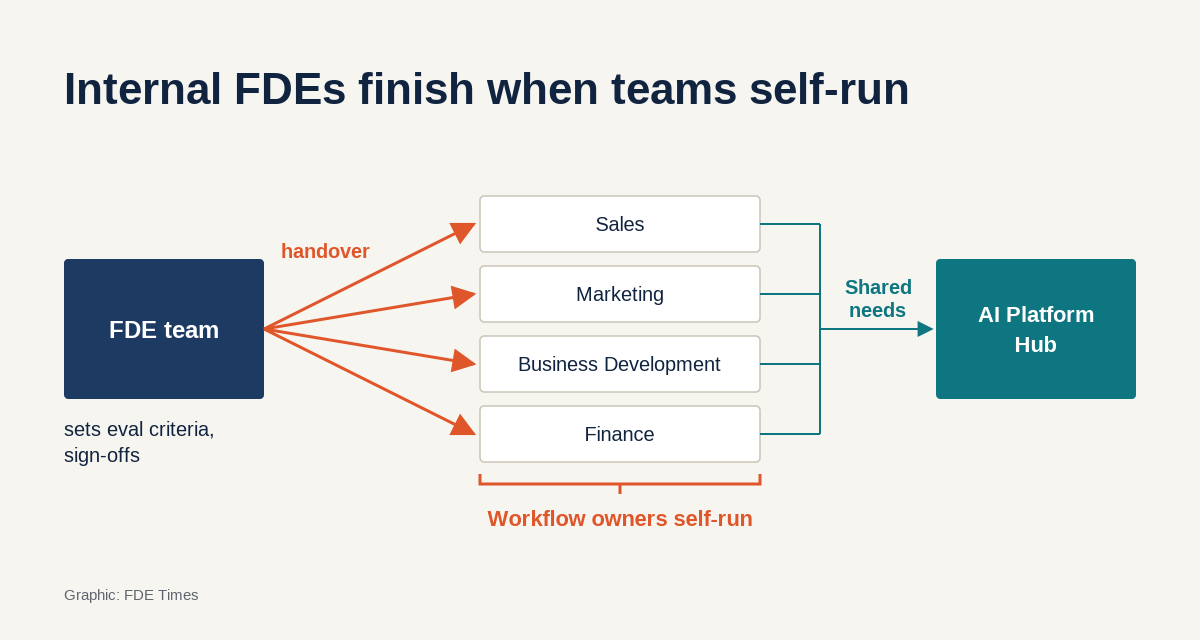
Its two AI Enablement roles embed with Sales, Marketing and Finance, then hand workflows over so those teams stop relying on the FDE team.
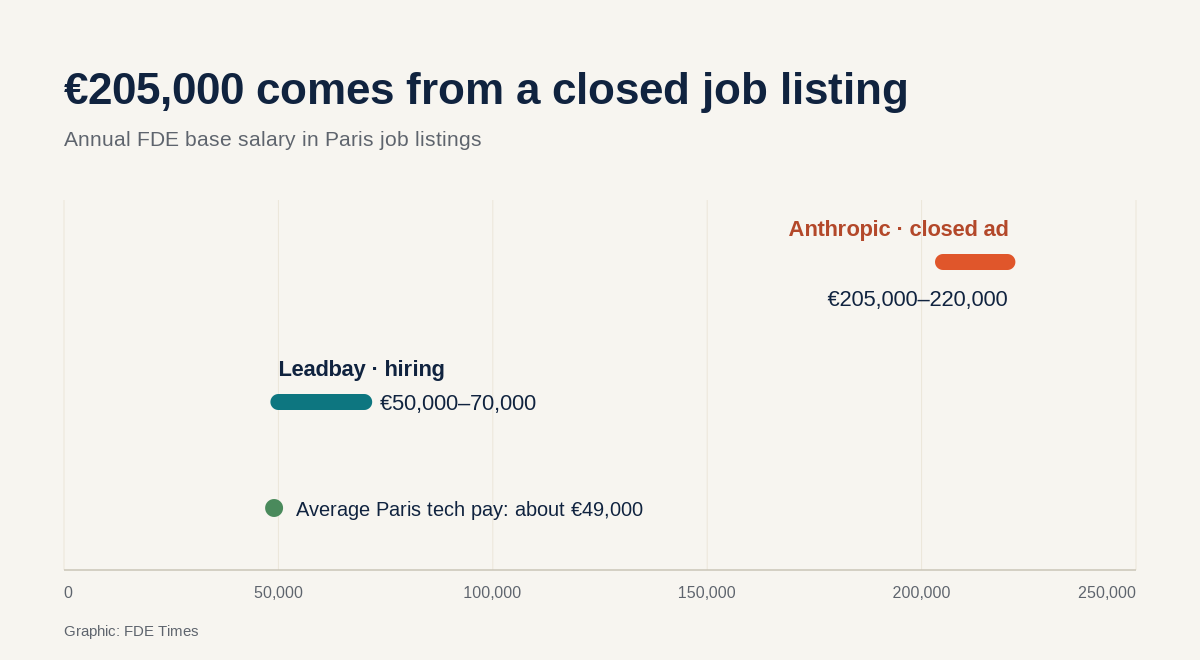
Set against a €50,000–70,000 startup role, it seems to show labs pay four times more, but timing, equity and seniority all differ.
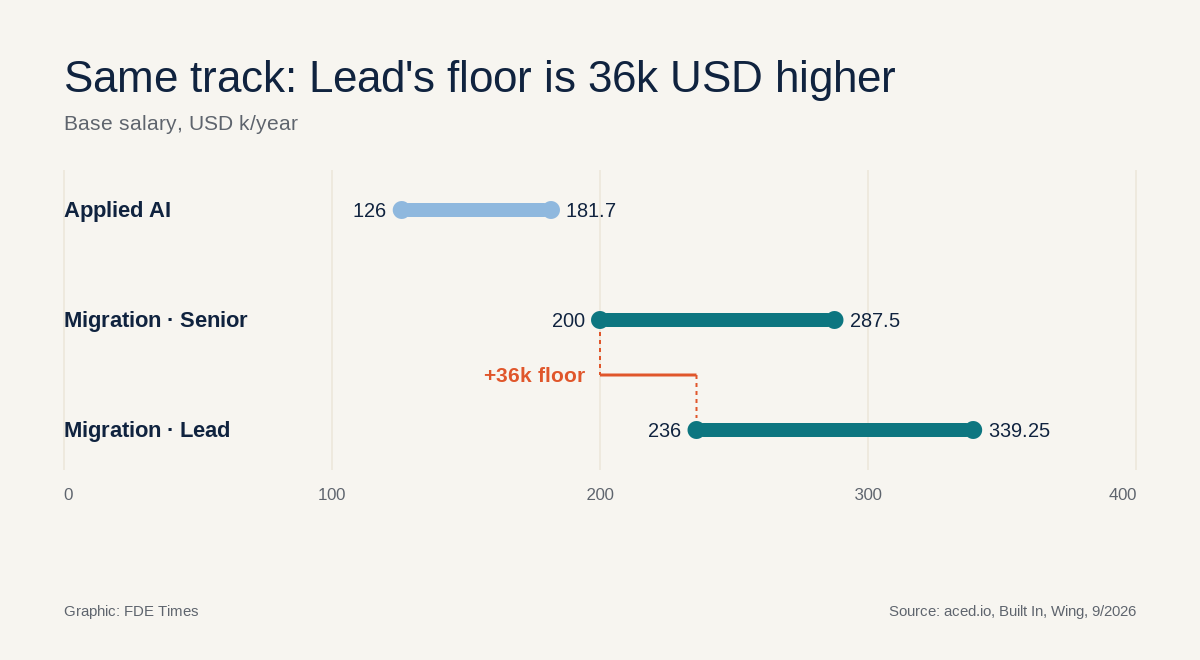
It looks like data pays better than AI, but the roles differ in seniority as well as track, so only a same-track comparison means anything.
Since January, postings must show pay within a C$50,000 range, but roles paying around C$200,000 or more are exempt.
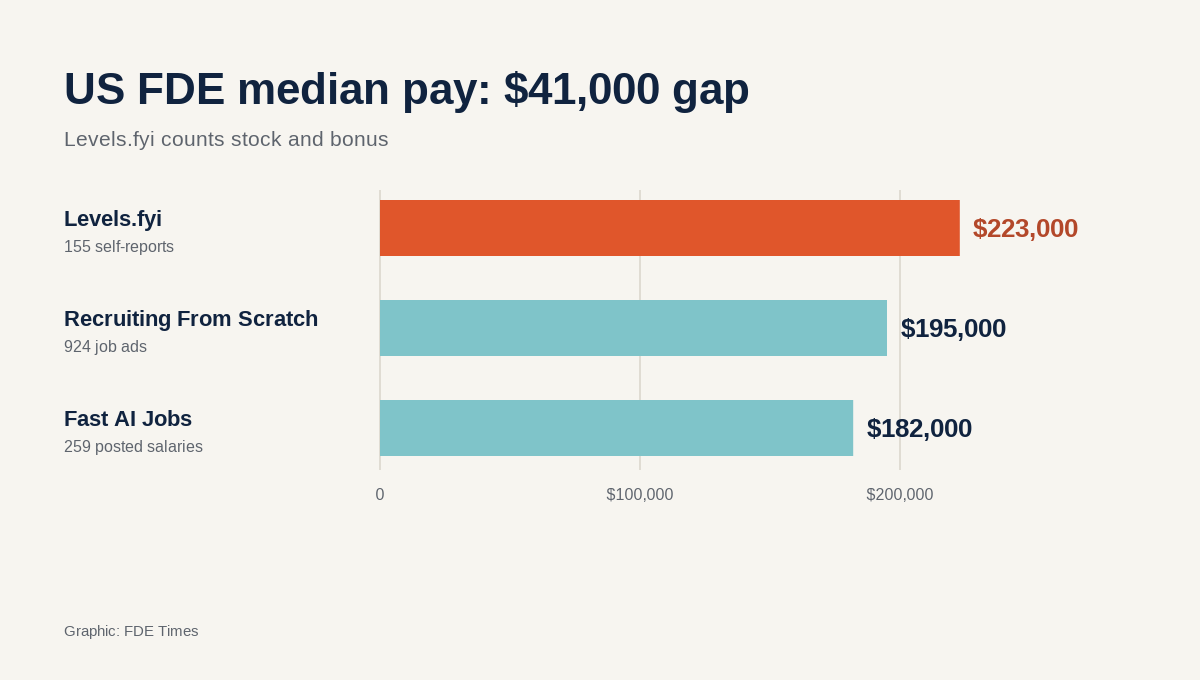
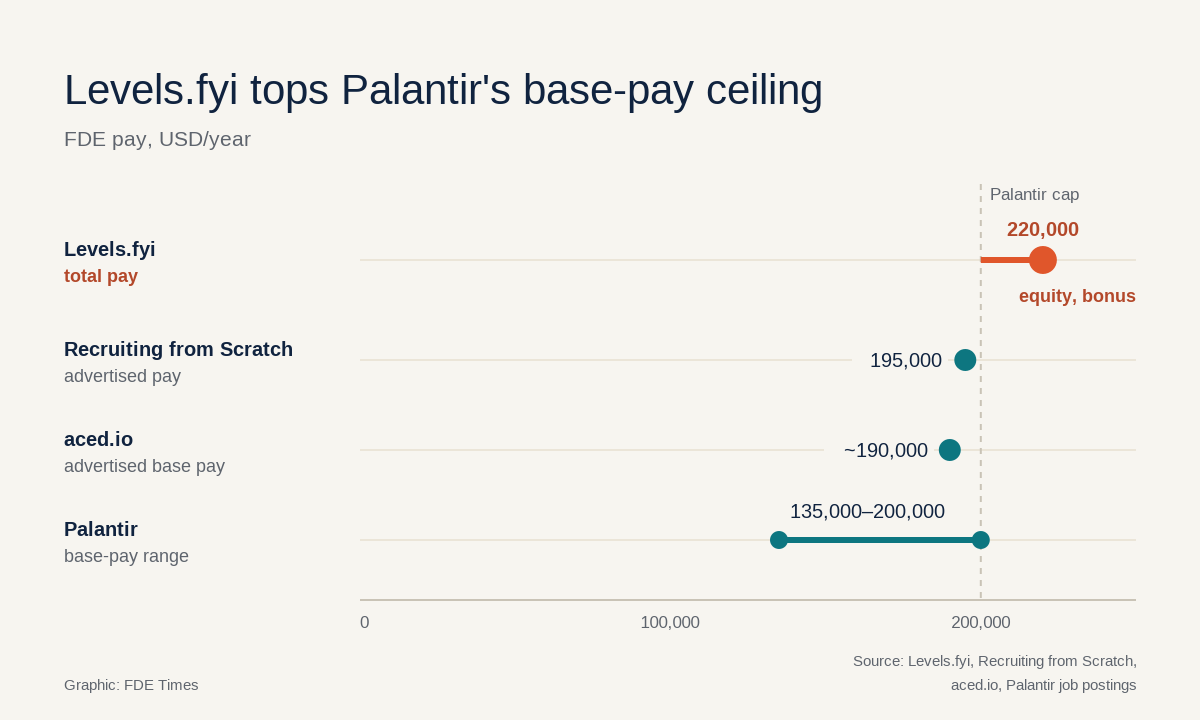
Levels.fyi's $223,000 counts self-reported stock and bonus while job-post medians count advertised pay ranges, so check what a number measures before negotiating.
No source appears to invent numbers; each counts different people at different times, and reading them takes the skill FDEs apply to client data.
Before asking whether forward deployed engineering is "technical enough", work out which of the jobs sharing that title the posting in front of you actually describes.
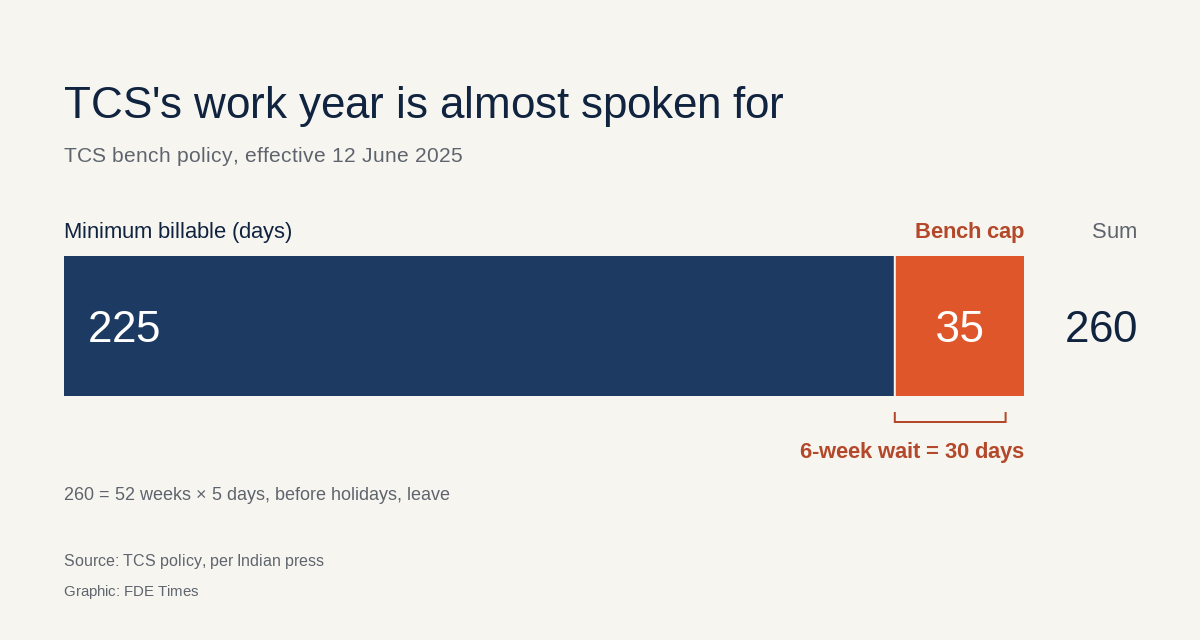
Before signing, ask what the company does with you in the gap, what local law allows and how much standing you have built with the client.
Anthropic, Meta and some OpenAI FDE rounds allow AI tools, so the marks go to what you check after pasting in the machine's suggestion.
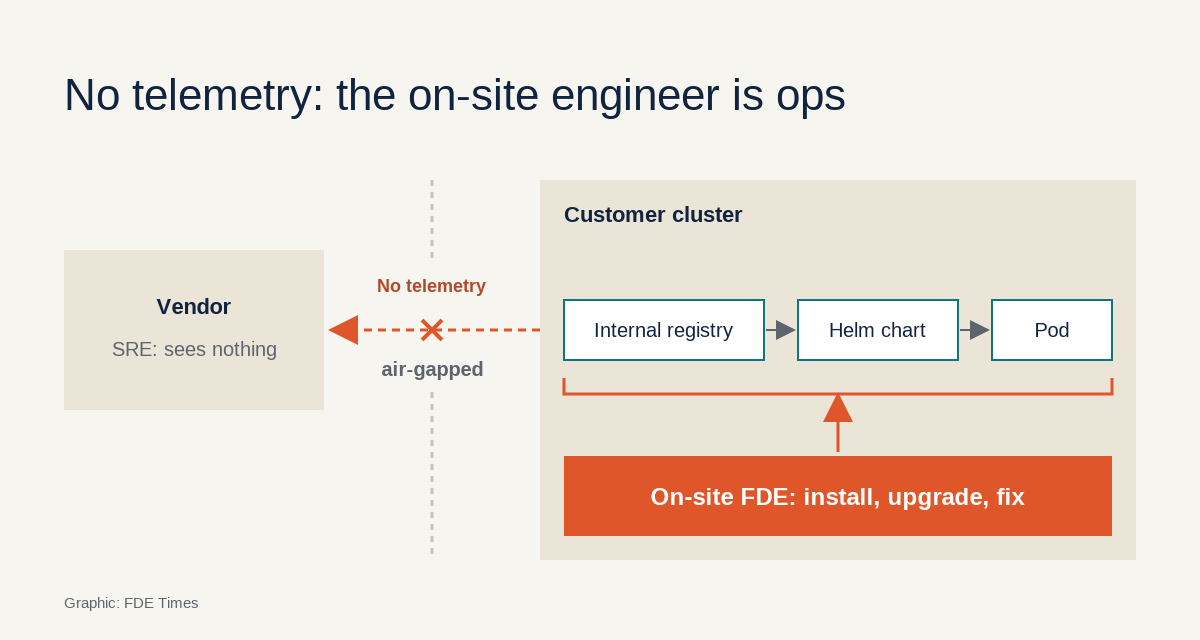
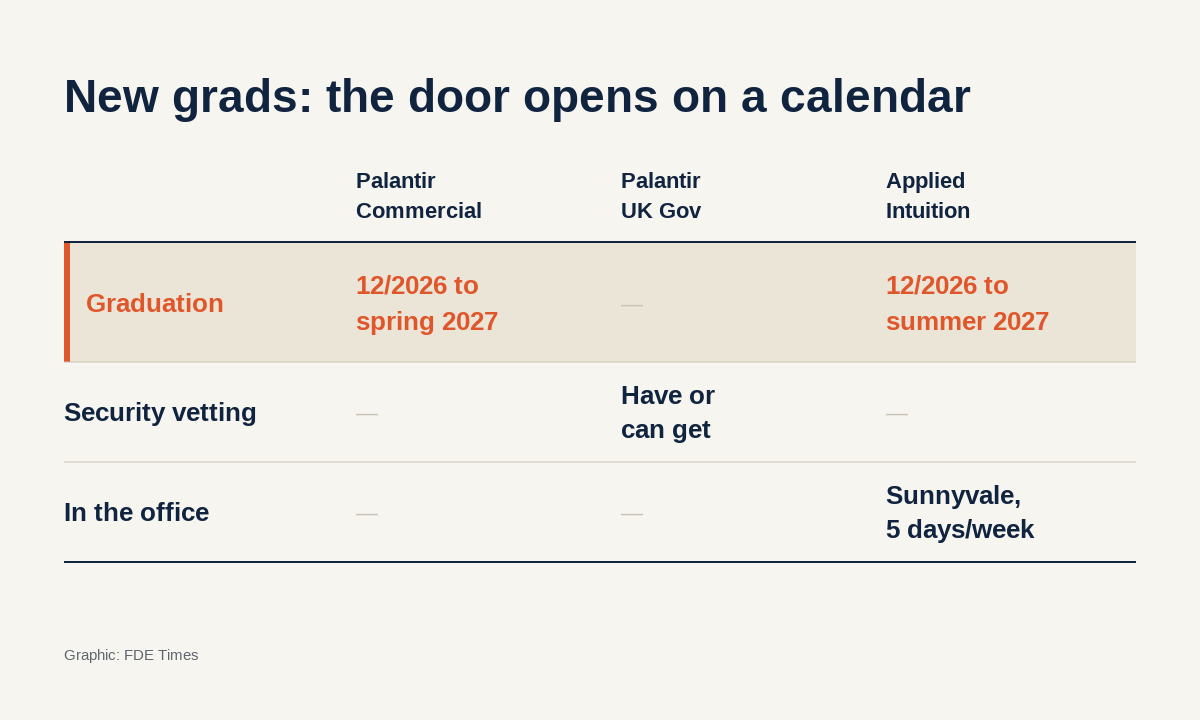
When a vendor cannot see inside a customer's cluster, the engineer on site becomes the operations team, and Palantir's infrastructure FDE role is open to new graduates.
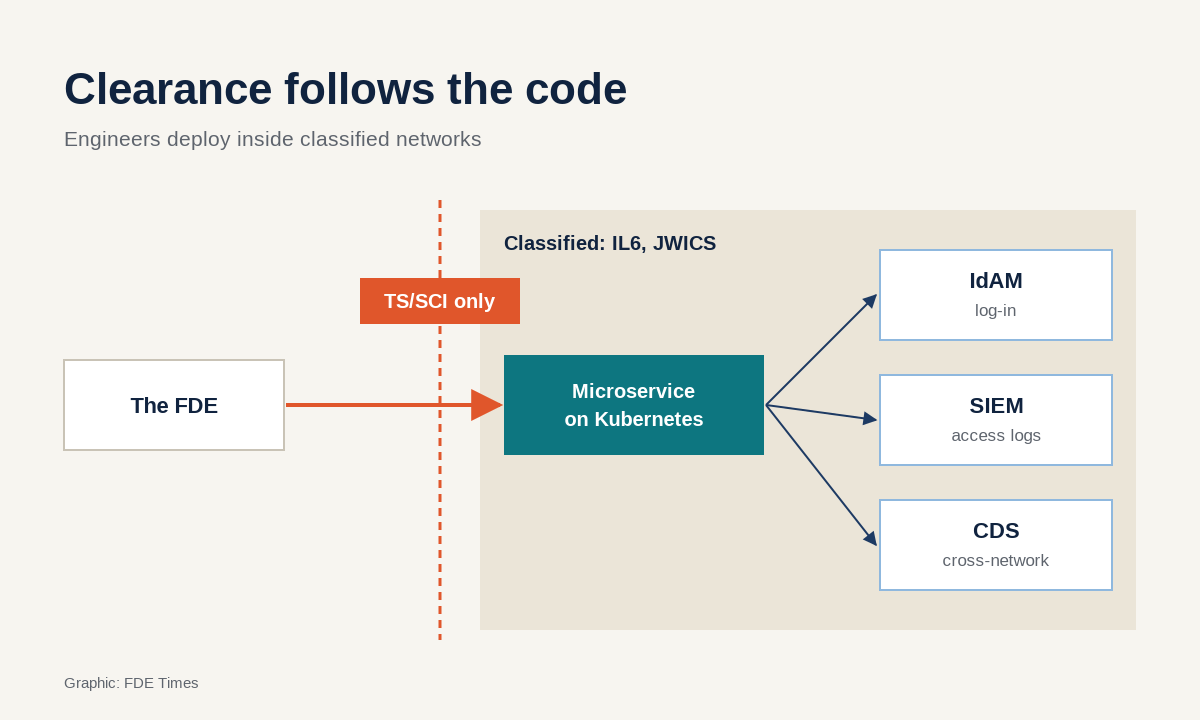
The clearance follows the servers: engineers deploy by hand onto classified clouds, an extreme form of the controls banks and hospitals impose.
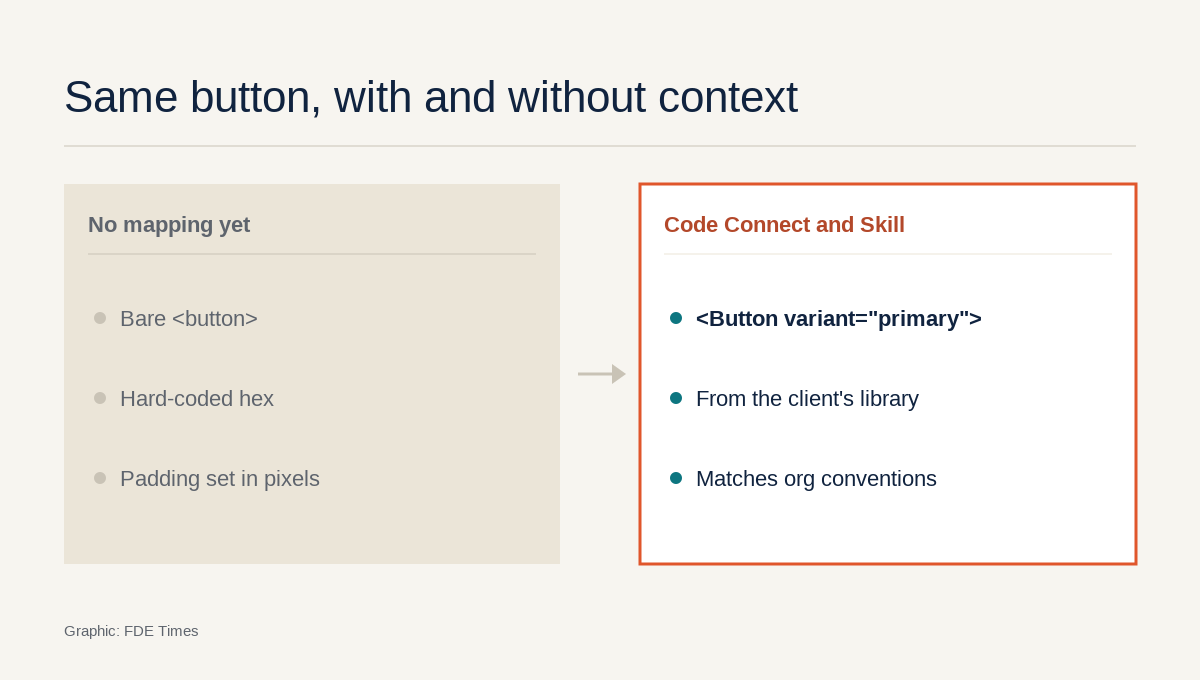
The posting says the role is neither sales nor services: the MCP server and Code Connect exist, but each organisation's context still needs building.
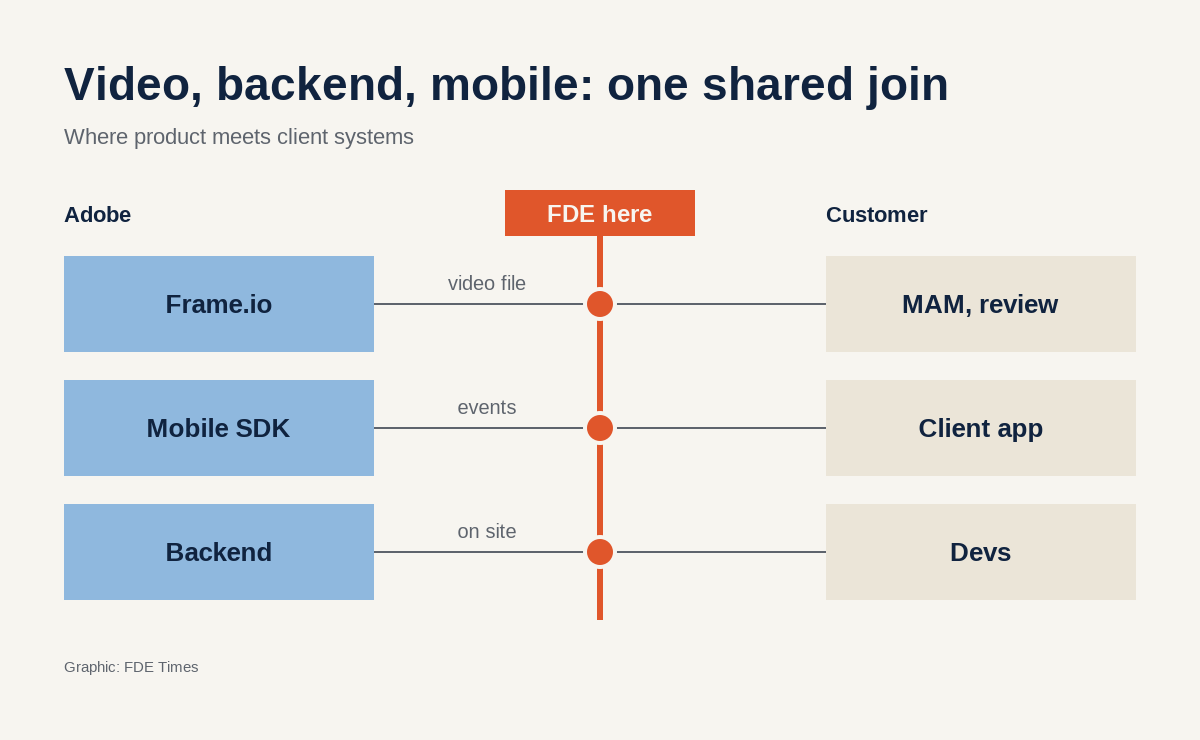
Video, backend and mobile SDK postings all sit where Adobe products meet customer systems, so candidates should prepare for that junction, not a job title.
Strip out 338 roles from 90 newly tracked companies and open posts fell by 25, as 139 closures outpaced 114 new listings.
Salesforce posted 28 of the 66 new roles while 75 came down; strip out newly tracked boards and openings fell by nine.
Aitomatic has no public FDE openings, but the company's own materials and a TSMC job ad in Phoenix point fairly clearly to the skills worth practicing.
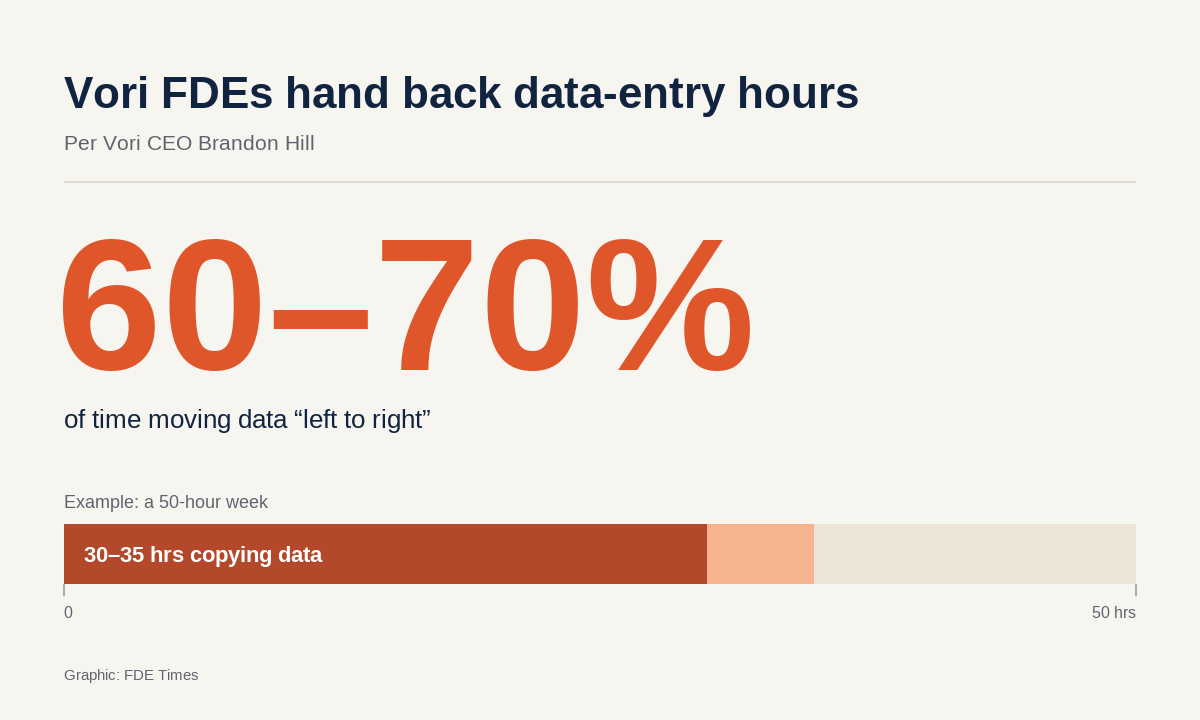
When the client receives a dataset rather than software, deployment means turning vague needs into specs and rubrics, then proving quality with numbers.
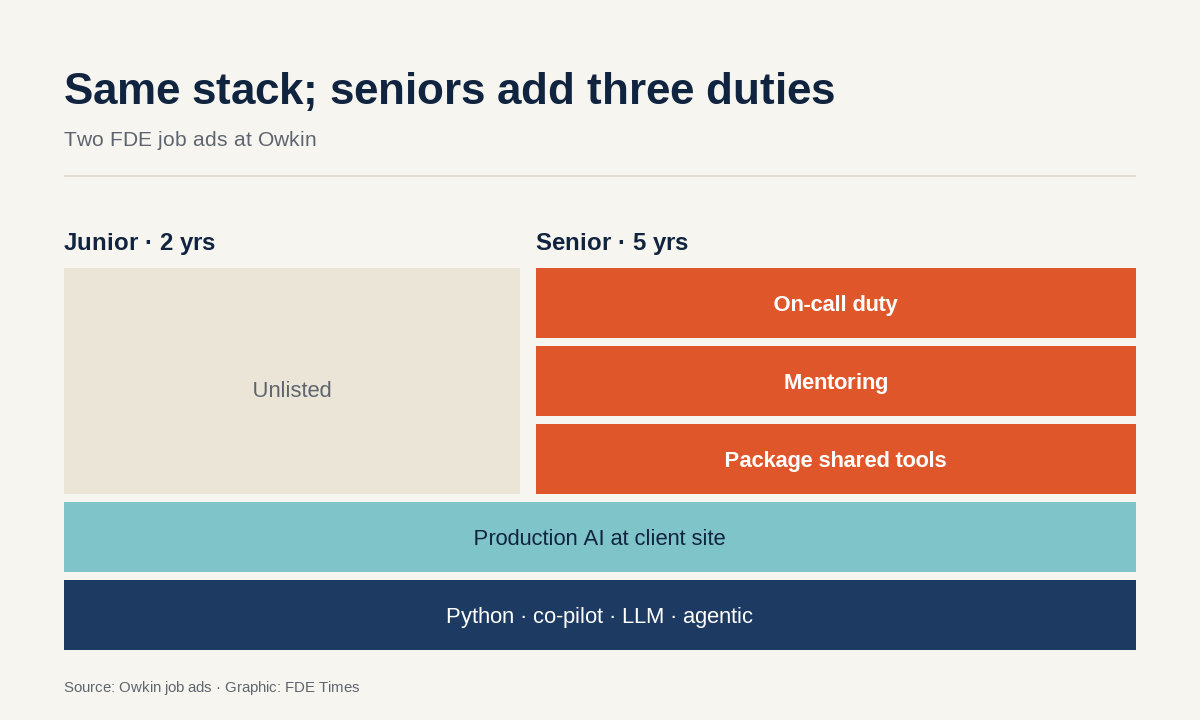
The senior posting adds three duties the junior one lacks: making solutions reusable, mentoring juniors and going on call.
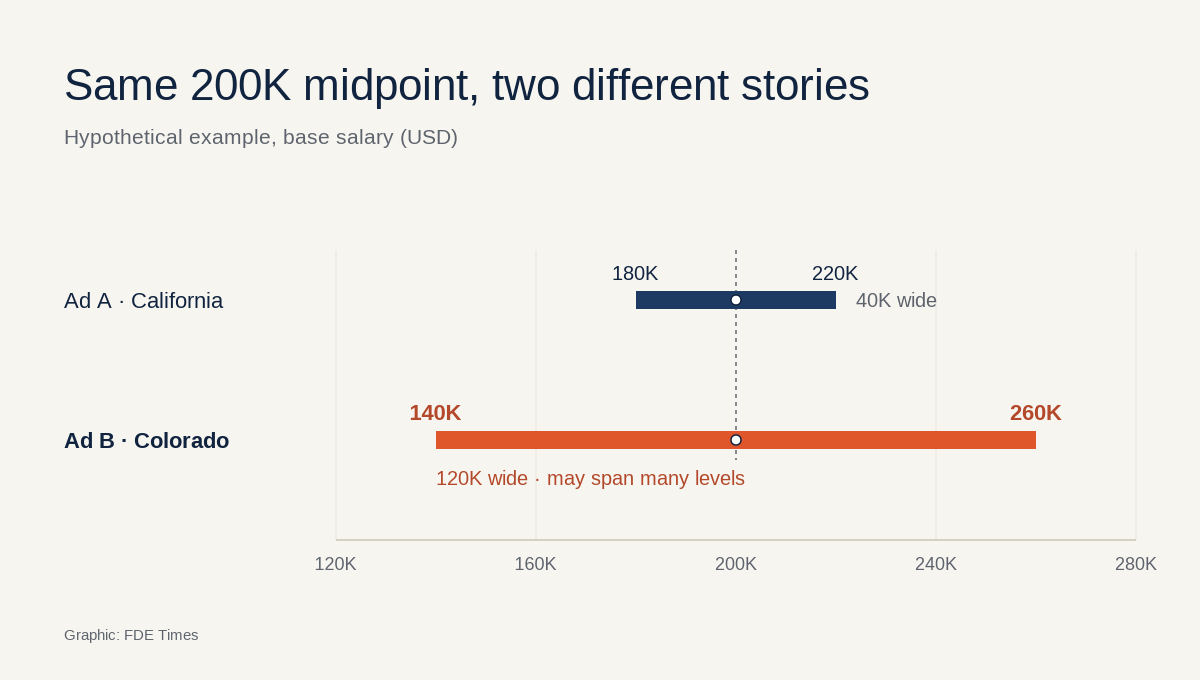
Where a range is posted, each state defines it differently, and misreading that definition can anchor your negotiation in the wrong place.
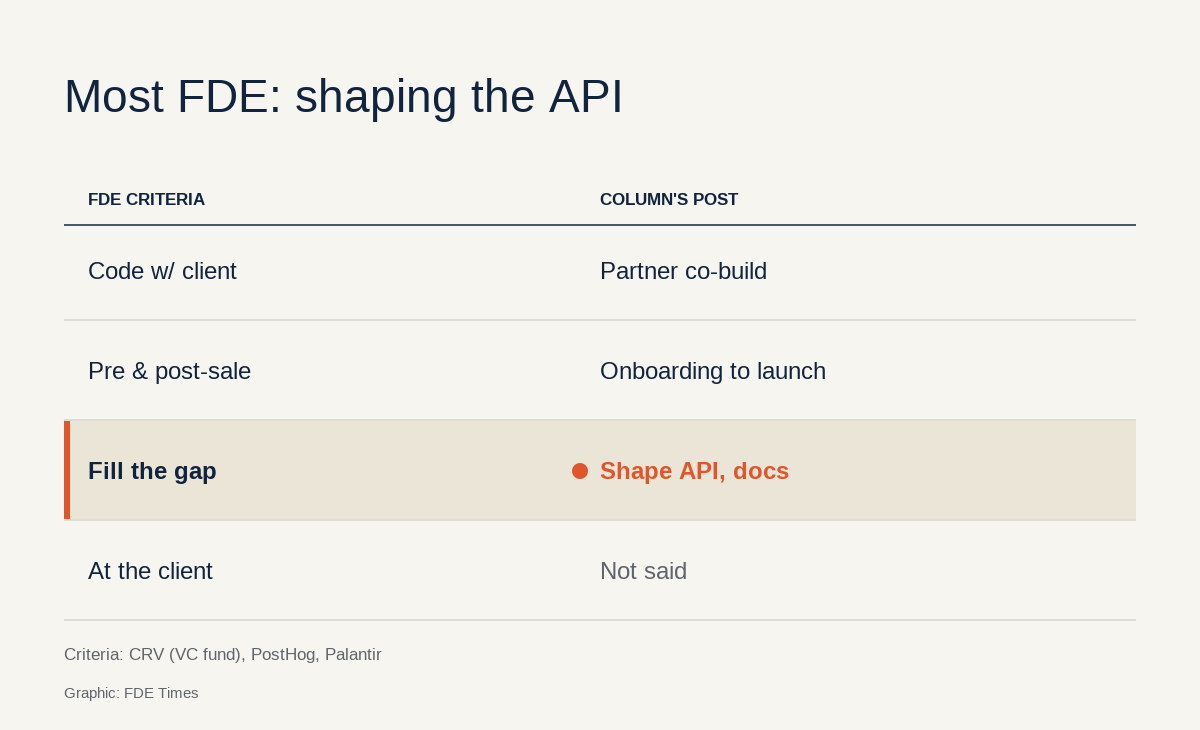
Column's API comes with a spec and a sandbox, but beneath it sits a real bank, and the integration point is the product.
One counts self-reported total pay, the other a posted base range, and quoting the wrong figure to a recruiter means underselling yourself or being screened out.
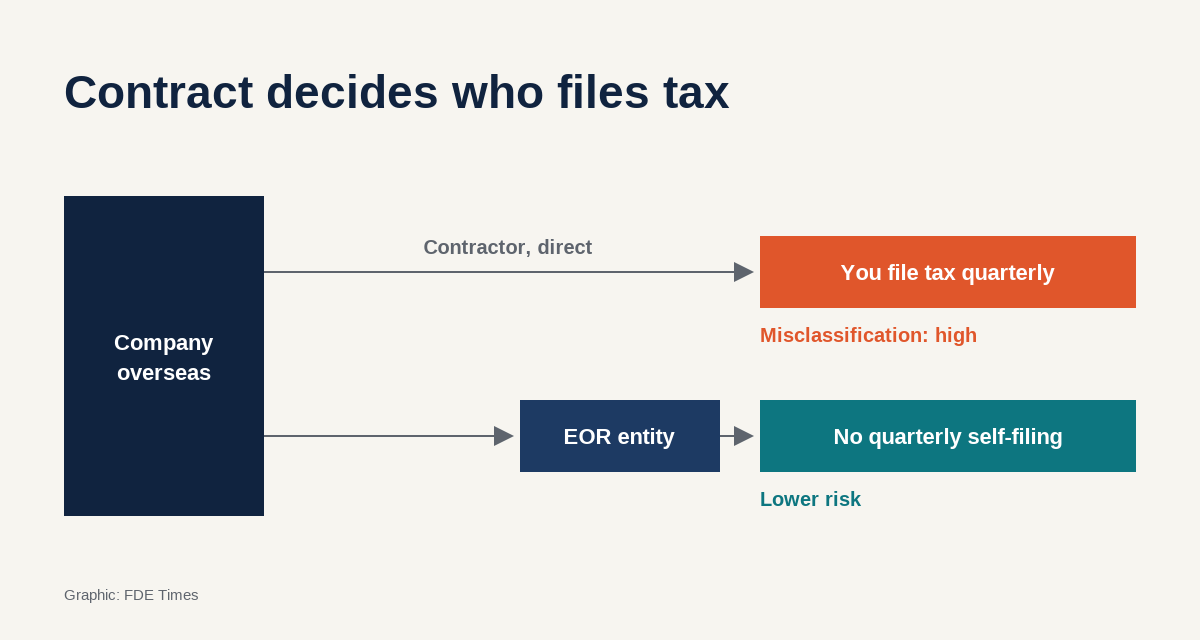
A foreign firm with no Vietnamese entity can hire you only through an EOR or as a contractor, and a new income tax law from July changes the sums.
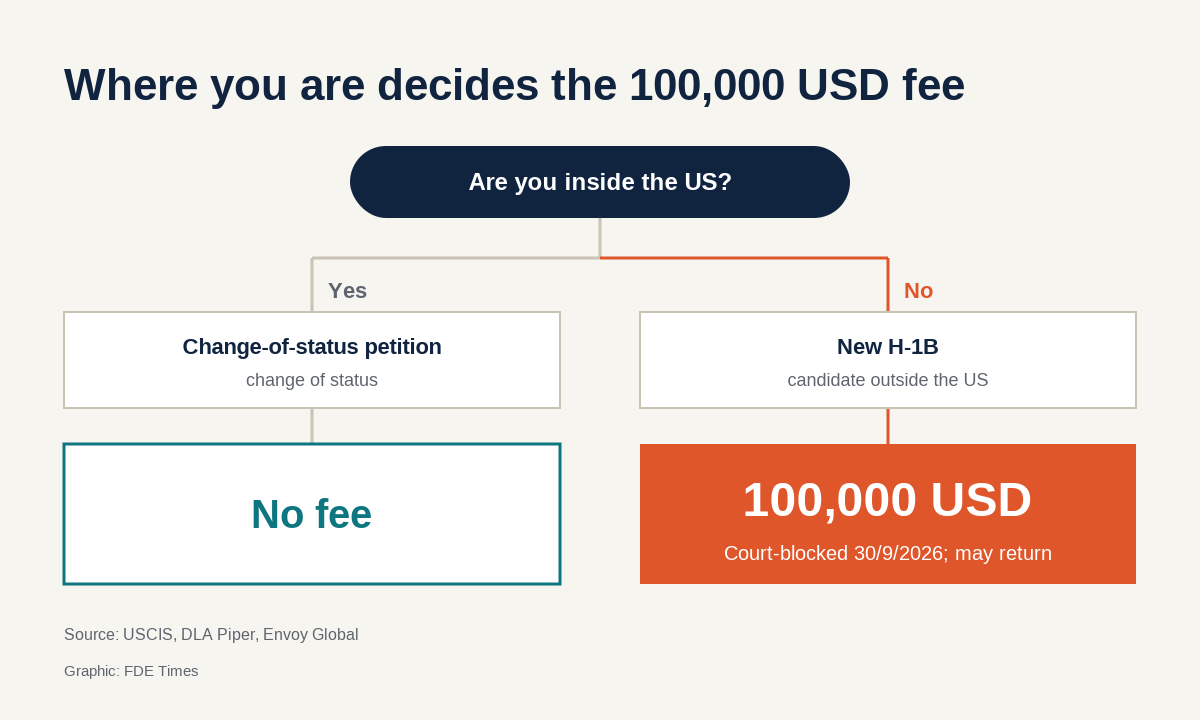
Anthropic says it sponsors, FieldAI only asks, and a $100,000 H-1B fee now makes being inside or outside the US a real hiring cost.
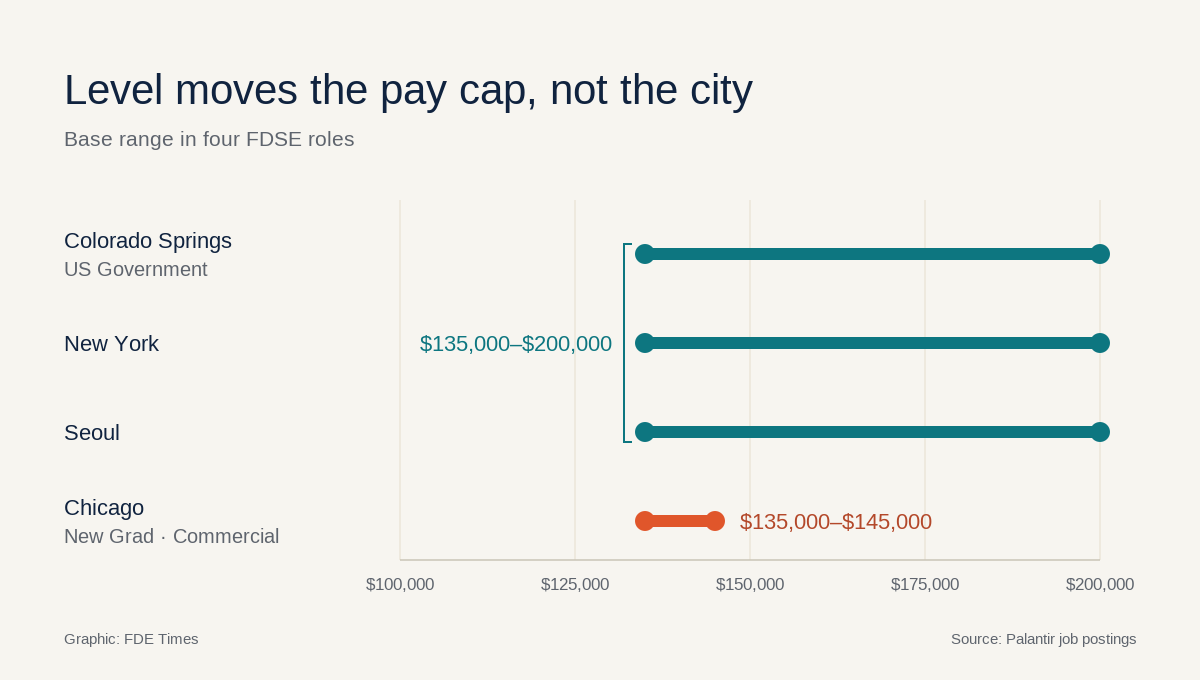
Beyond the $135,000–$200,000 base, what really moves your pay is your level, RSUs left out of the figure, and a clearance coding skill cannot buy.
The Singapore Aladdin job carries the FDE product feedback loop but sits inside the sales process, so applicants need a solutions-engineering story.
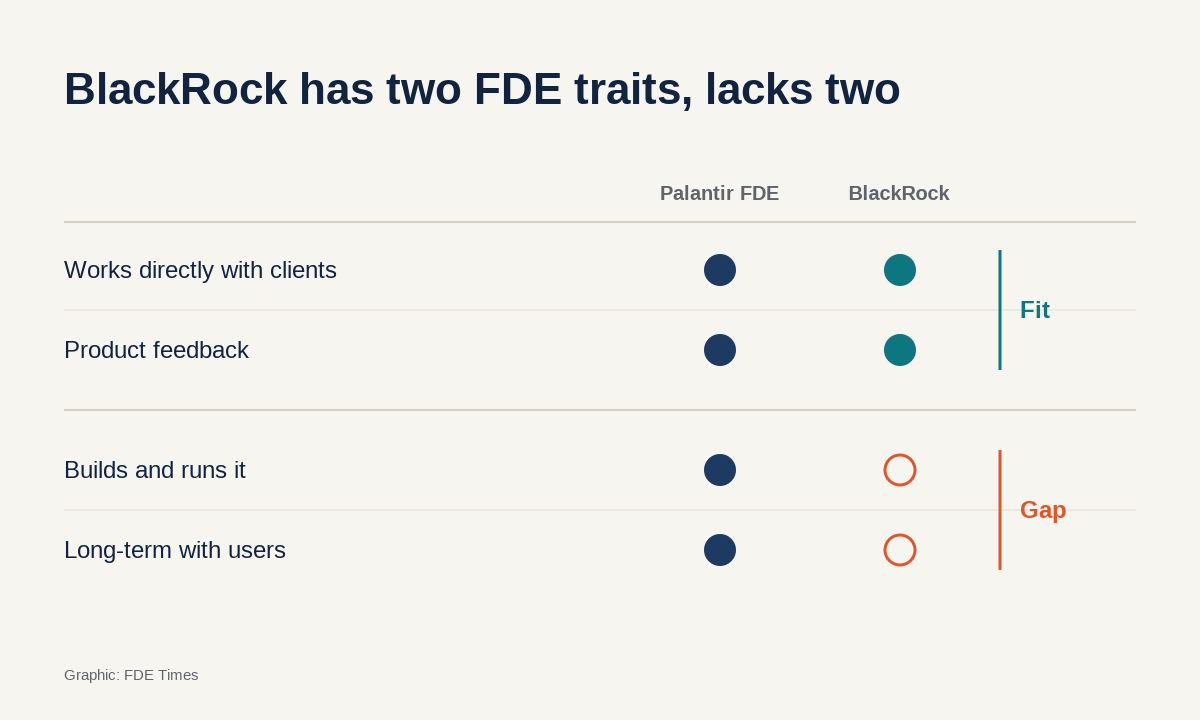
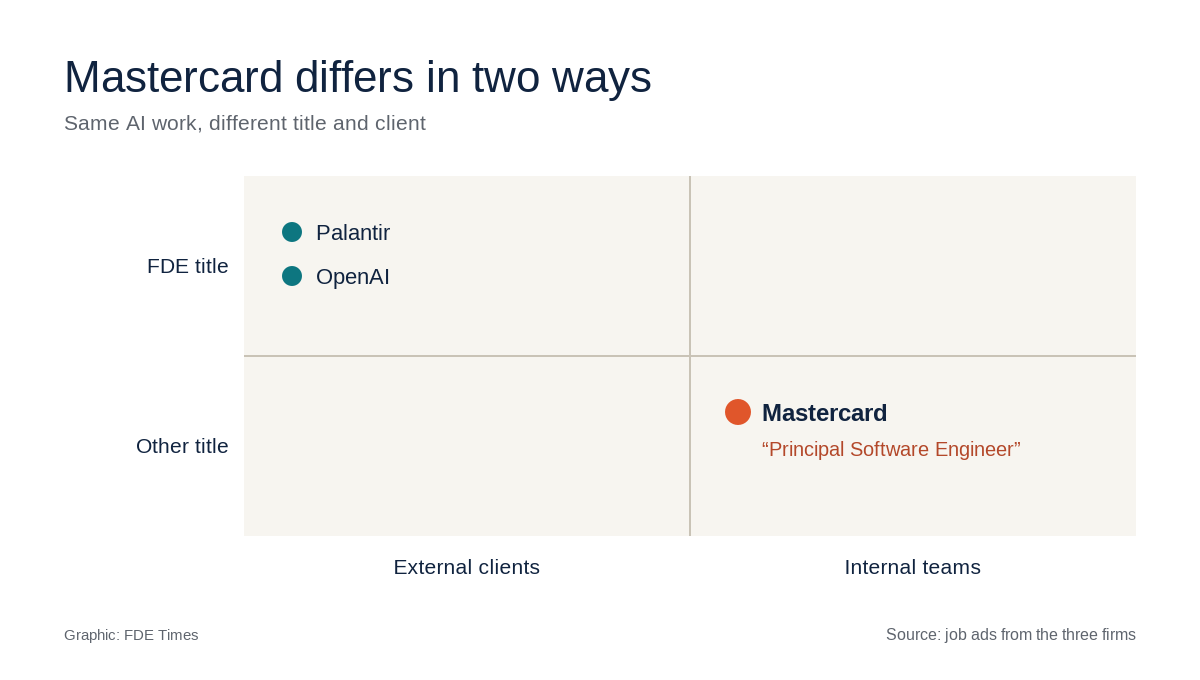
The job ad says "Principal Software Engineer", but its first sentence shows forward deployed engineering moving inside financial groups.
Most customers self-host Textual in their own VPC, so Tonic's FDEs install it, check the de-identified output and write part of the customer's report.
The headline count rose to 625 between 19 and 25 October, but only because 186 roles from 45 newly tracked companies were added.
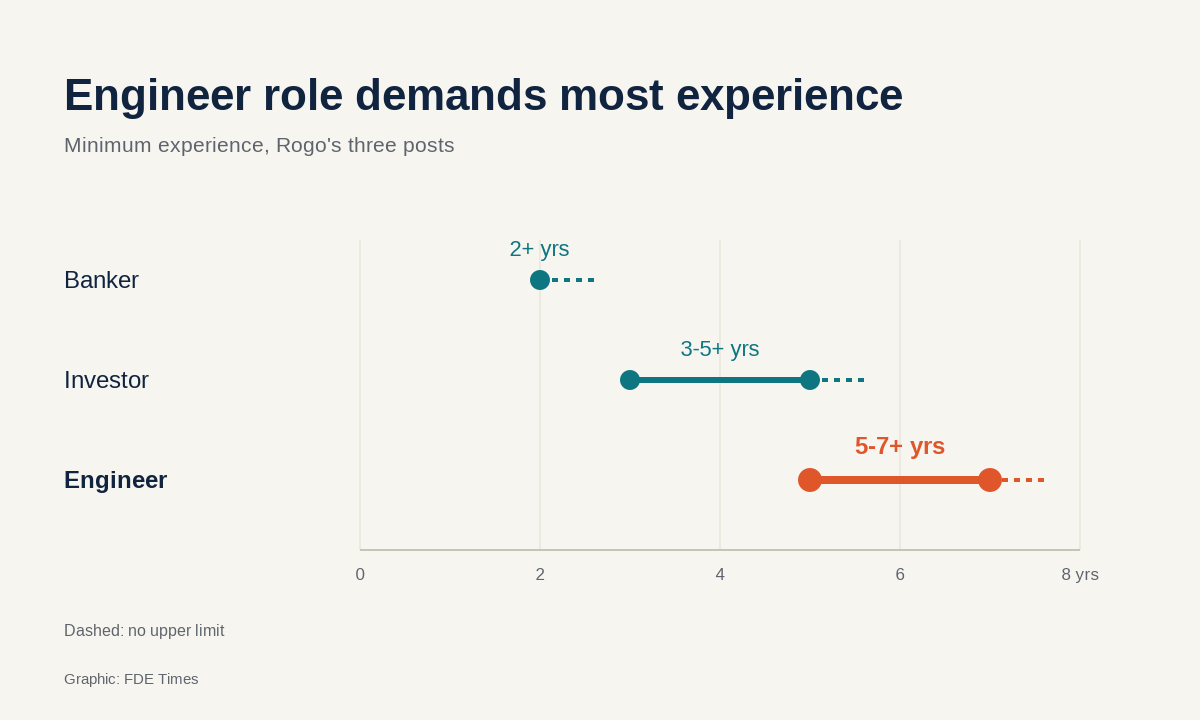
The banker and investor roles go to people from banks and funds; read only the title and you may rehearse demos for an infrastructure job.
What they build for strategic customers ships in Glean's product, which is why strong implementation experience alone will not clear the hiring bar.
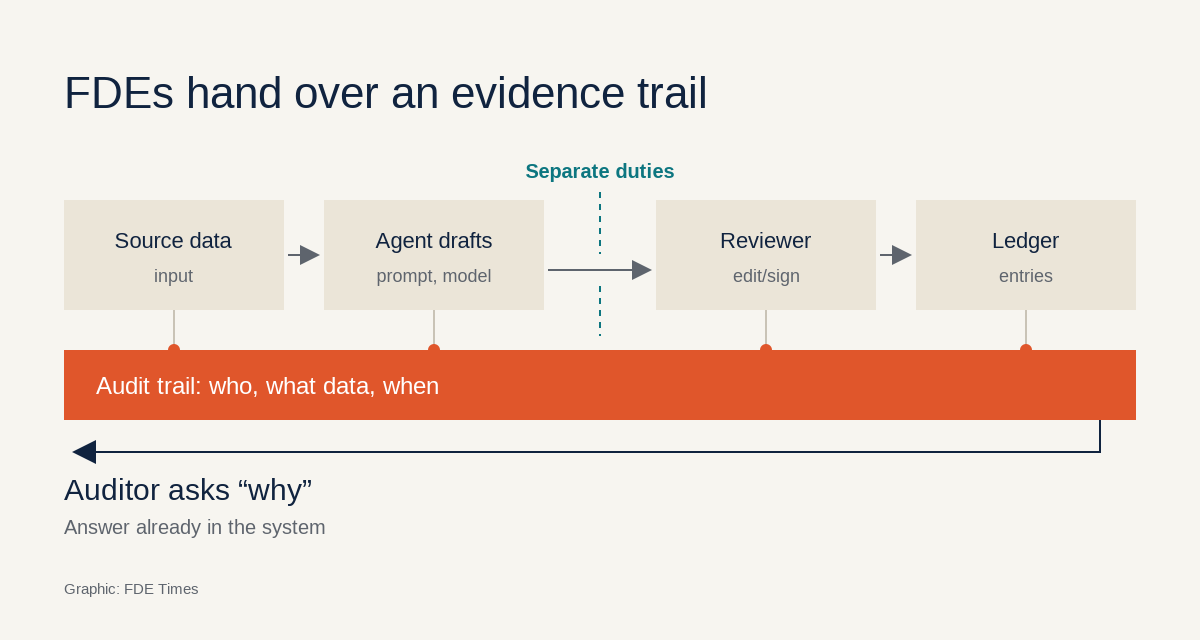
Two postings nine days apart, after a 14% layoff, demand agents whose every output can be explained to someone with the power to reject it.
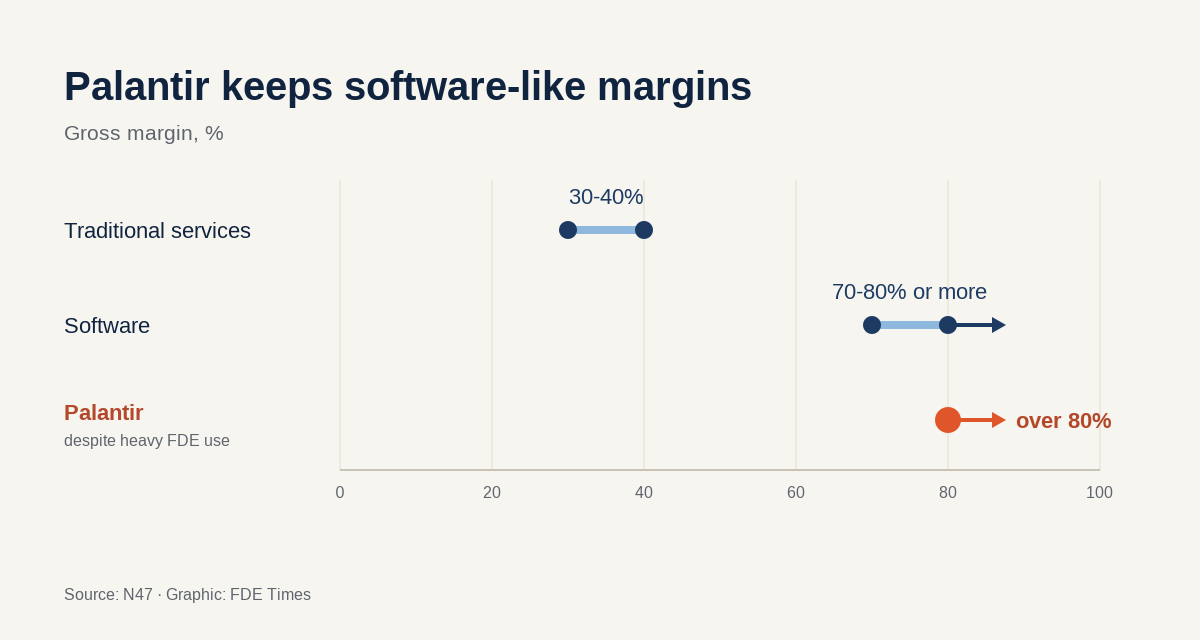
Services earn 30-40% gross margins against software's 70-80%, so the real question is whether field work leaves the product stronger.
From mid-level to Senior, judging LLM output for legal accuracy weighs as much as building RAG pipelines and agents.
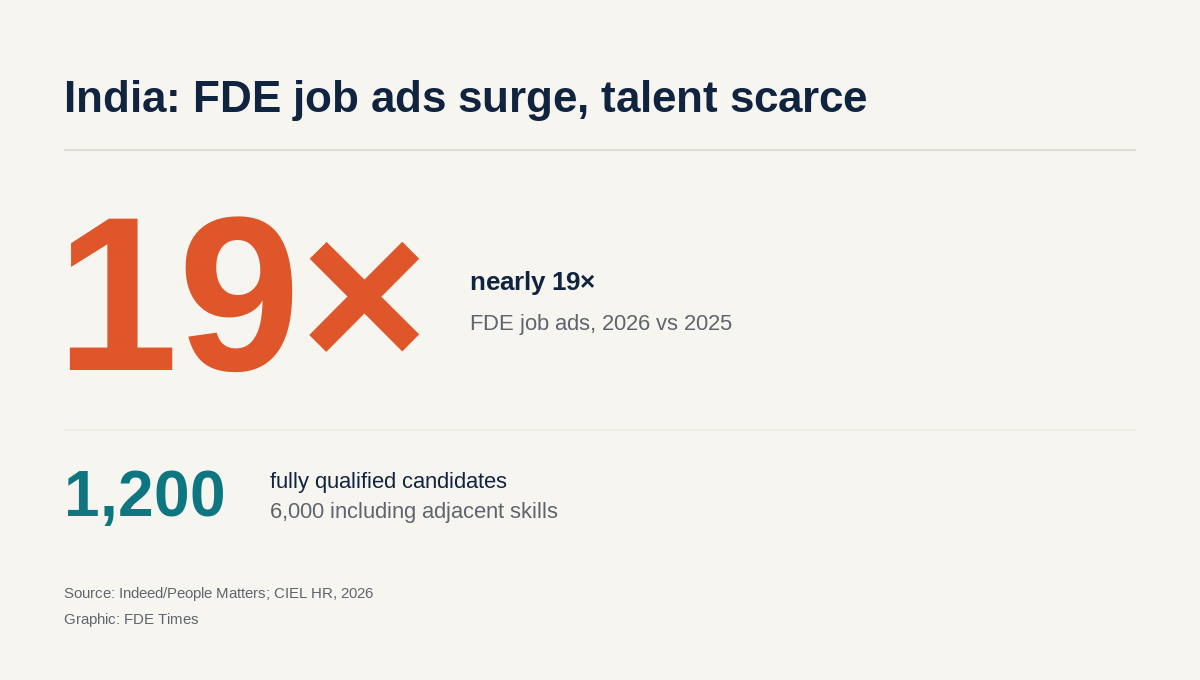
Employers are not lowering the bar wholesale: one Bengaluru listing takes one to three years and LLM side projects, while senior roles demand specific proof.
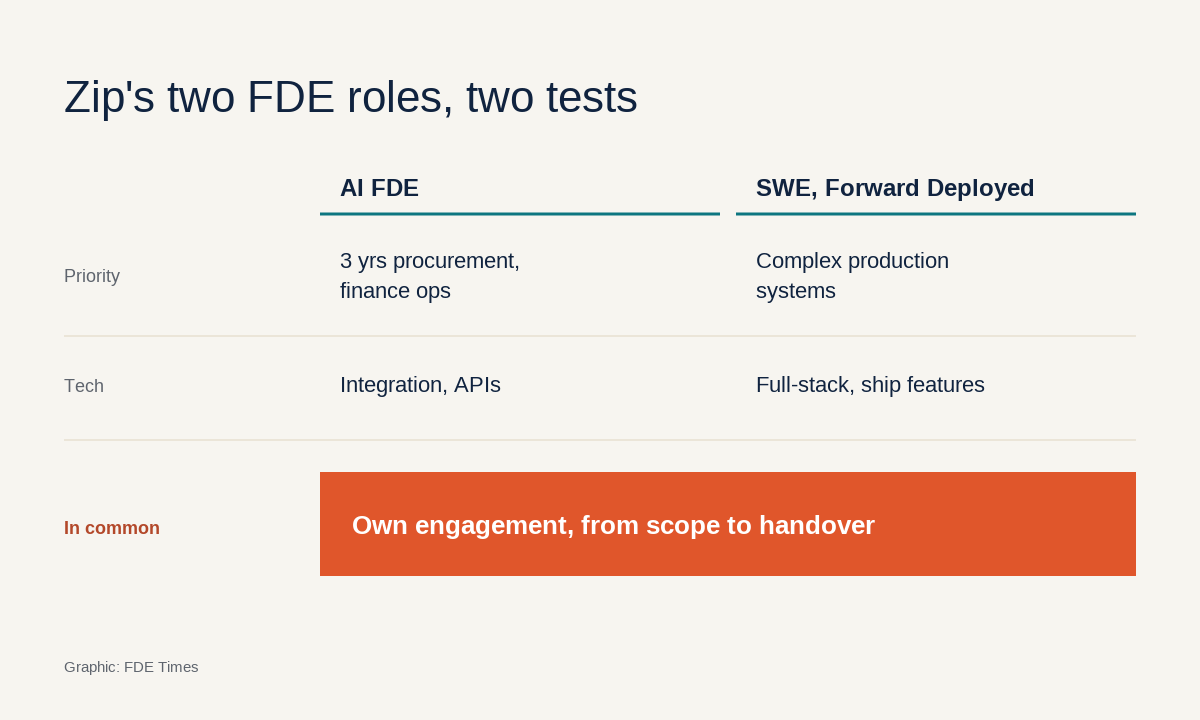
The AI role wants at least three years in procurement or finance operations; the software role wants complex production systems you have actually shipped.
Whichever you apply for, unofficial guides say the case study round checks whether you question the customer before designing anything.
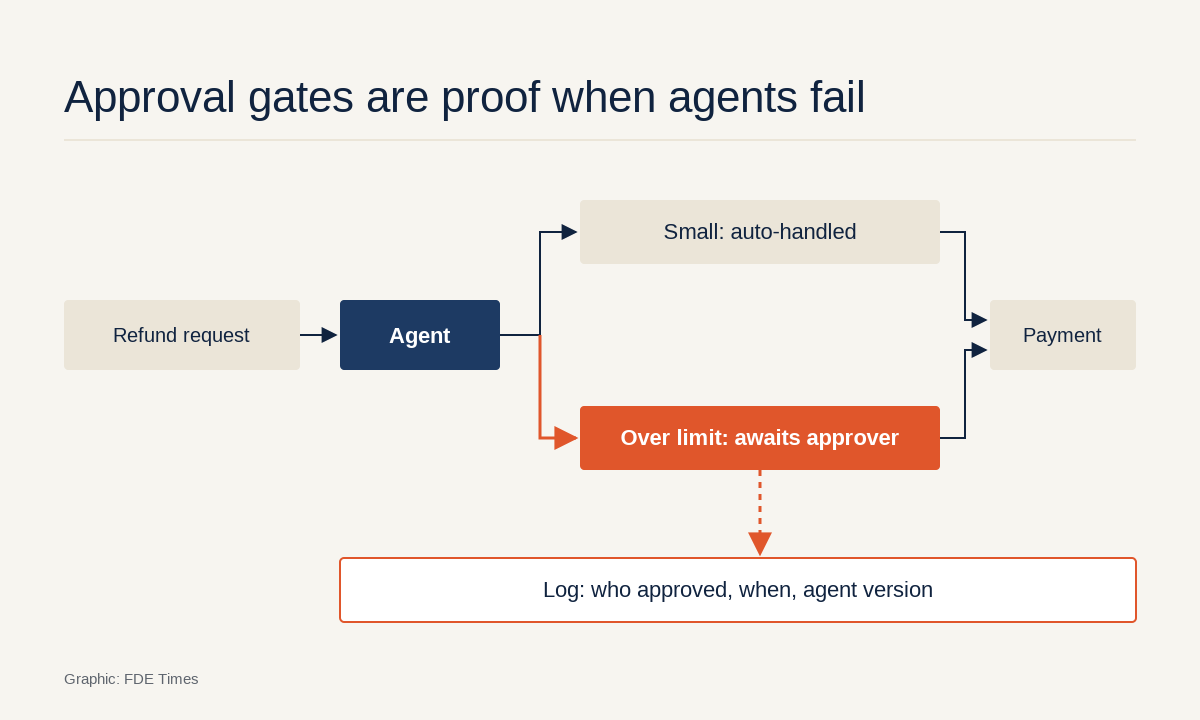
After the Air Canada chatbot ruling and the Workday lawsuit, the approval gates and logs that FDEs build are becoming evidence when disputes arise.
The round tests whether candidates grasp why a product is worth paying for, which calls for different preparation than rehearsing a slick sales pitch.
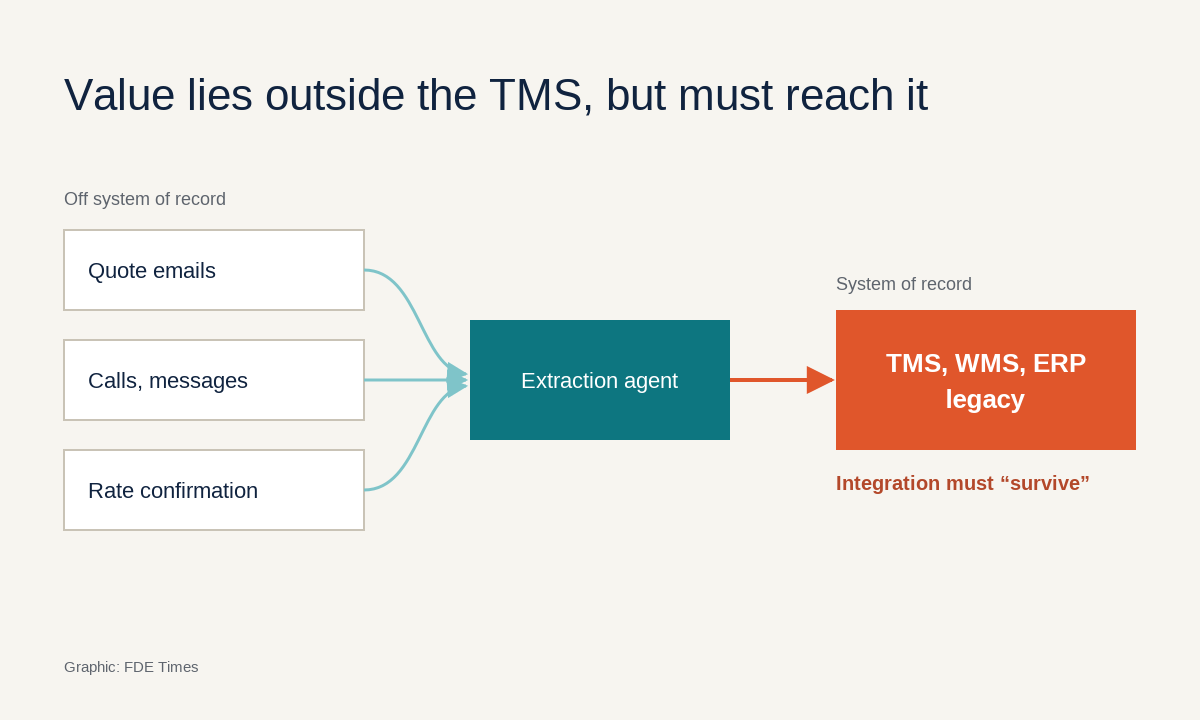
Loadsmart, Vooma and Augment want engineers who integrate with client systems, yet the data still arrives as carrier emails and paperwork typed in by hand.
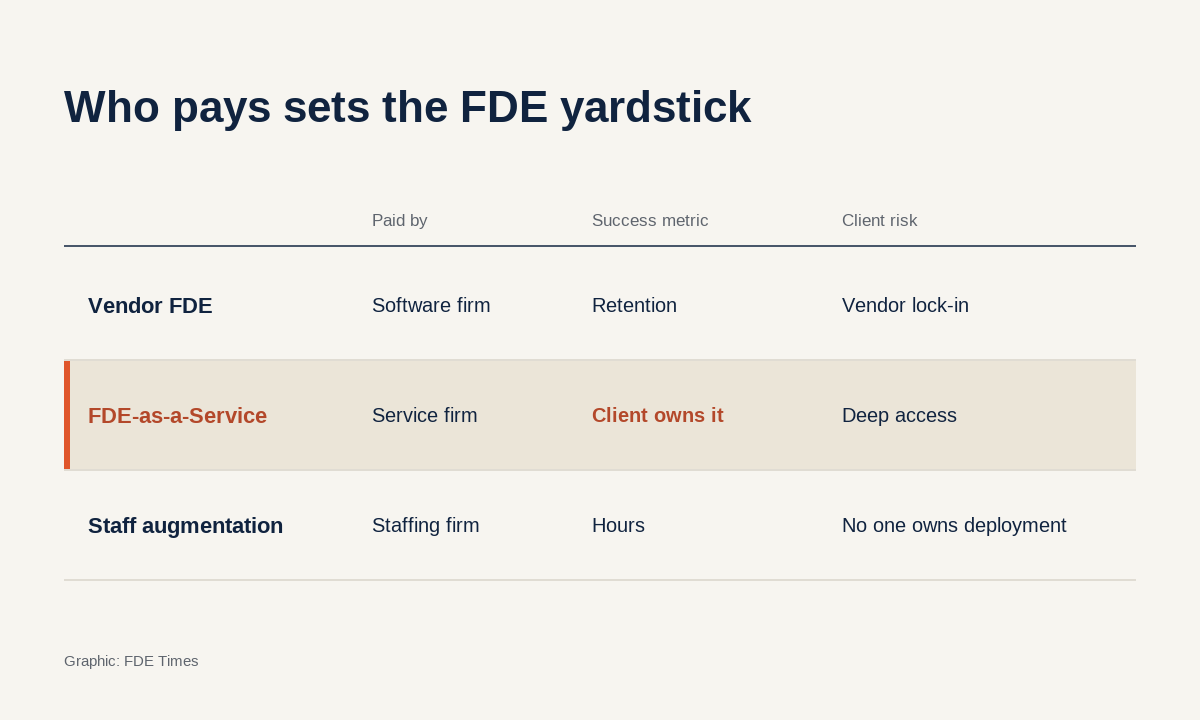
Firms such as &above and Entrans now rent out FDEs, and different payers judge the same title by almost opposite measures.
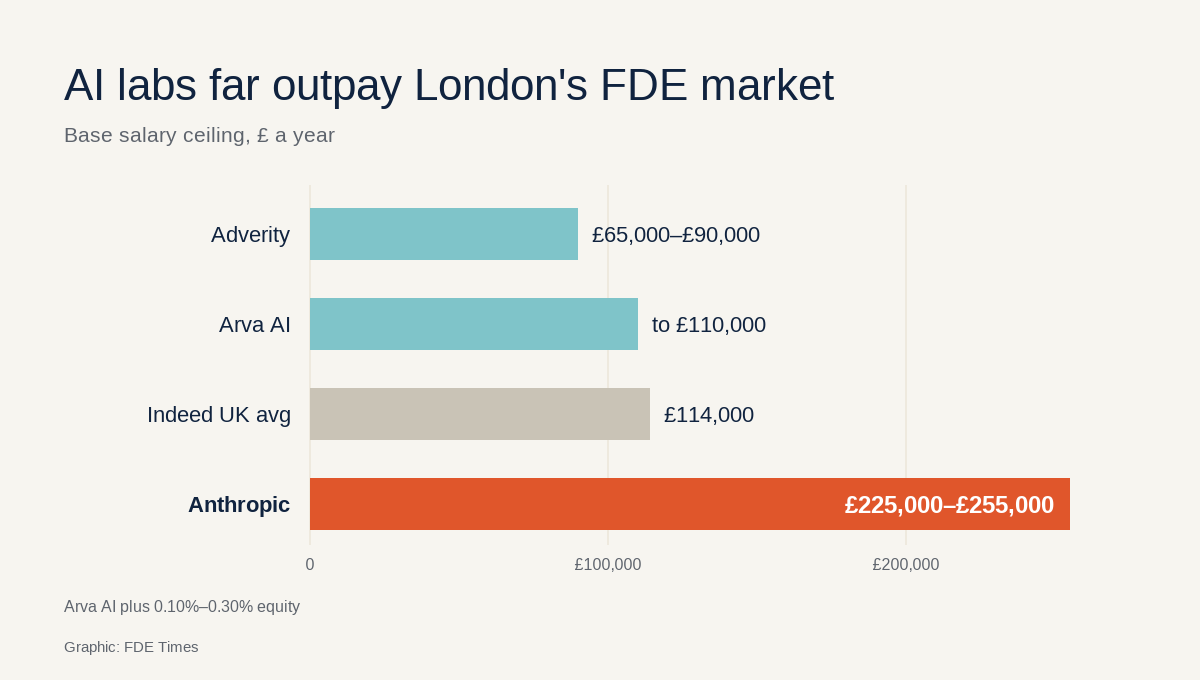
Across three ads, the nearly fourfold gap tracks the client work, office days and equity attached rather than the title itself.
Only 8% of FDE ads seek Staff+ experience, and at that level reviewers judge the customer ambiguity you absorb and the knowledge you bring back.
Only one ad checked lists a salary, and a staffing firm's S$7,000–25,000 monthly range is borrowed from machine learning engineers.
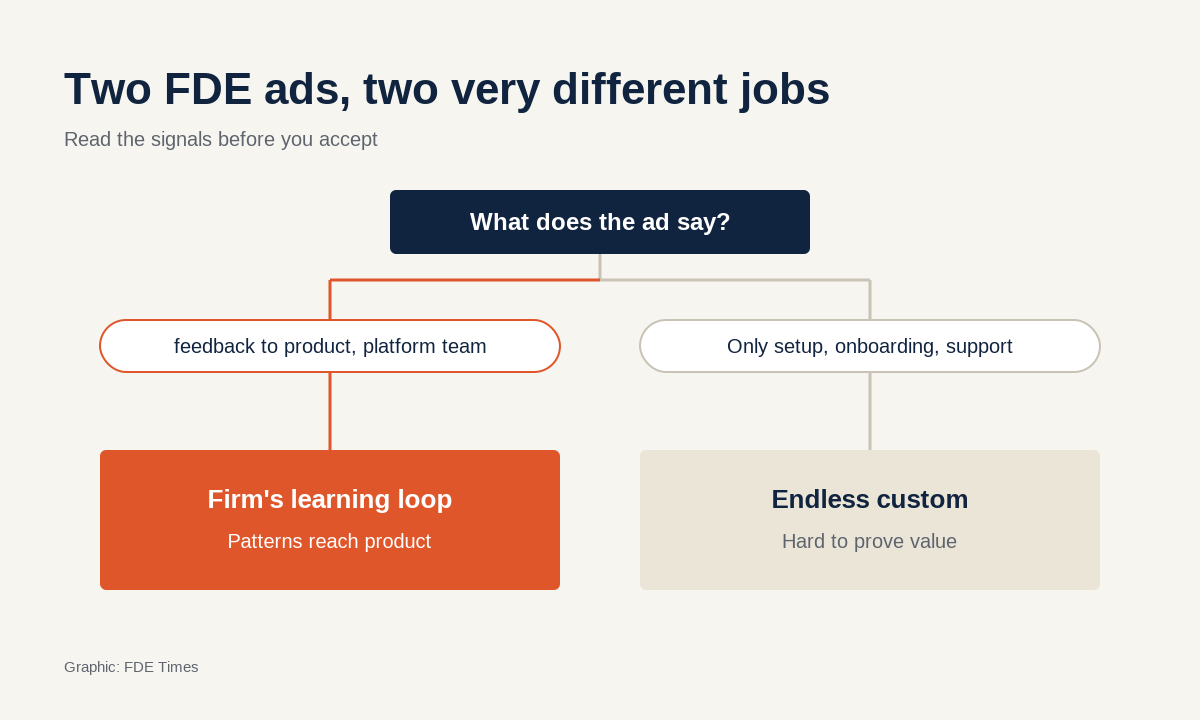
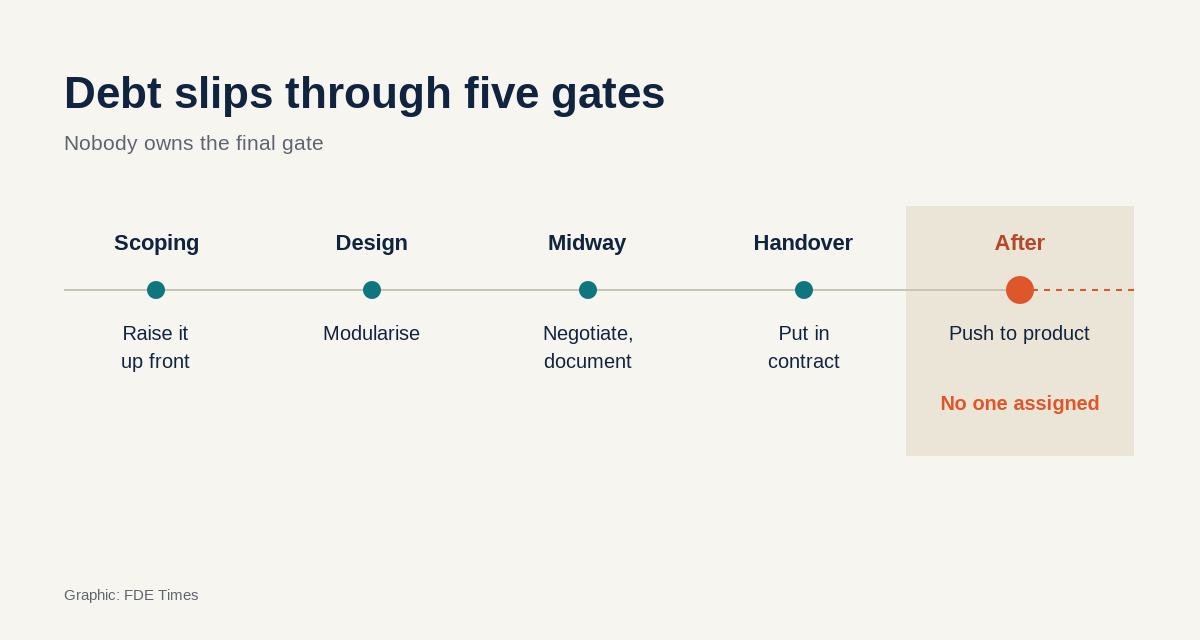
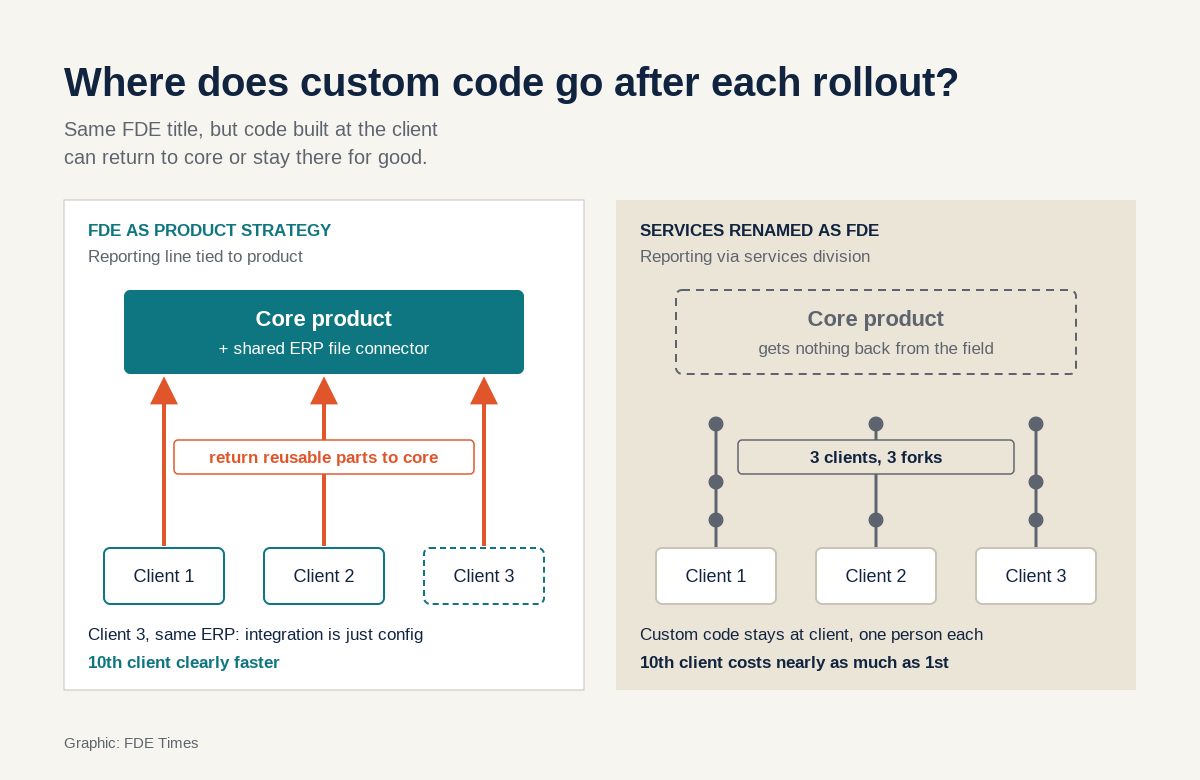
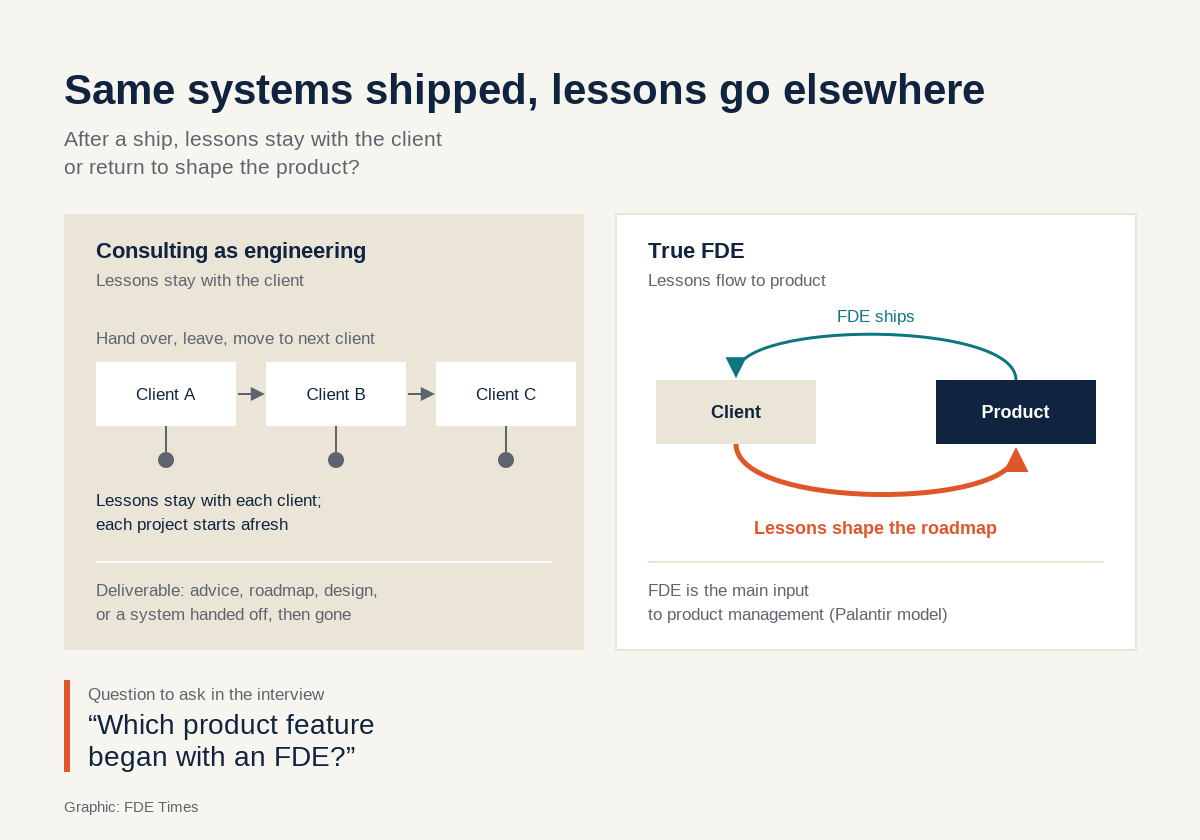
Custom code keeps running after handover, and whether it ever reaches the product shows if you joined a product company or a consultancy in disguise.
Strip out one newly tracked company and real growth in the week to 18 October was four roles, with 53 companies hiring at both ends.
ServiceNow and Workday accepted thin margins at IPO and won them back; the test is whether lessons from the field flow back into the product.
Equity may now make up 55-70% of top FDE pay, so treat any offer without the fully diluted share count as unfinished.
OpenAI's UAE role pairs three office days a week with up to 50% travel, while Indian postings promise on-site work without saying how much.
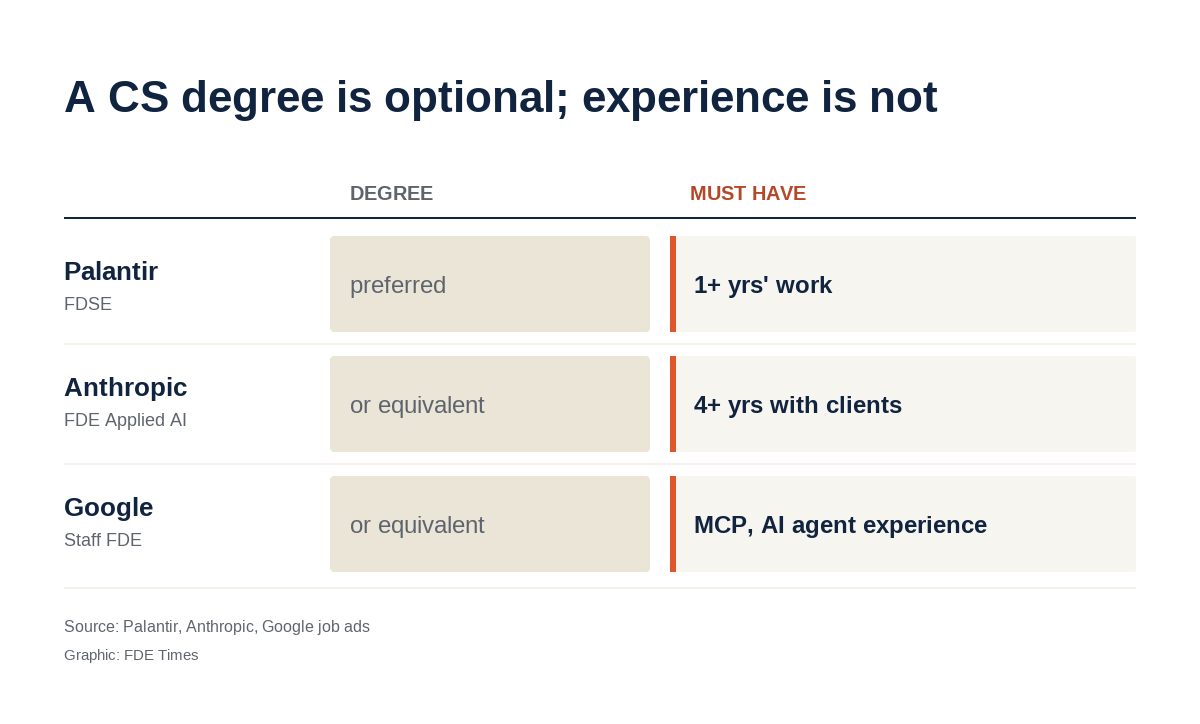
Anthropic and Google accept equivalent experience and Palantir lists fields only as preferred, so the real question is what replaces the degree on your CV.
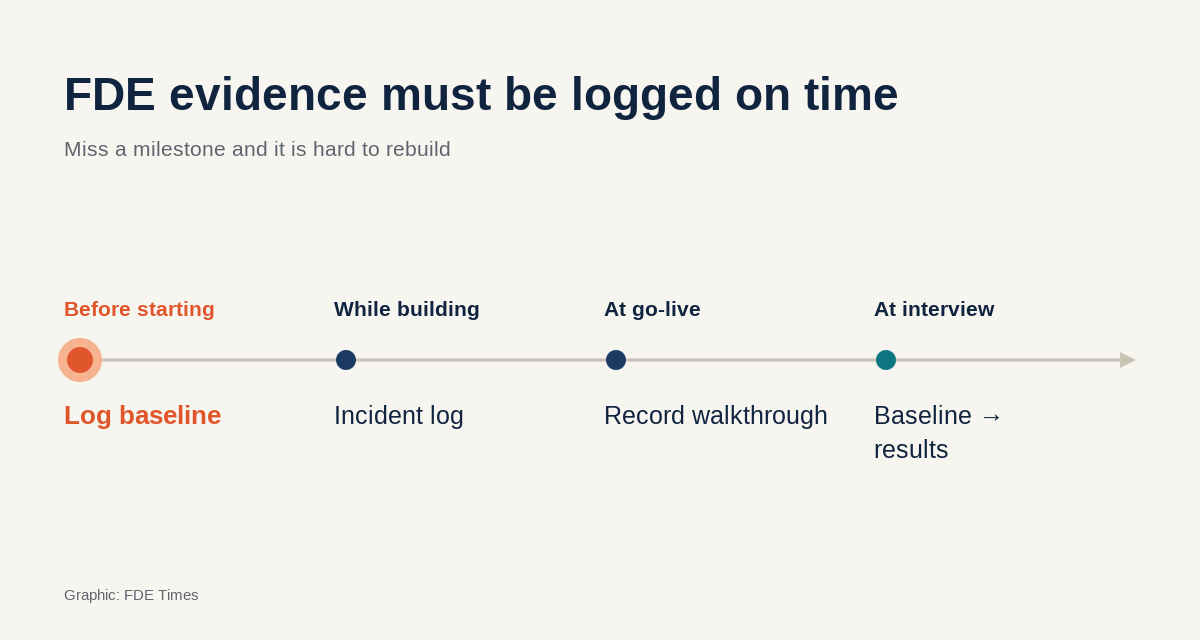
Four hiring guides are written for employers, but they reward candidates who began documenting their client work months before the interview.
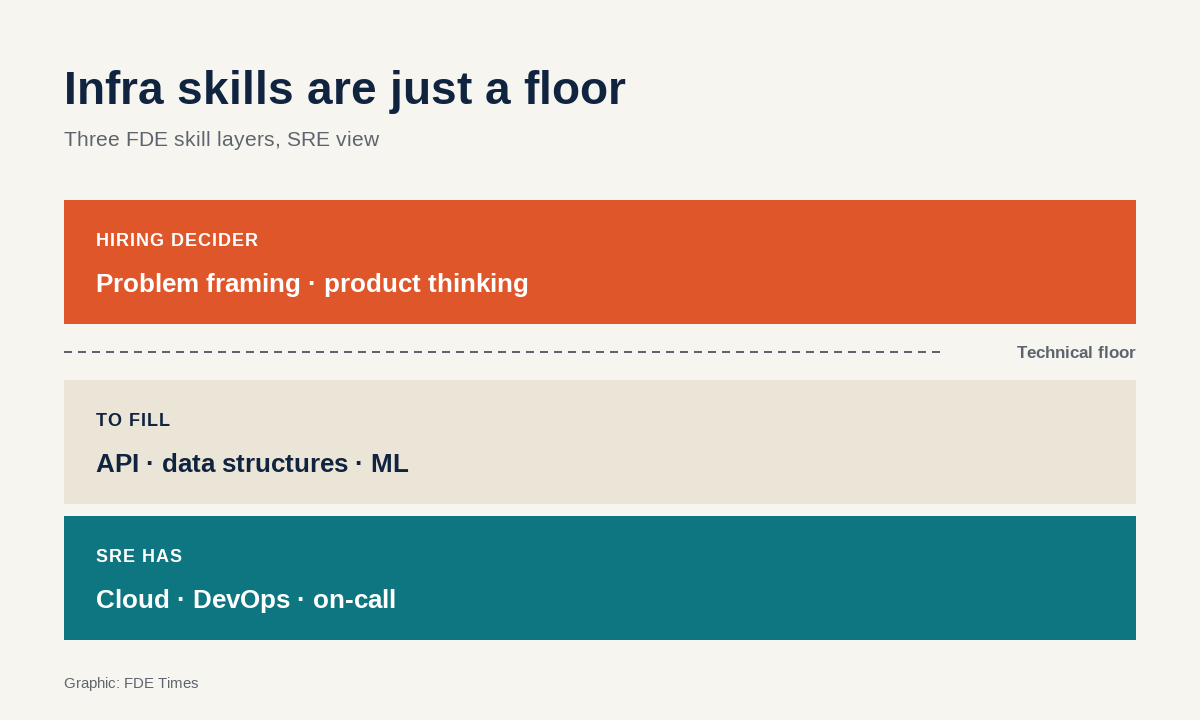
Incident work, observability and cloud carry over; the gaps are APIs, data structures, ML and becoming the client's trusted technical adviser.
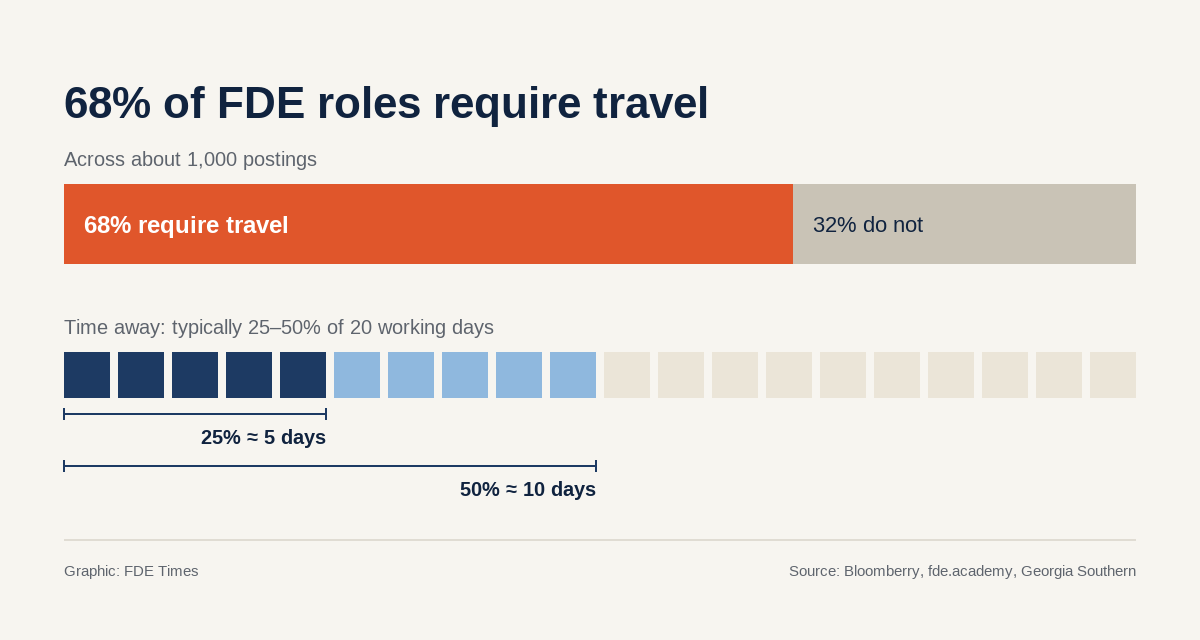
In Bloomberry's study of about 1,000 postings, the travel figure shapes your working week more, and at top AI labs much of the pay is equity.
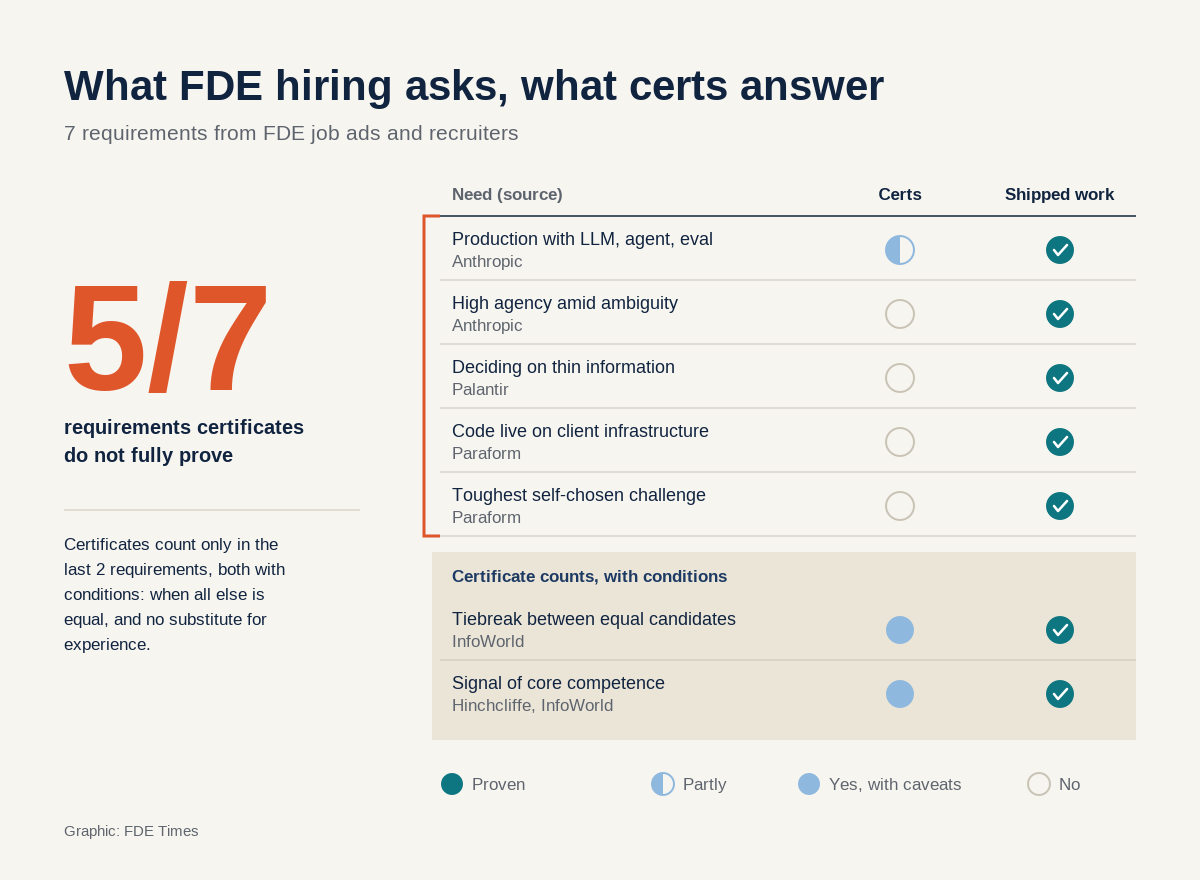
Extra weeks of study do not turn into years of experience. Aimed at the right hiring tier, though, they can build the evidence recruiters actually check.
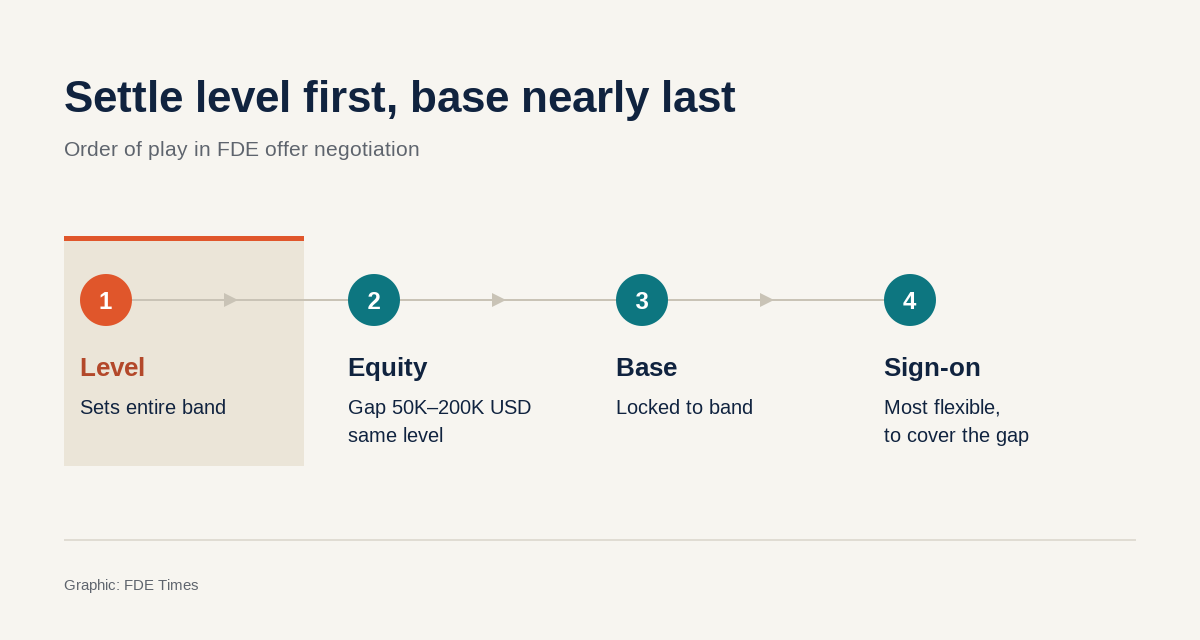
Base clusters near $195K and is capped by level, while equity at the same level can differ by $50K to $200K, so settle the level first.
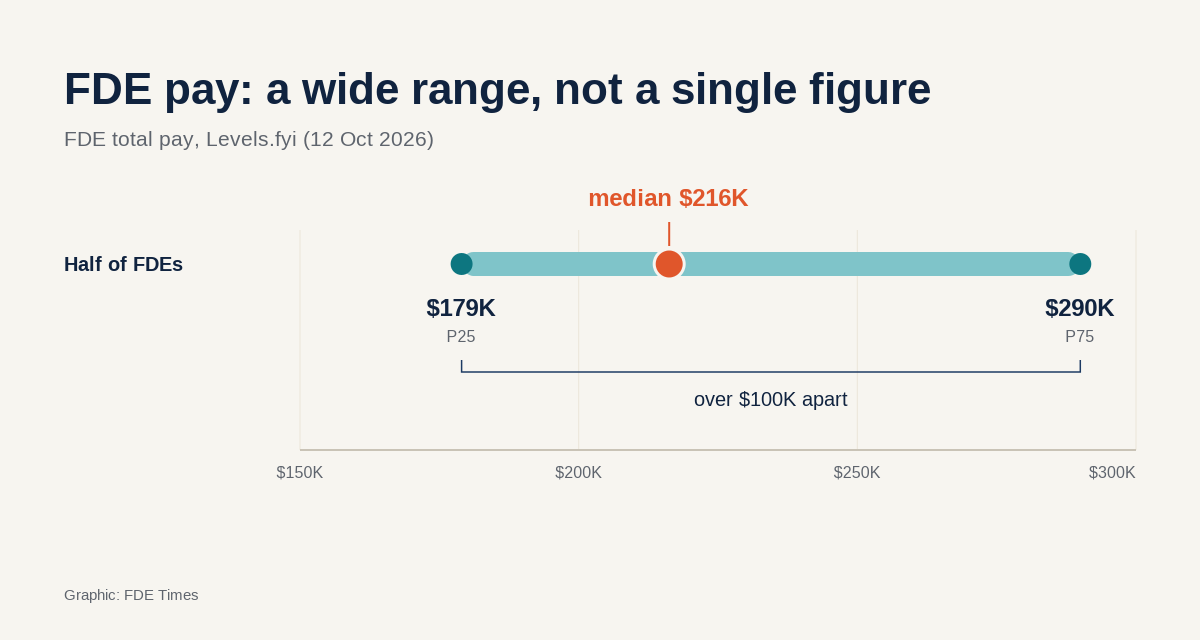
Levels.fyi puts median FDE pay at $216,250; the bigger danger is letting coding skills fade and leaving no record of what you actually built.
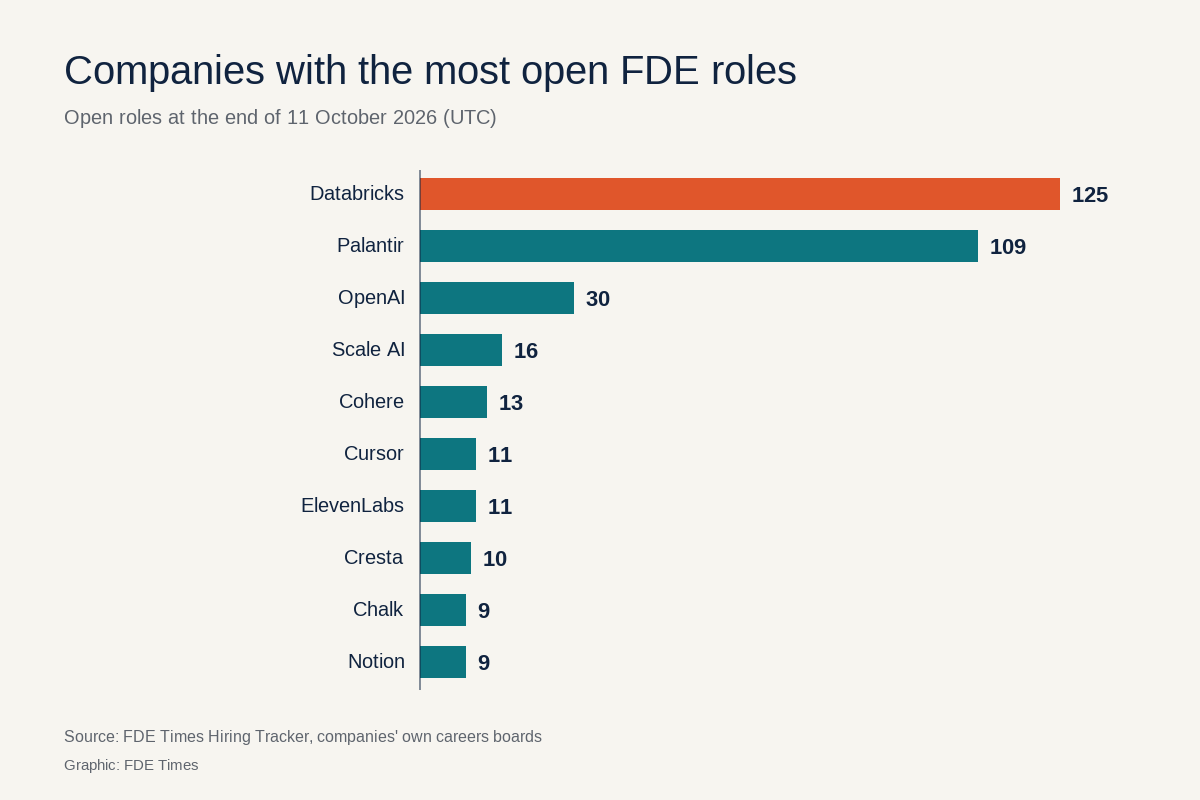
Set aside the 145 roles from newly tracked careers boards, and the count of open Forward Deployed Engineer roles changed by -8 between 7 October and 11 October 2026.
Palantir and Anthropic value customer experience, but their job ads set Python and shipped production applications beside it as hard requirements.
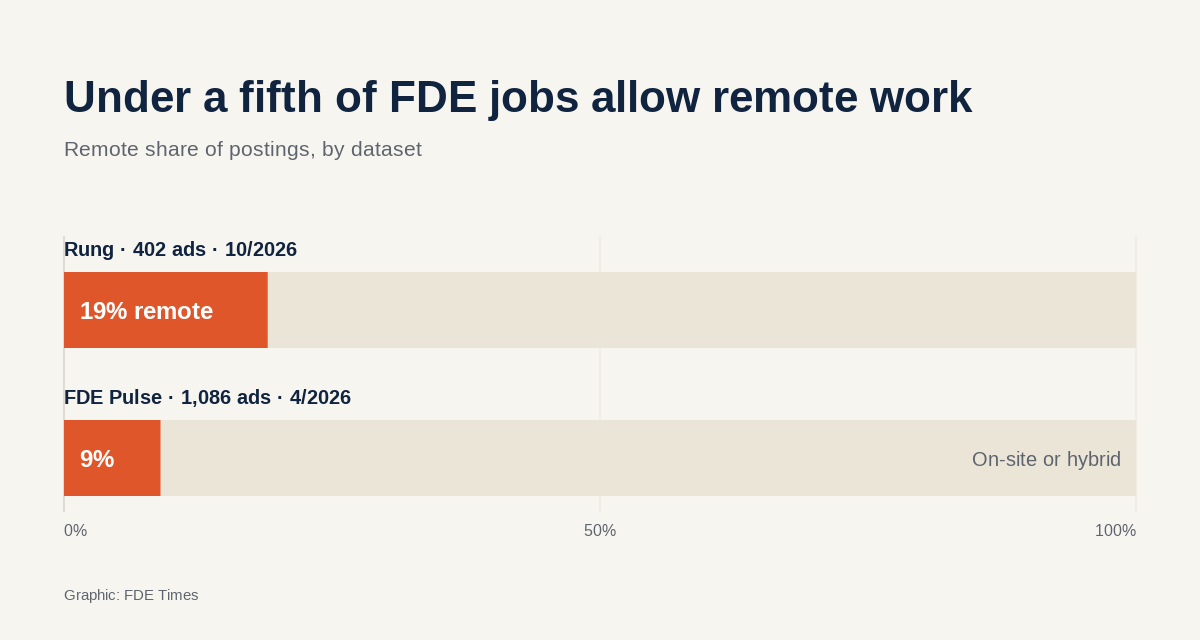
Two trackers put the remote share at 9% and 19%, while 80% of the ads Rung collected mention travel or on-site work.
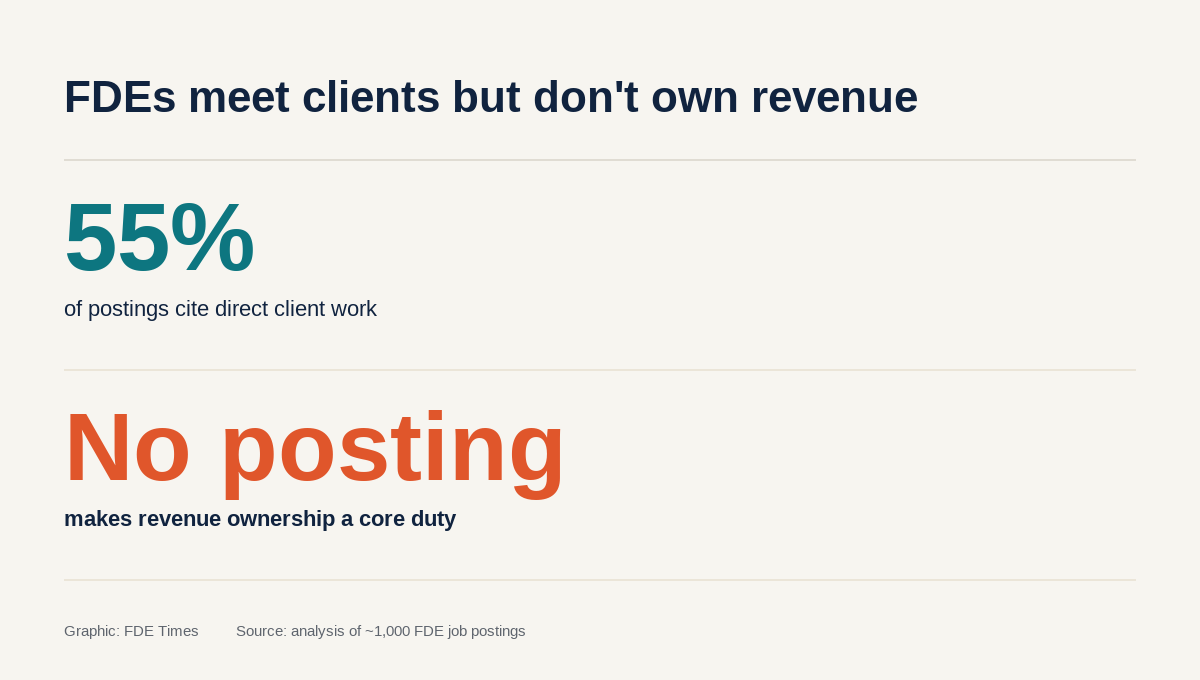
That gap separates the FDE from the customer success engineer: one builds the first deployment, the other keeps the customer using it.
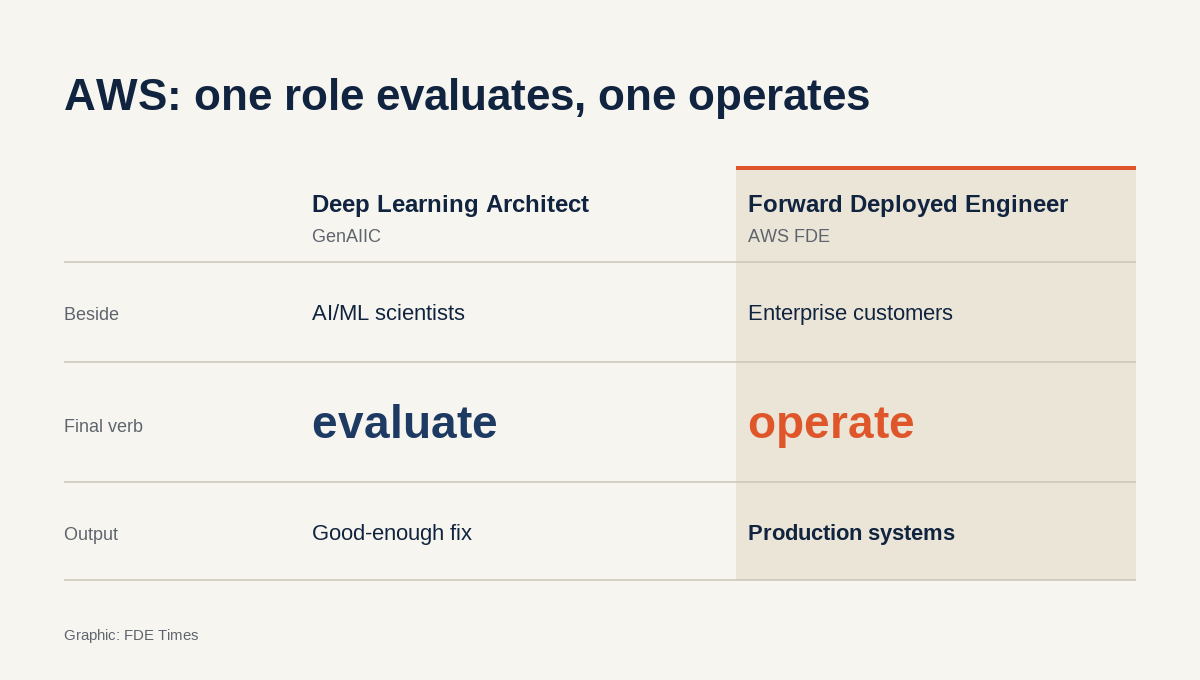
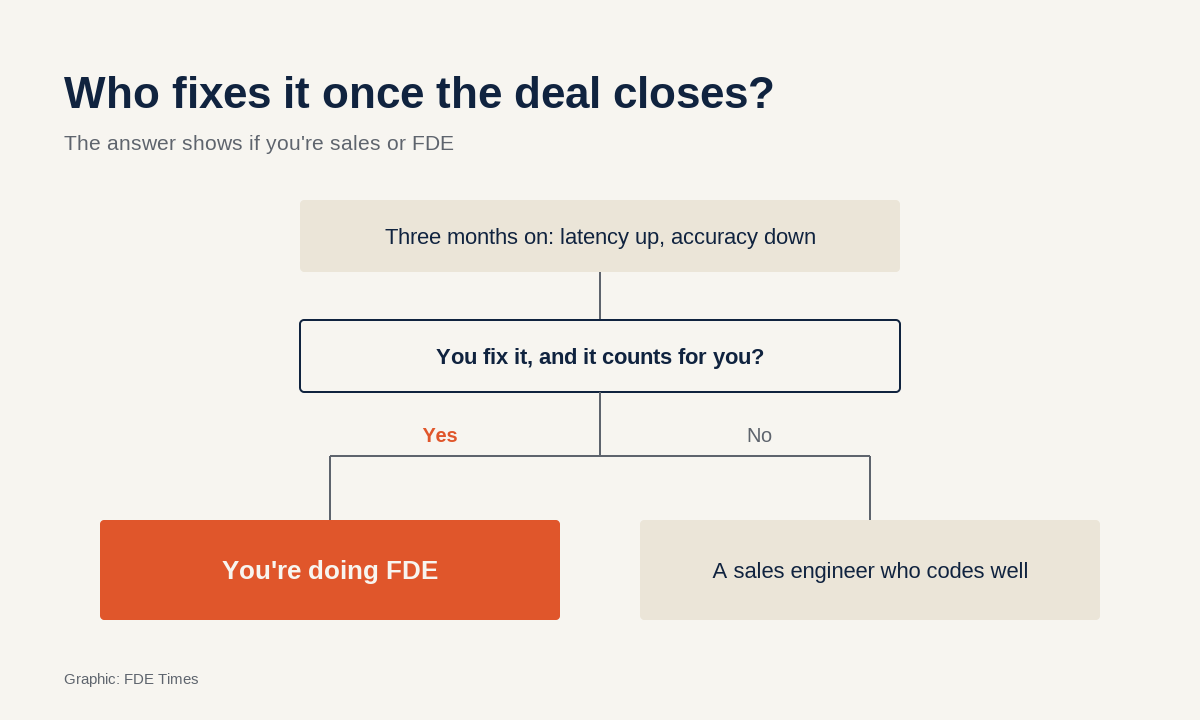
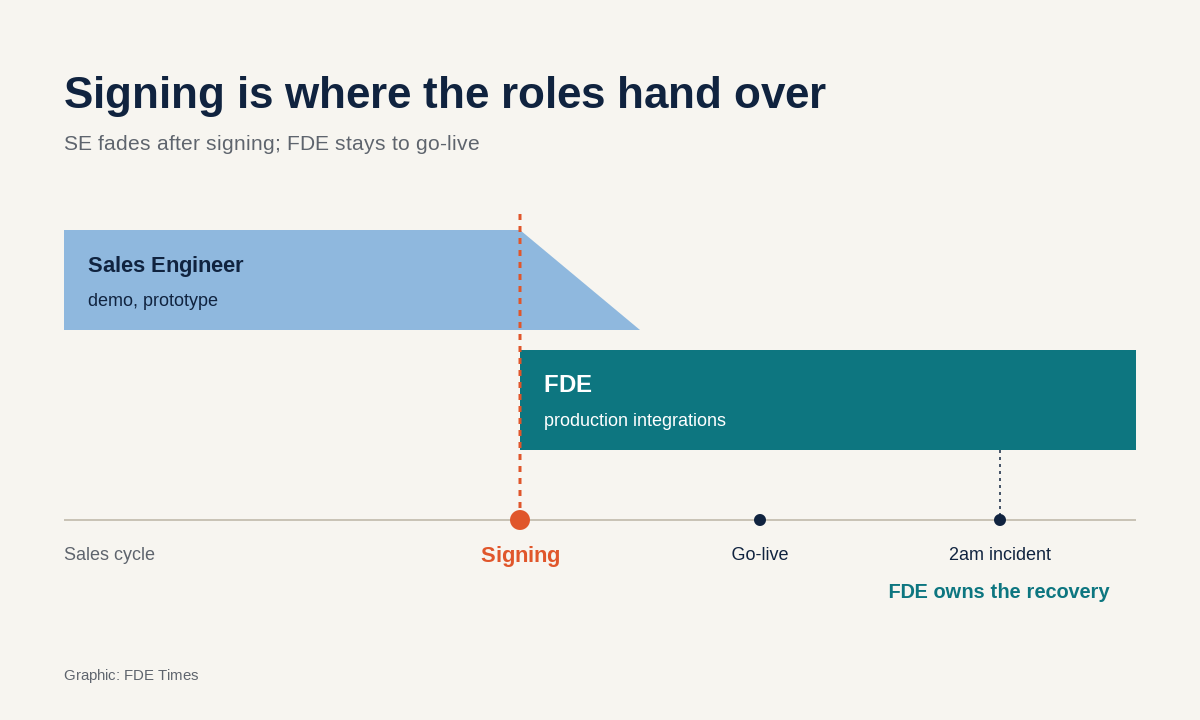
The line falls at the signed contract: sales engineers prove the product fits the problem, while forward deployed engineers own the system once it is running in production.
Newly tracked boards at 35 companies added 131 roles; on boards already tracked, 12 roles closed and only 3 new ones appeared.
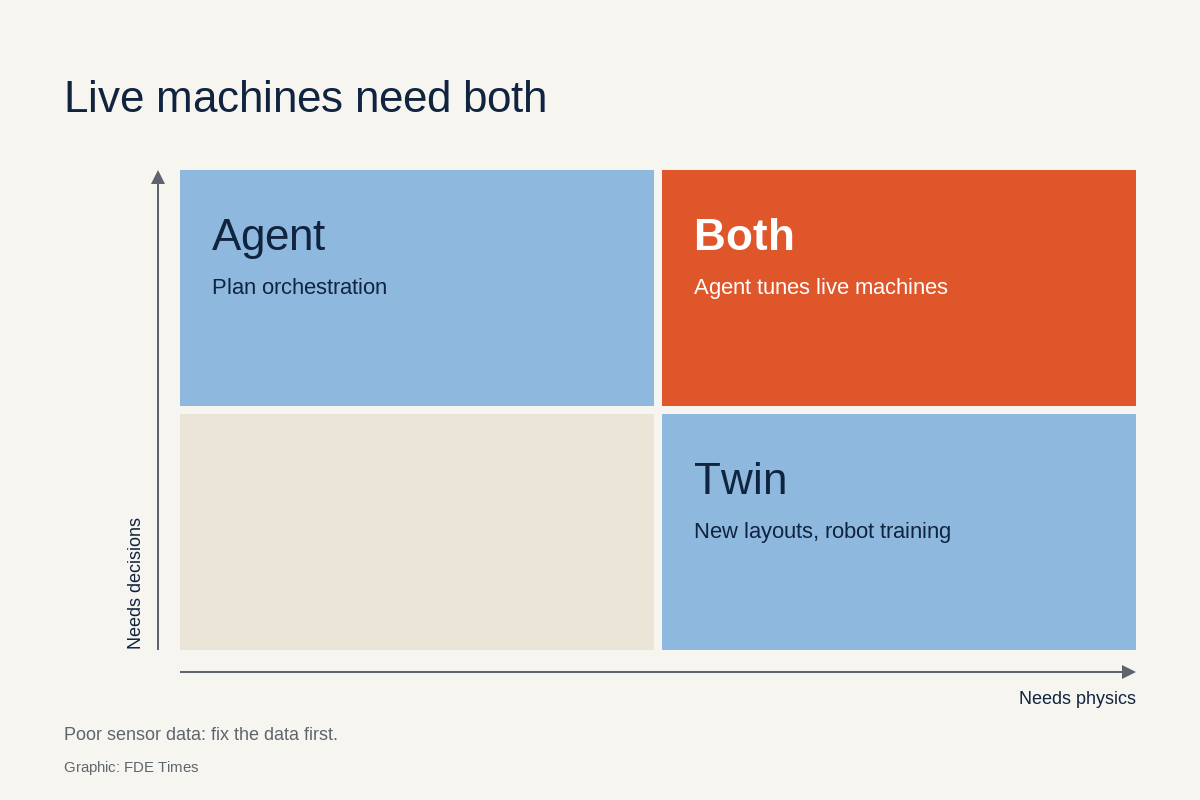
A twin tells you what will happen and an agent decides what to do, and an agent that touches a live line without a twin can do real damage.
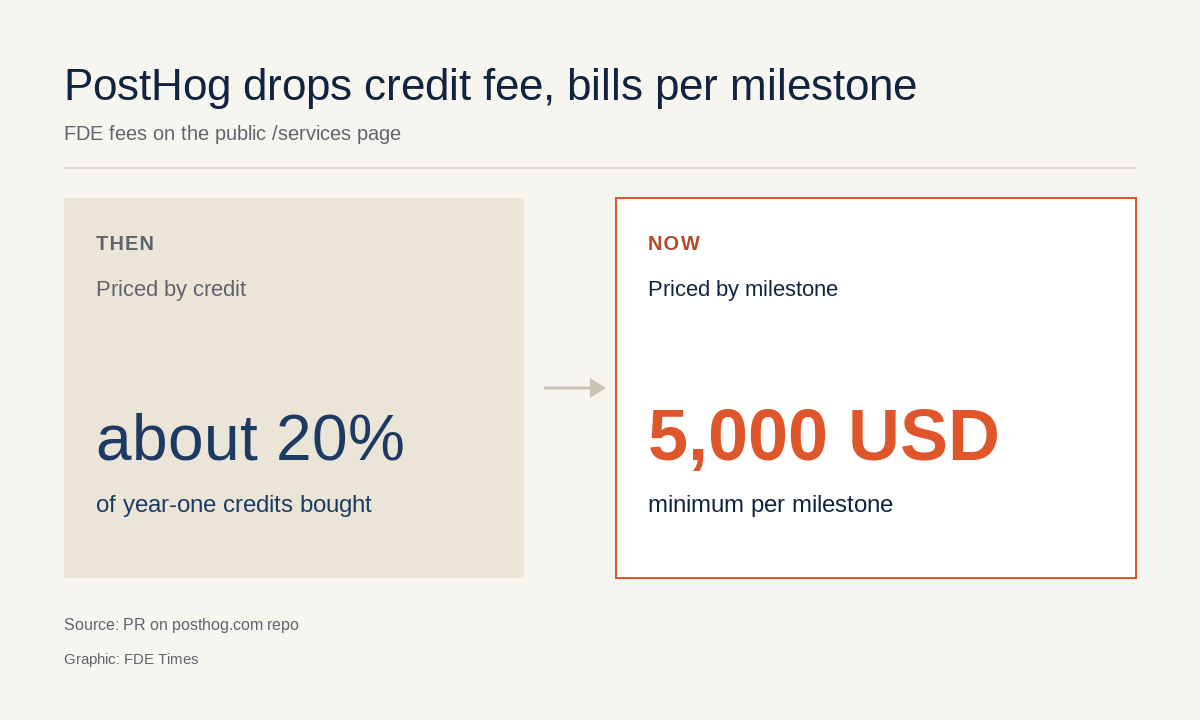
Each milestone starts at $5,000 and closes only when a named client approves it, turning judgement into something a customer can sign for.
With 67% of US HR leaders saying AI-made CVs slow hiring, a project write-up earns its keep when someone sets out to check your claims.
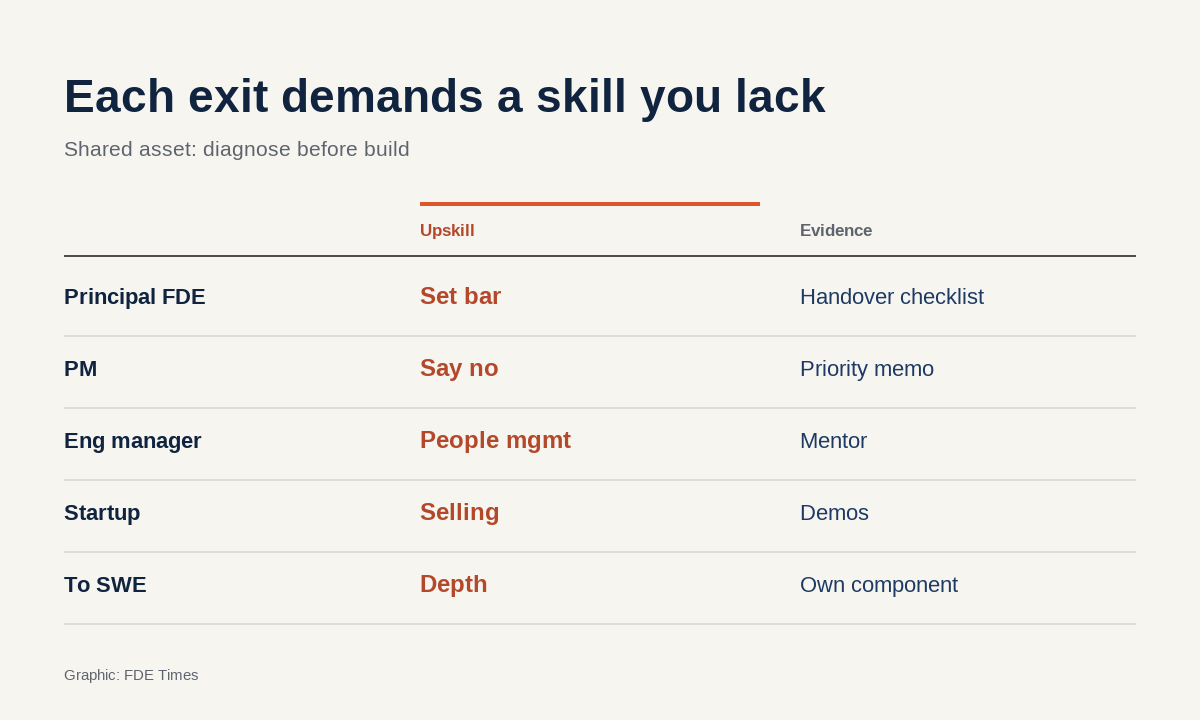
Principal FDE, product, management and founding all draw on the same field diagnosis, so the real choice is which missing skill to spend two years learning.
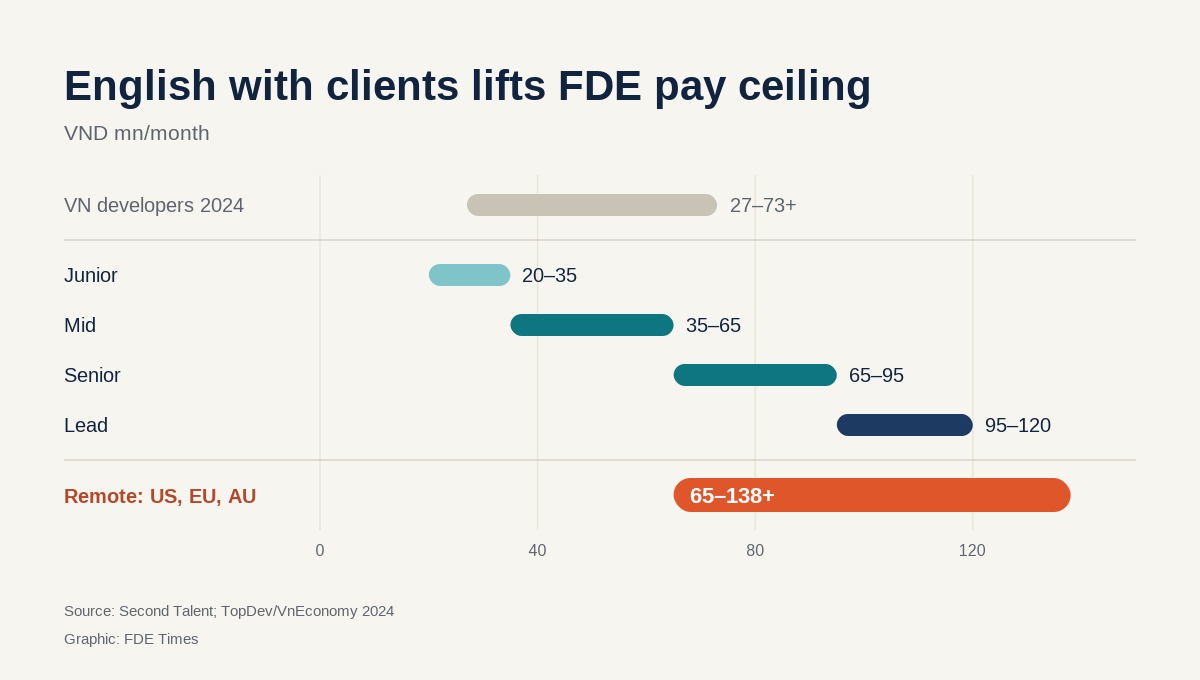
The claim comes from a recruiter and is unverified; its own bands start junior FDE pay at 20m dong a month, below many ordinary developers.
The median base salary across 135 US FDE job postings is about $190,000; what lifts packages at OpenAI and Anthropic is equity that vests by the year.
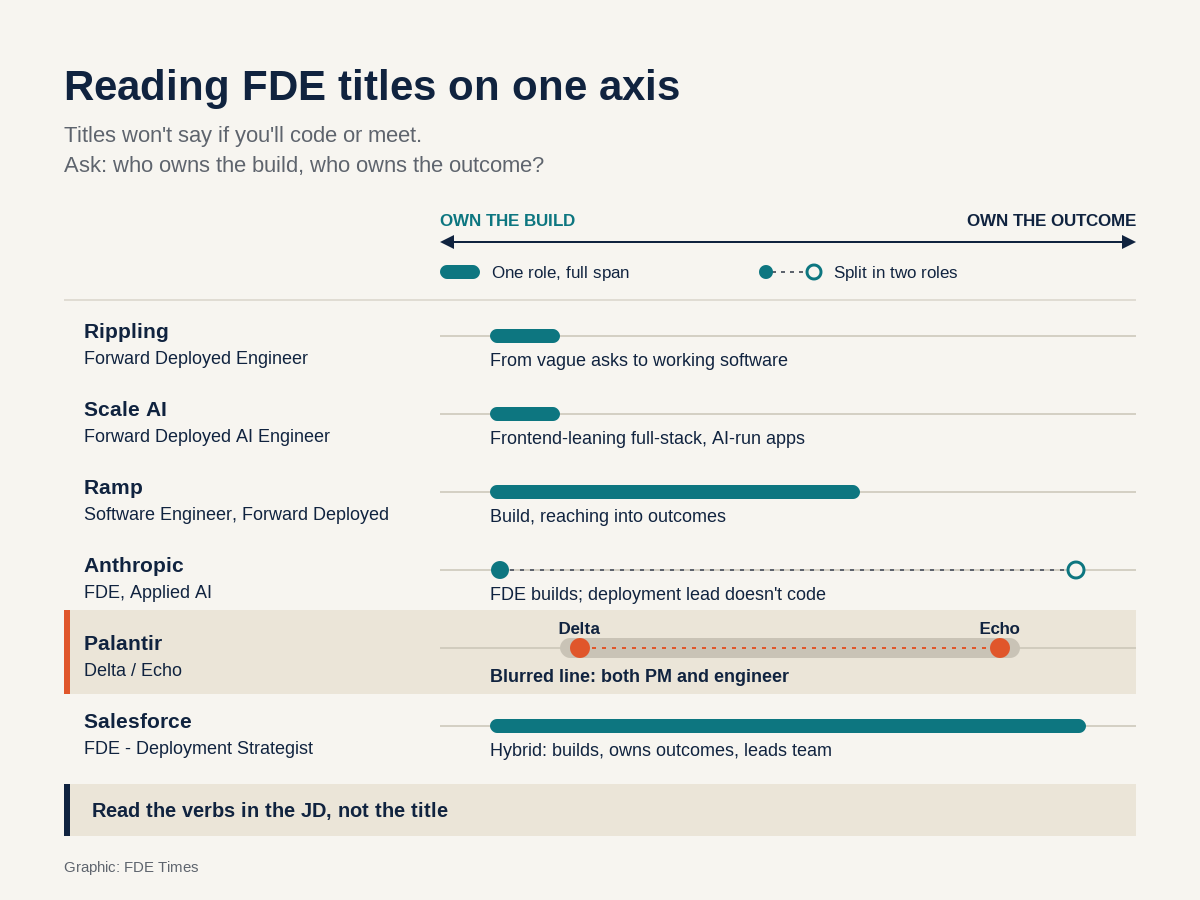
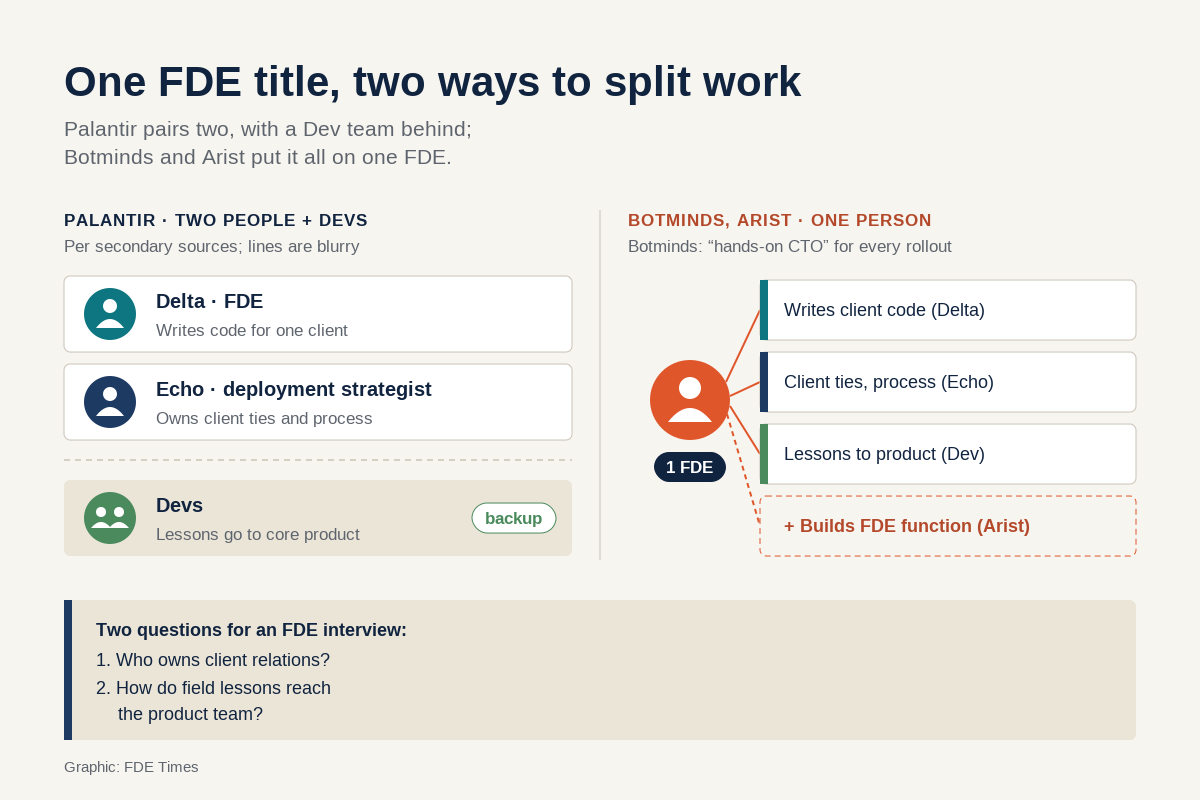
Even Palantir, which splits the job into Delta and Echo, admits the line blurs; the better test is who owns the build and who owns the outcome.
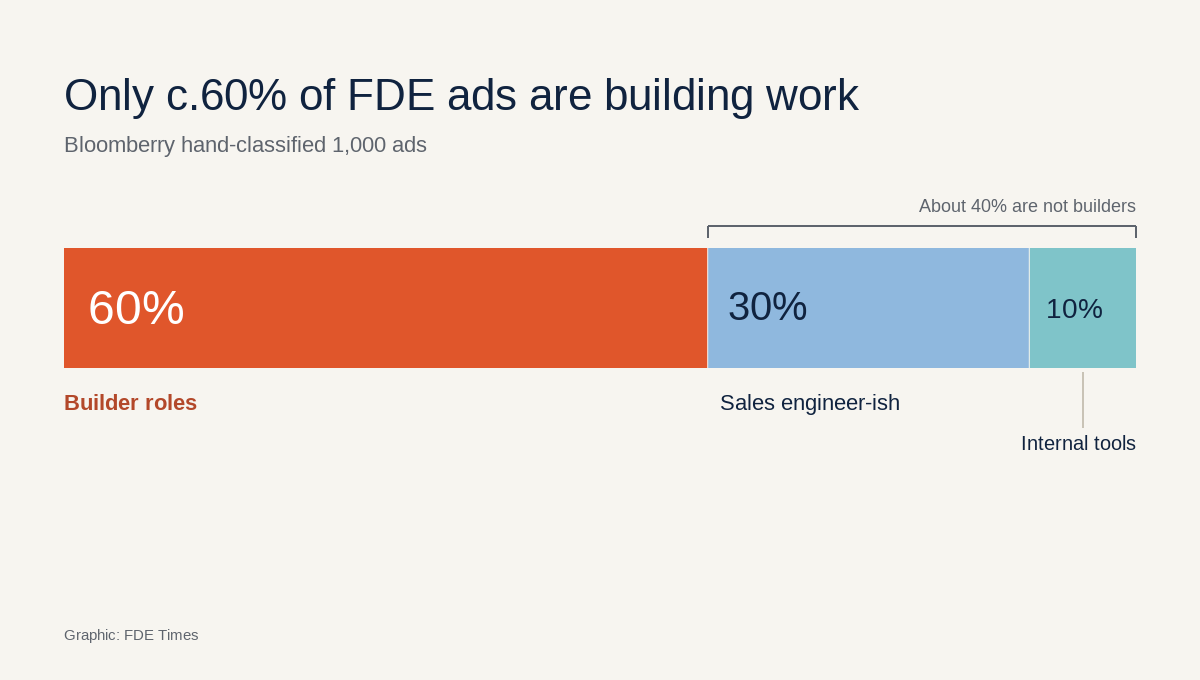
One curated index found just 224 open roles at 39 companies, and one analyst puts about 40% of FDE-titled listings outside the builder mold.
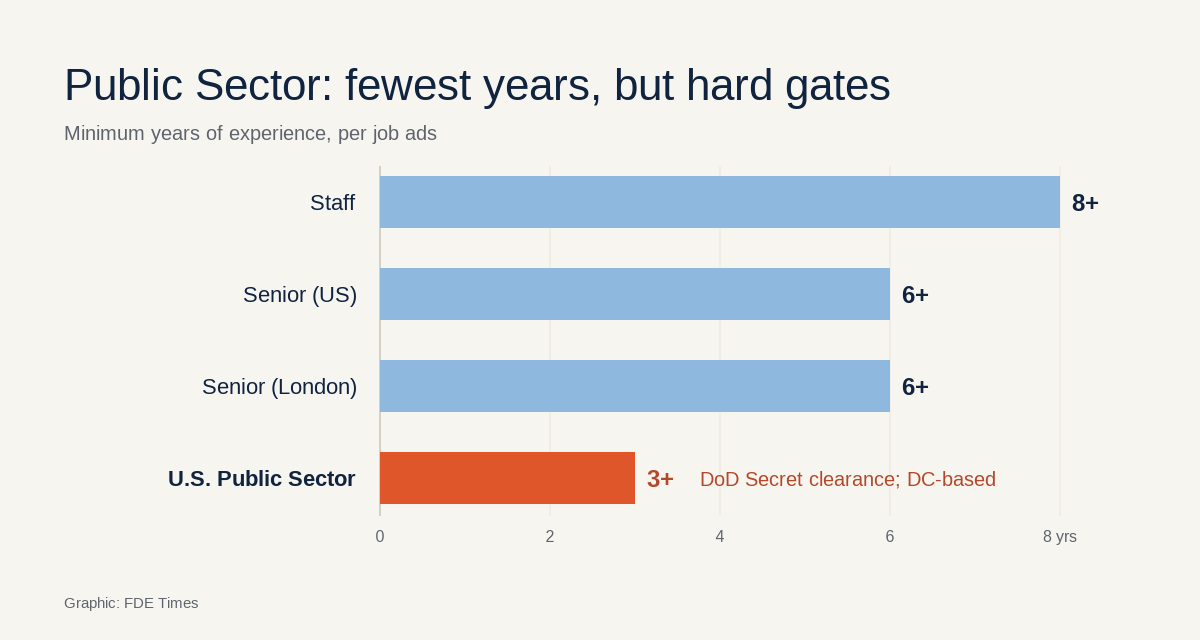
OpenAI's government FDE band starts $39,200 below its commercial one, and the real price is security clearance, time away from home and ethics.
No company publishes the number, but the playbooks agree that the ceiling depends on each account's stage and how much of the work has become reusable tooling.
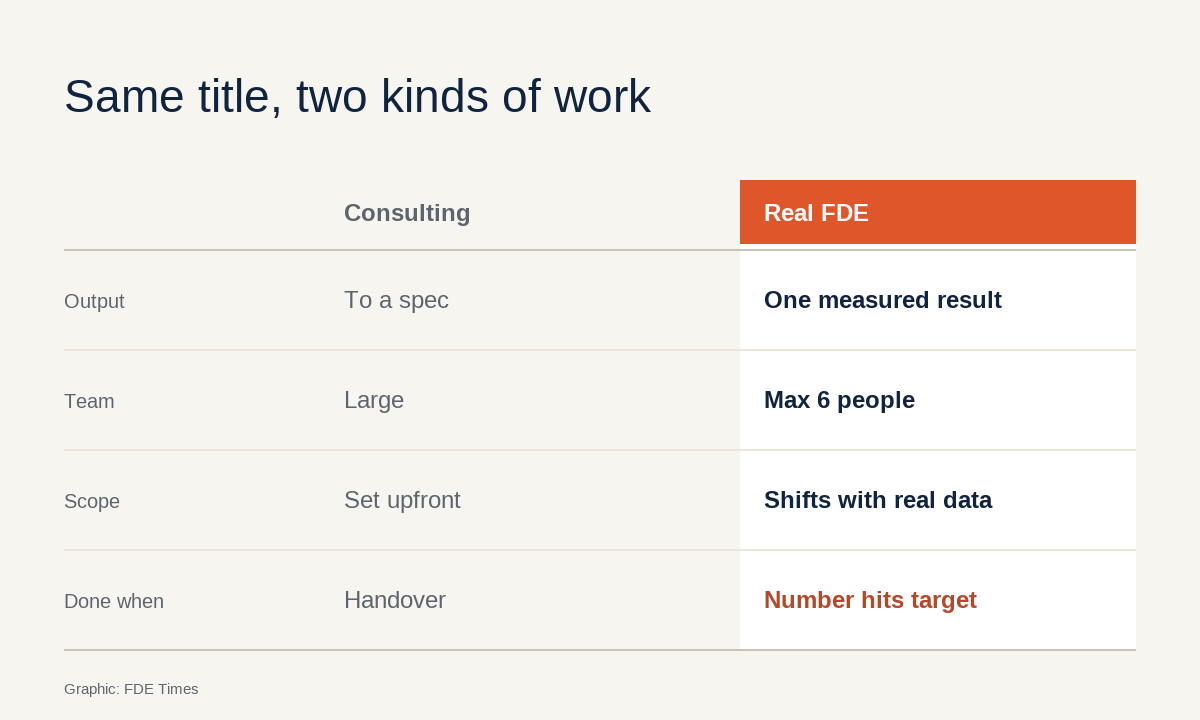
If code written on site flows back into the core product, it is FDE work; if it stays and bills by project, it is services.
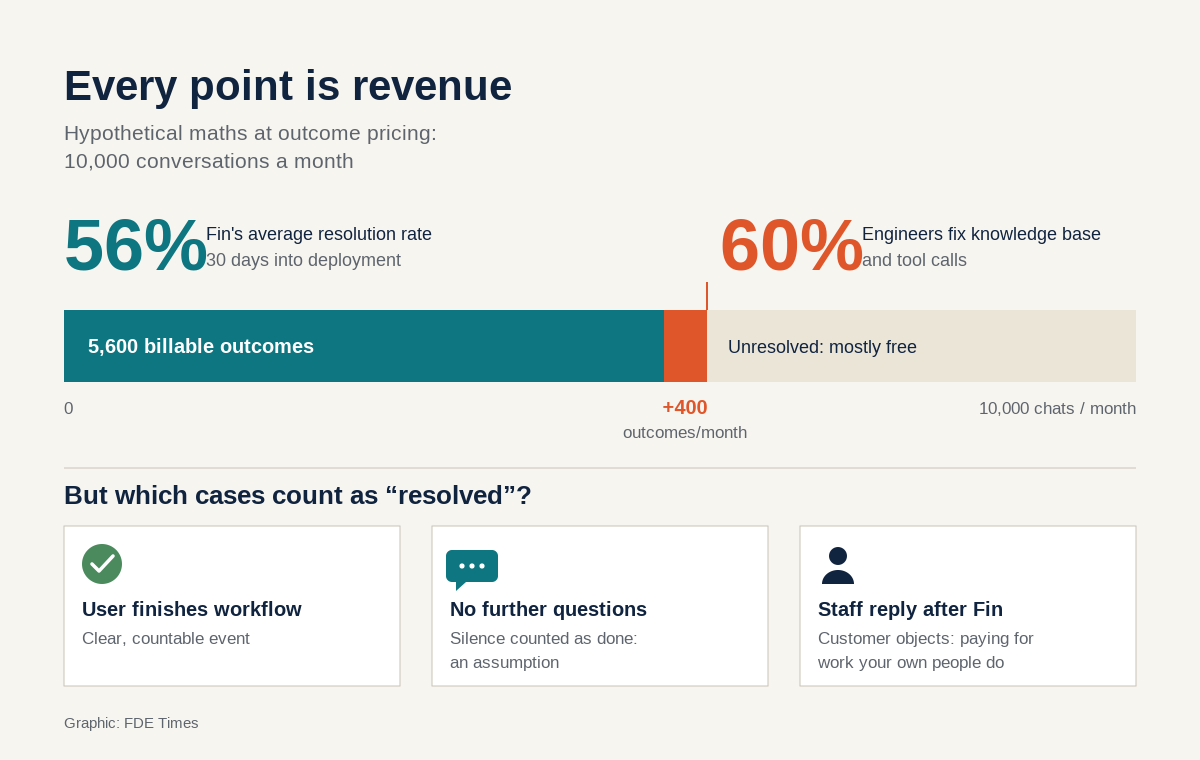
Intercom can count a customer's silence after Fin answers as a resolution, and the engineers beside the client are the ones who measure and defend it.
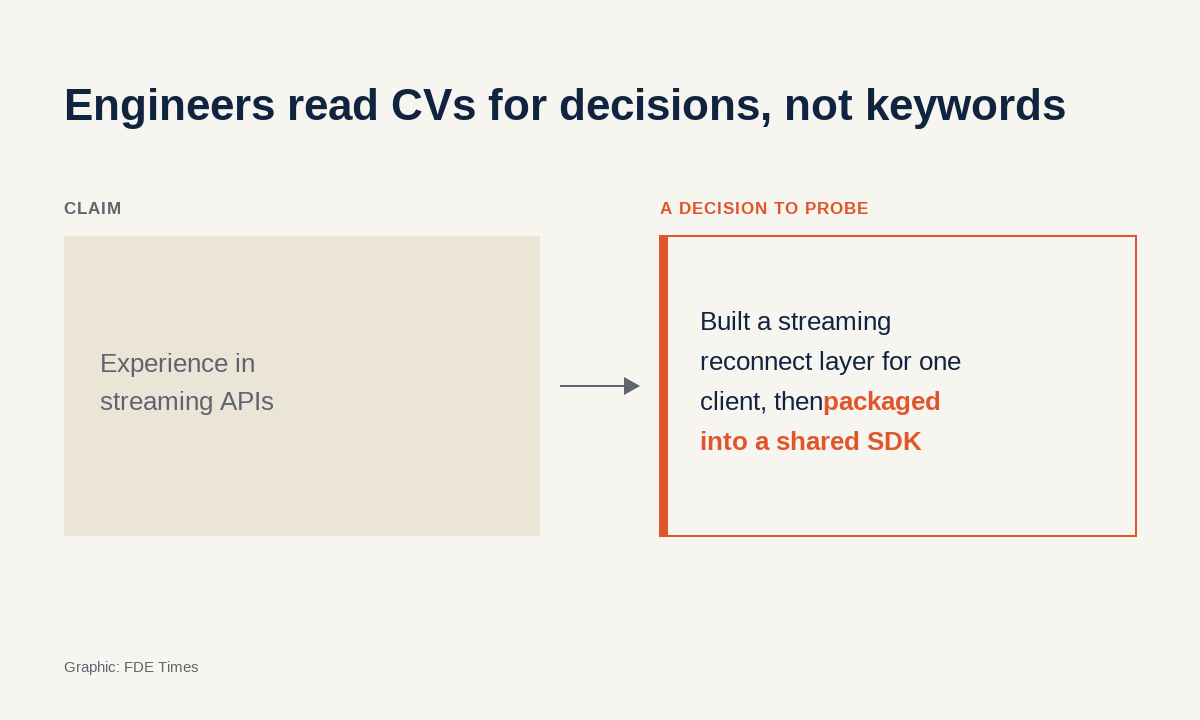
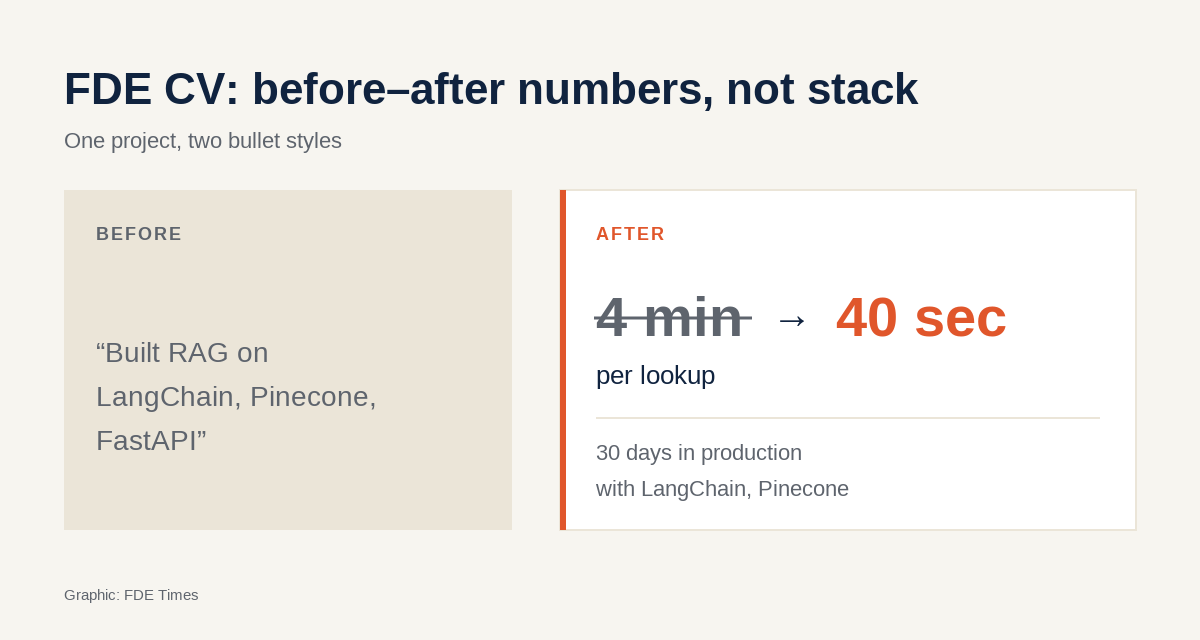
Hiring teams for forward deployed roles look for a deployment result they can check, such as "cut from 6 weeks to 9 days," ahead of tool names.
Salesforce has written into its FDE job listing that code may come from AI tools, but the person accountable for the result must still be an engineer.
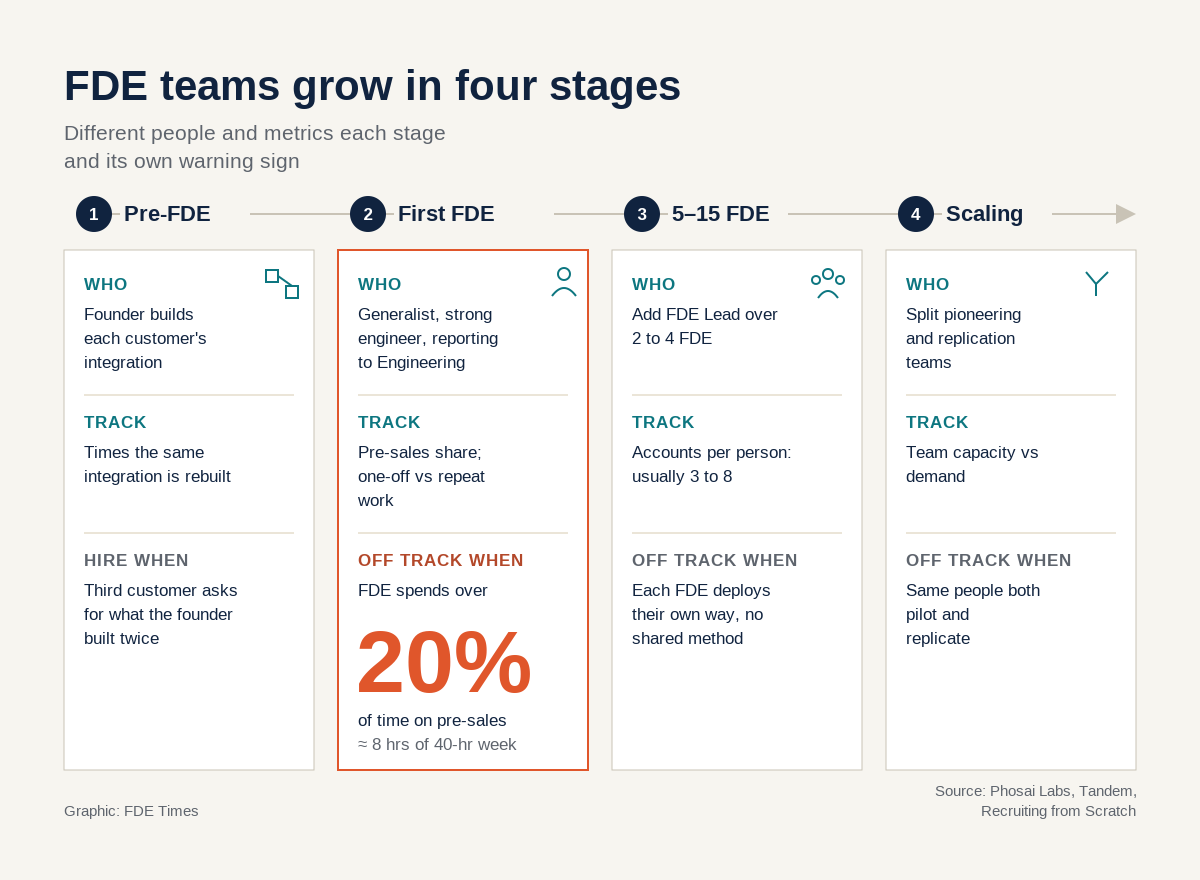
Phosai Labs adds a 20% threshold for spotting a team drifting into sales support, while Rocketlane reads the same signal as a product gap.
Finding problems worth solving carries over; turning one customer's fix into a business with leverage does not, and that is the part to practise.
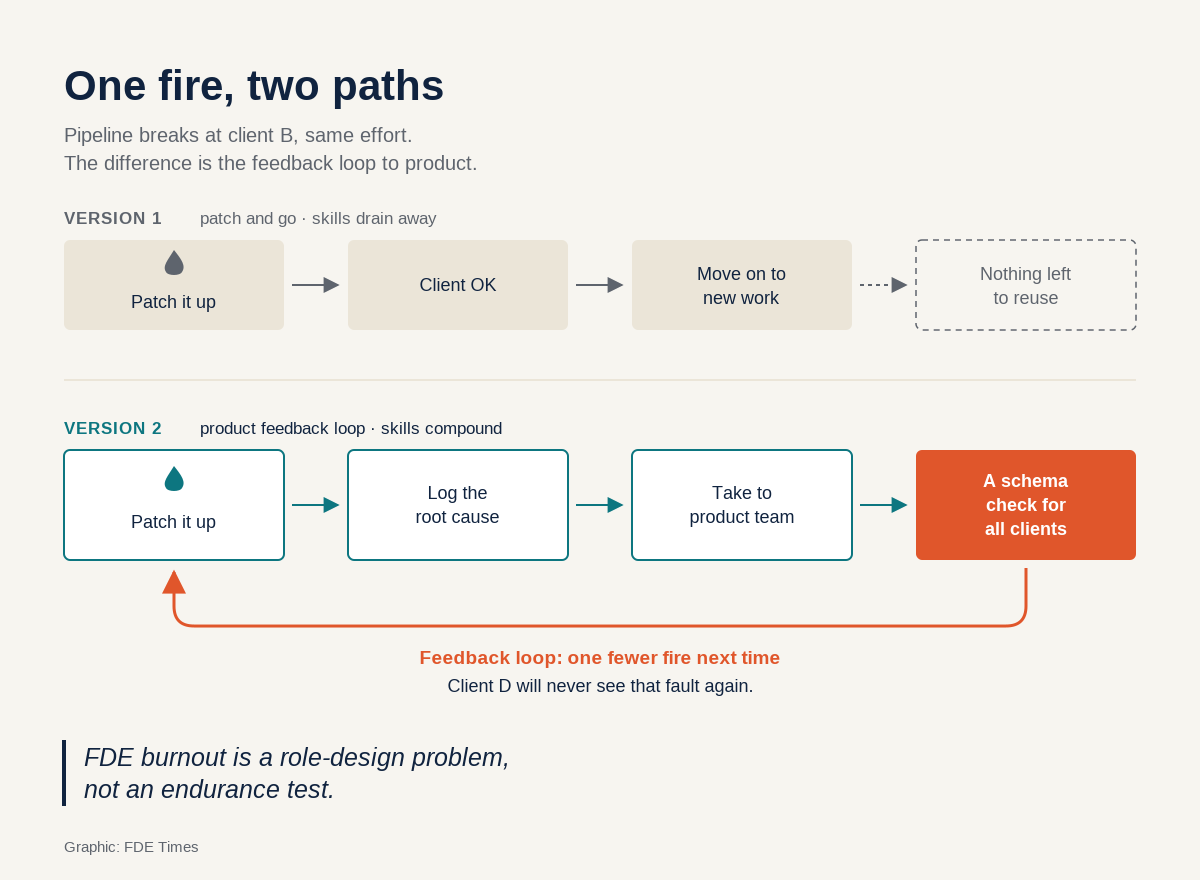
Role design matters more than stamina: a feedback loop into the product protects your skills, while rotation and honest travel schedules protect you.
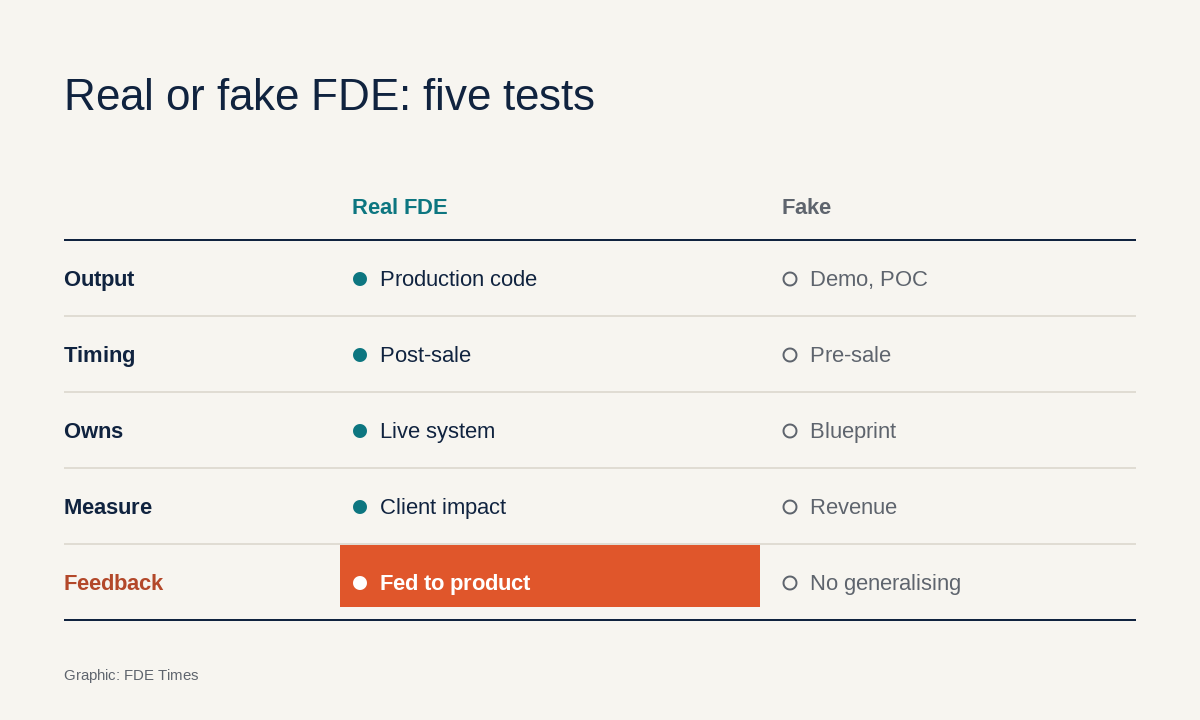
Ignore the job title and check what you build and where the code goes: five tests expose demo and support roles relabeled as forward deployed engineering.
They want proof you have made software run in someone else's environment, and Anthropic will even accept equivalent experience in place of a bachelor's degree.
Junior FDE roles are real but narrow and tied to graduation calendars; for most engineers the realistic route is a detour they can start preparing now.
With enterprise AI images the prompt is the easy part; the hard part is an approval workflow where a person with decision rights, not a score, has the final say.
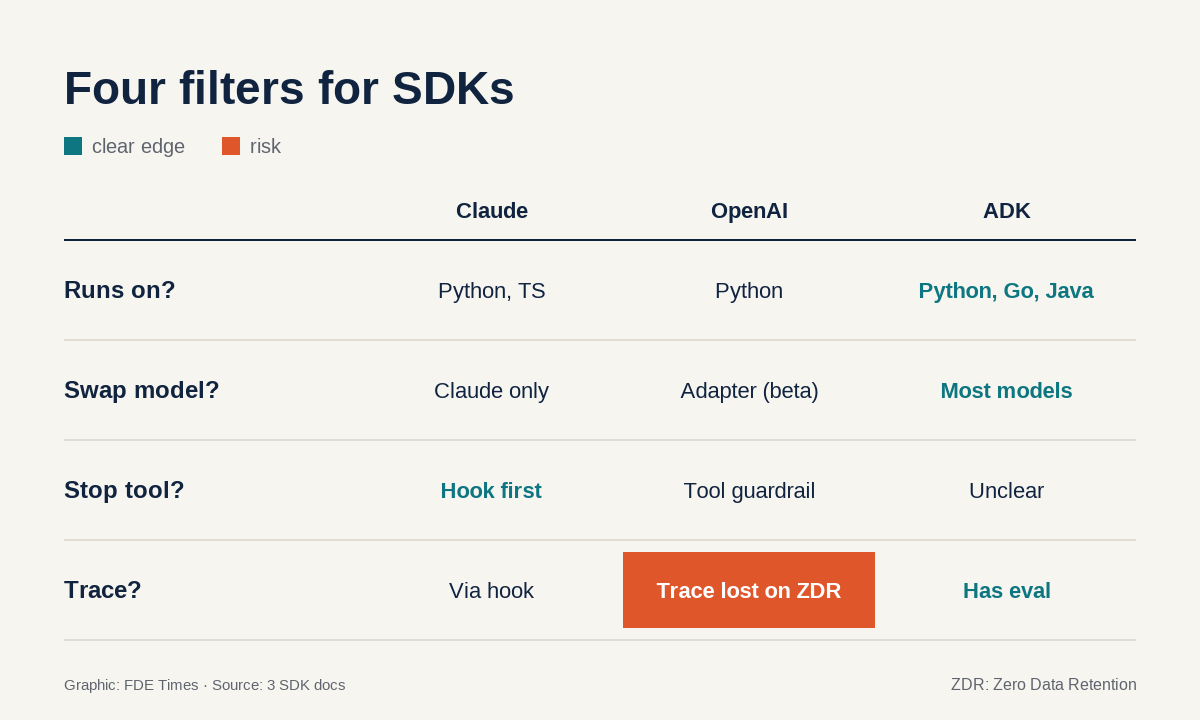
Client constraints, not benchmark scores, decide between Claude Agent SDK, OpenAI Agents SDK and Google ADK, and four questions settle it before any code is written.
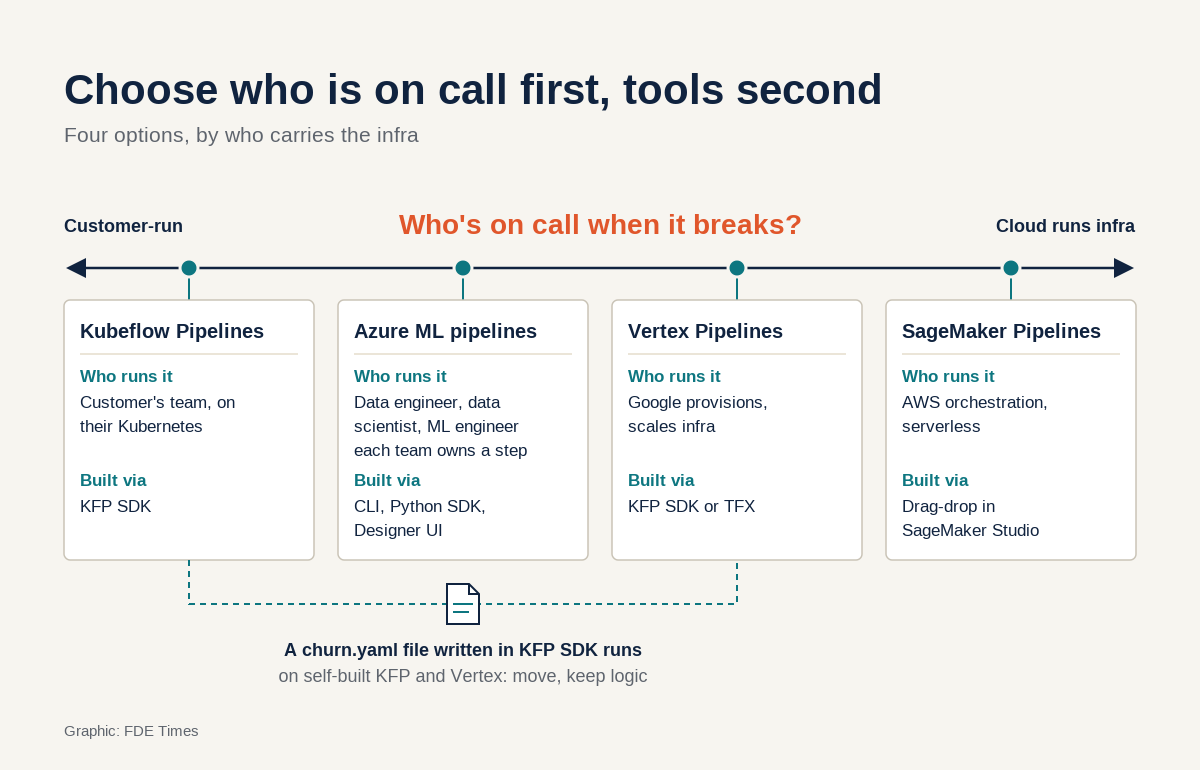
Microsoft calls Kubeflow the open-source equivalent of Azure ML pipelines and Vertex runs KFP code directly, so feature tables no longer separate them.
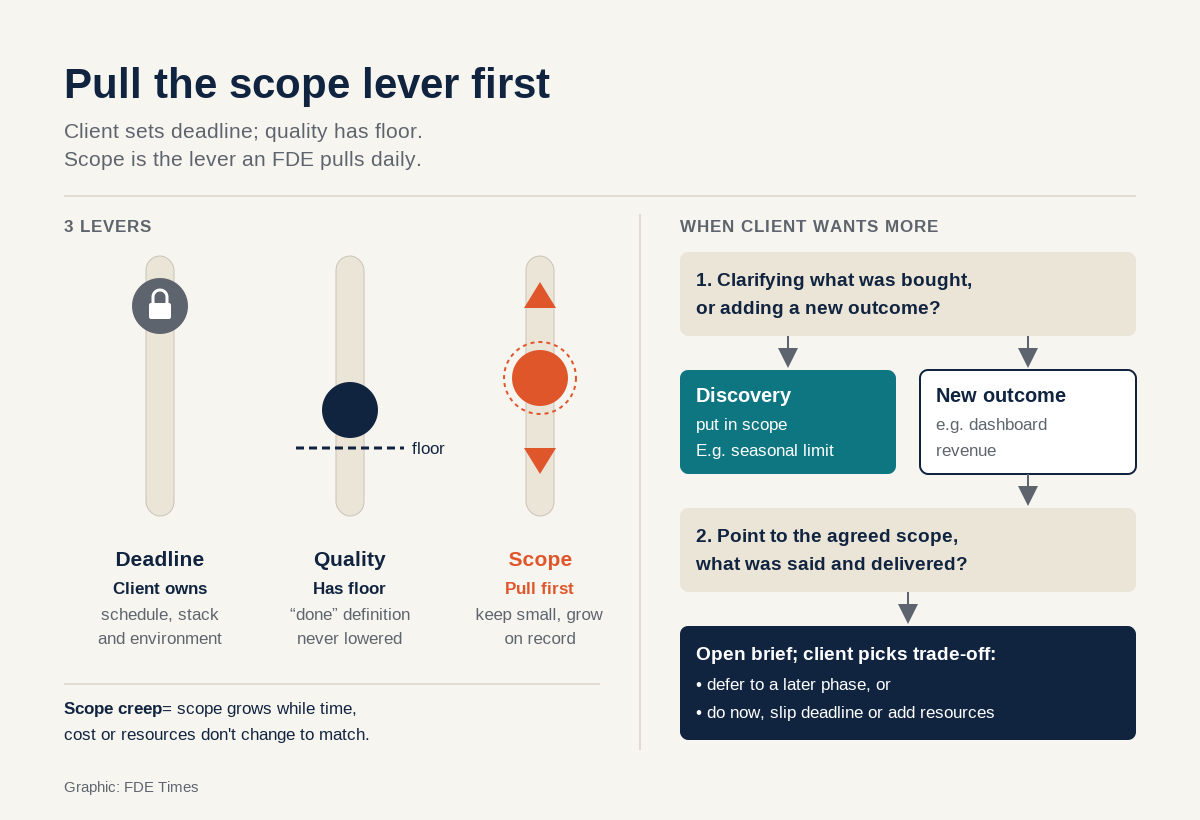
The client owns the deadline and quality needs a floor; the hard skill is telling genuine discovery from scope creep.
The line is not whether AI wrote the code but whether anyone reviewed, tested and can explain it, as a deleted production database on Replit showed.
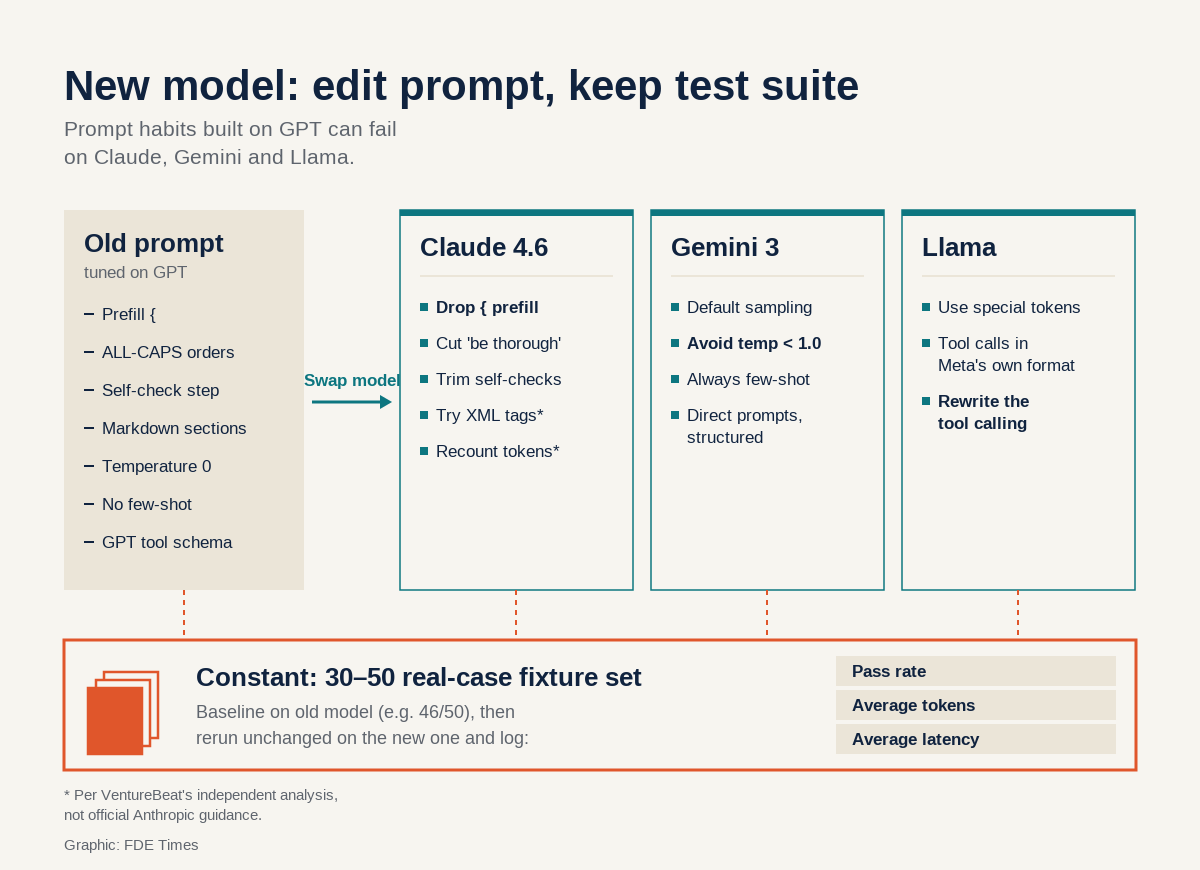
Prompts carry patches for the old model's flaws, so the eval suite is what must survive, and OpenAI's Evals platform shuts on 30 November.
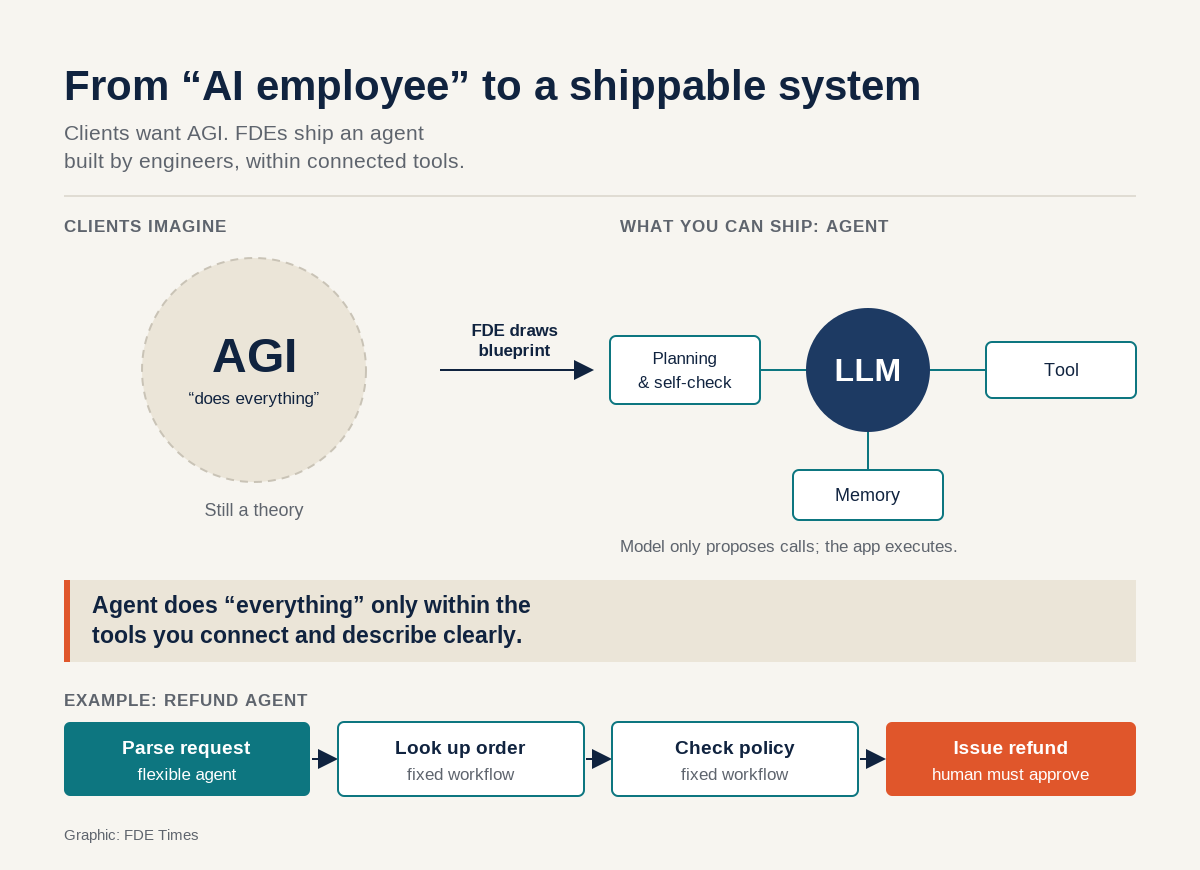
What executives picture is close to the definition of AGI, which remains theoretical; the FDE's job is to turn that hope into a design without crushing it.
When a bank wants its data kept apart and updates only once a quarter, but retail chains want features now, deployment stamps matter more than microservices.
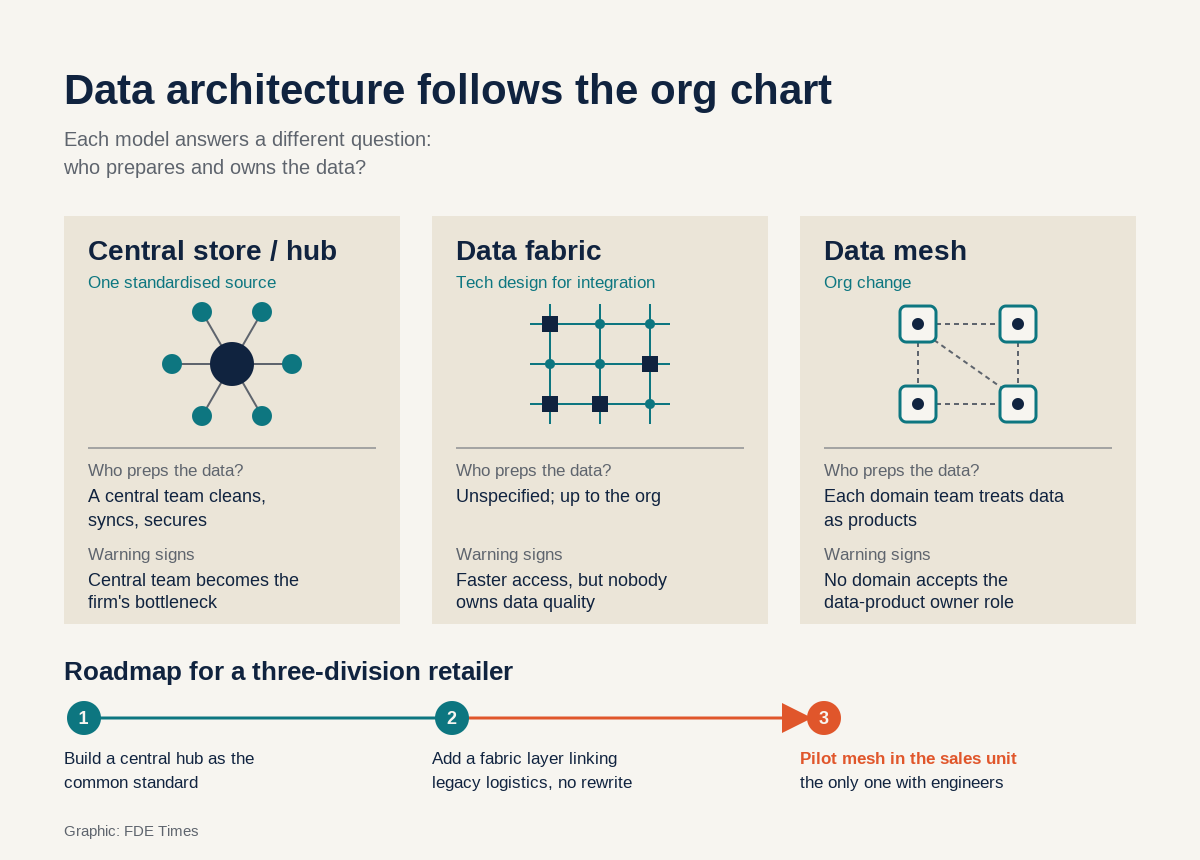
Mesh, fabric and the central warehouse each assume a different way of organizing people, and if the assumption is wrong, even a strong stack will stall.
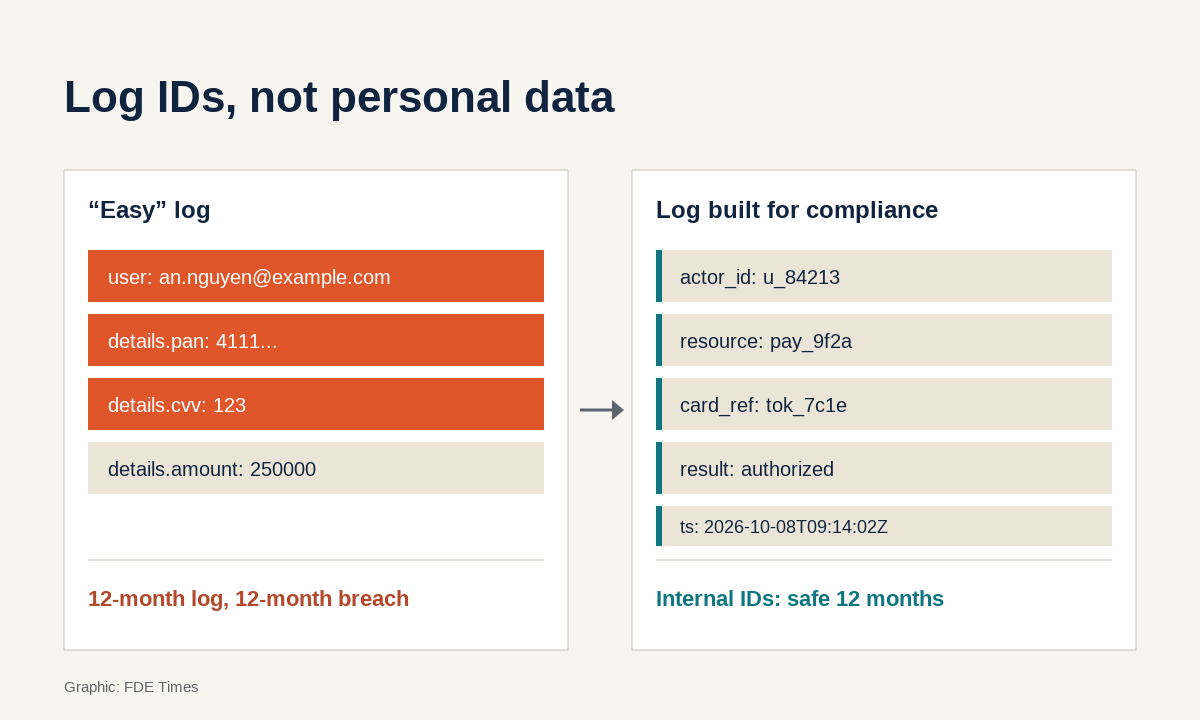
PCI DSS demands 12 months of audit history and GDPR demands erasure without delay, so the answer lies in what an API accepts and what it logs.
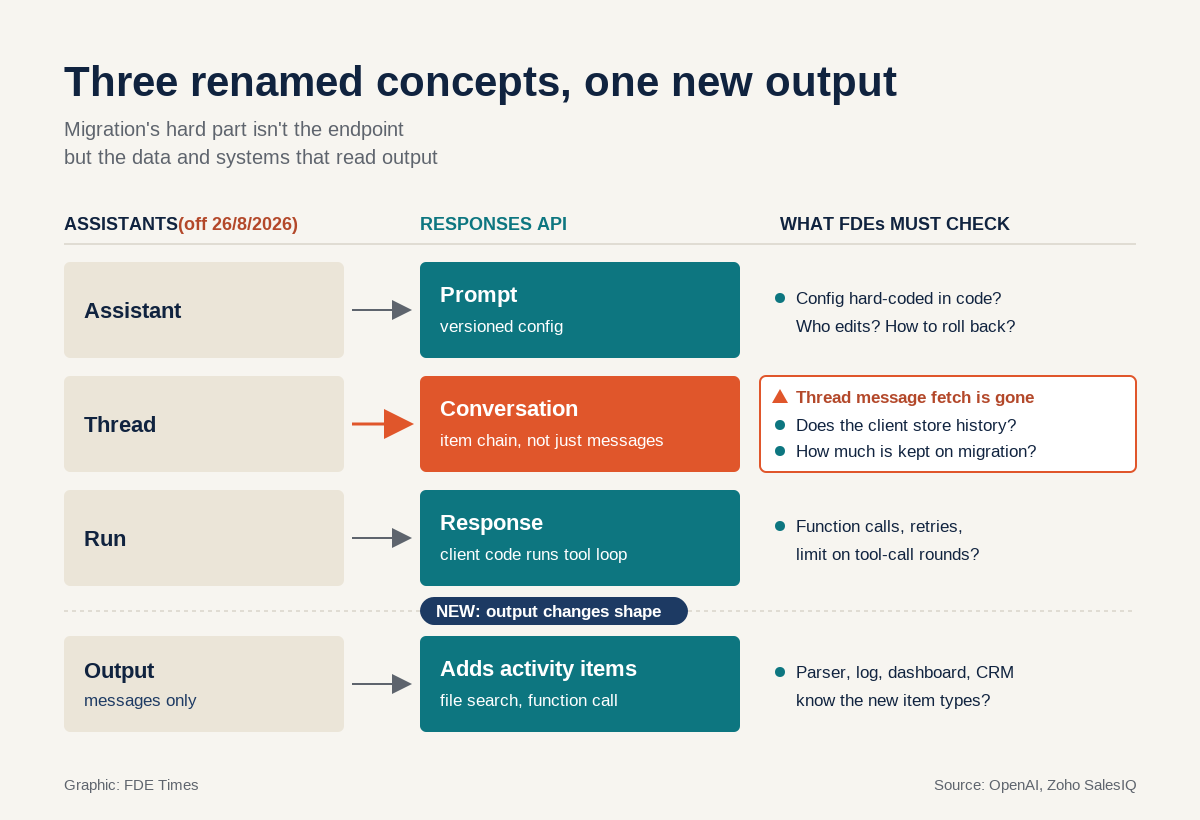
Moving to the Responses API looks like an endpoint swap, but the tool-calling loop and conversation storage now live in the client's own code.
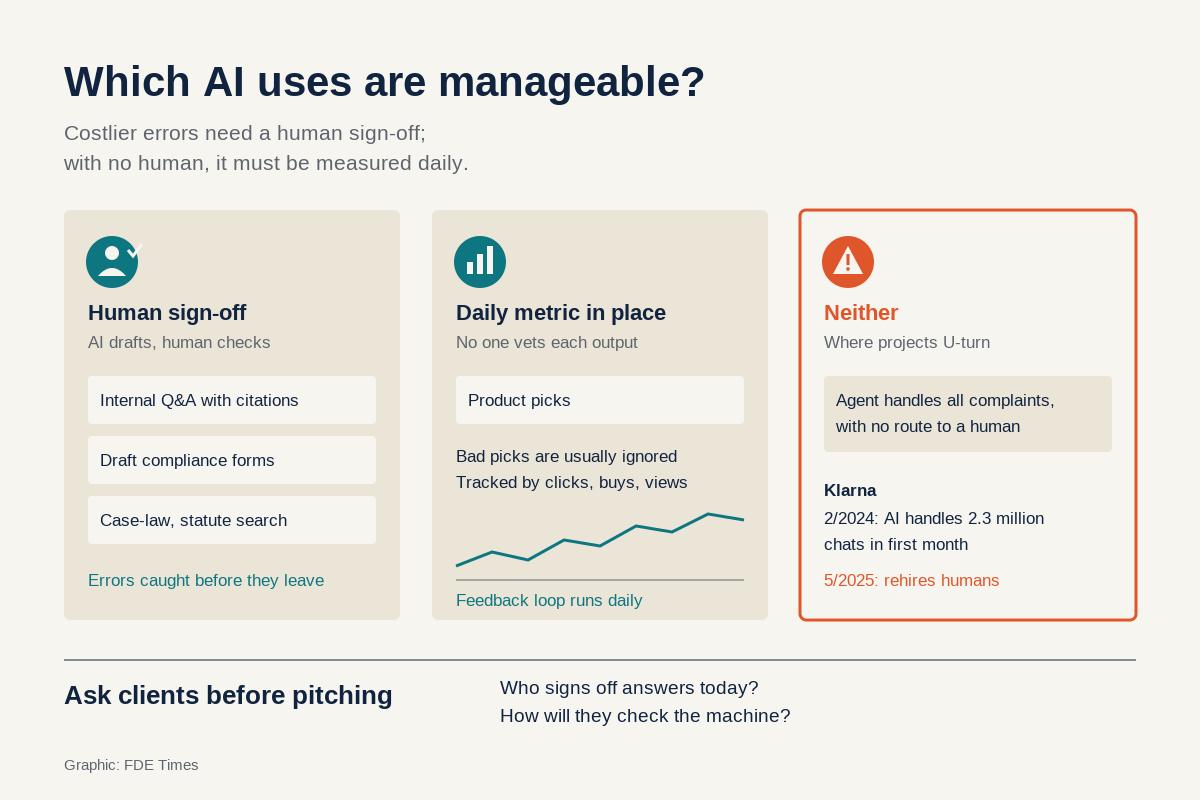
The AI use cases that survive real users usually share one trait: either a person signs off on the result, or a metric is measured every day.
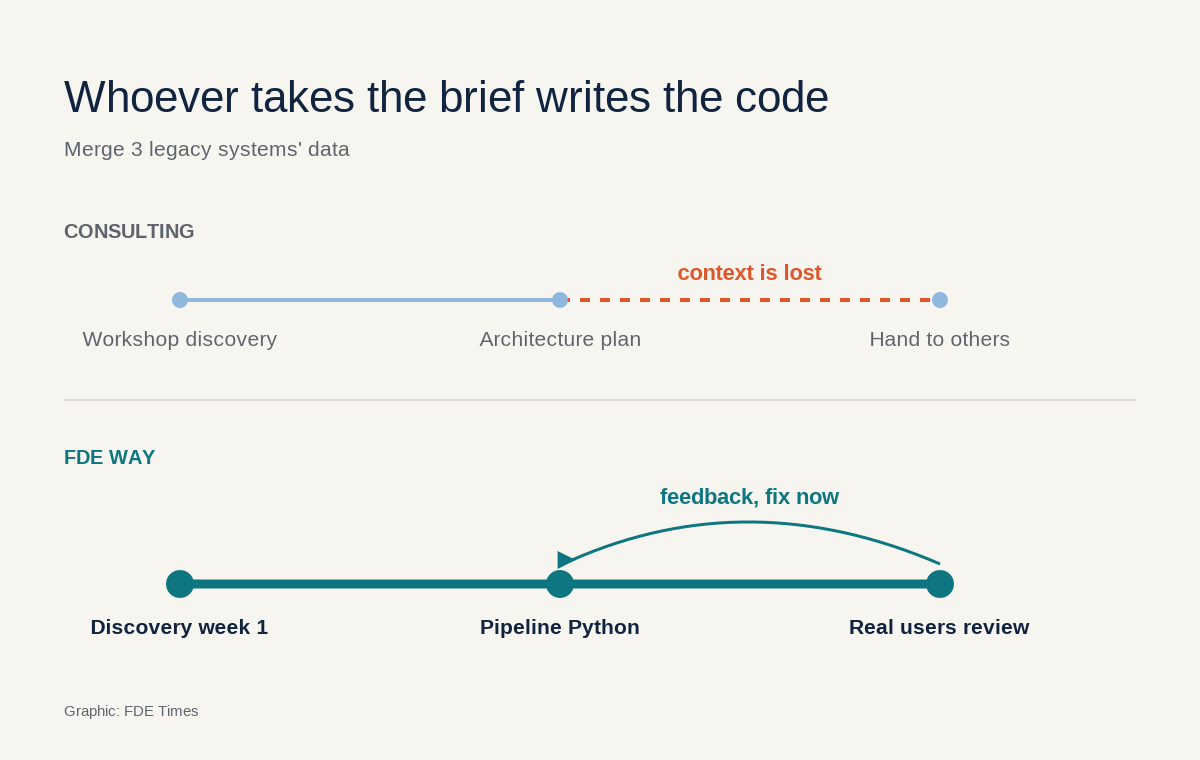
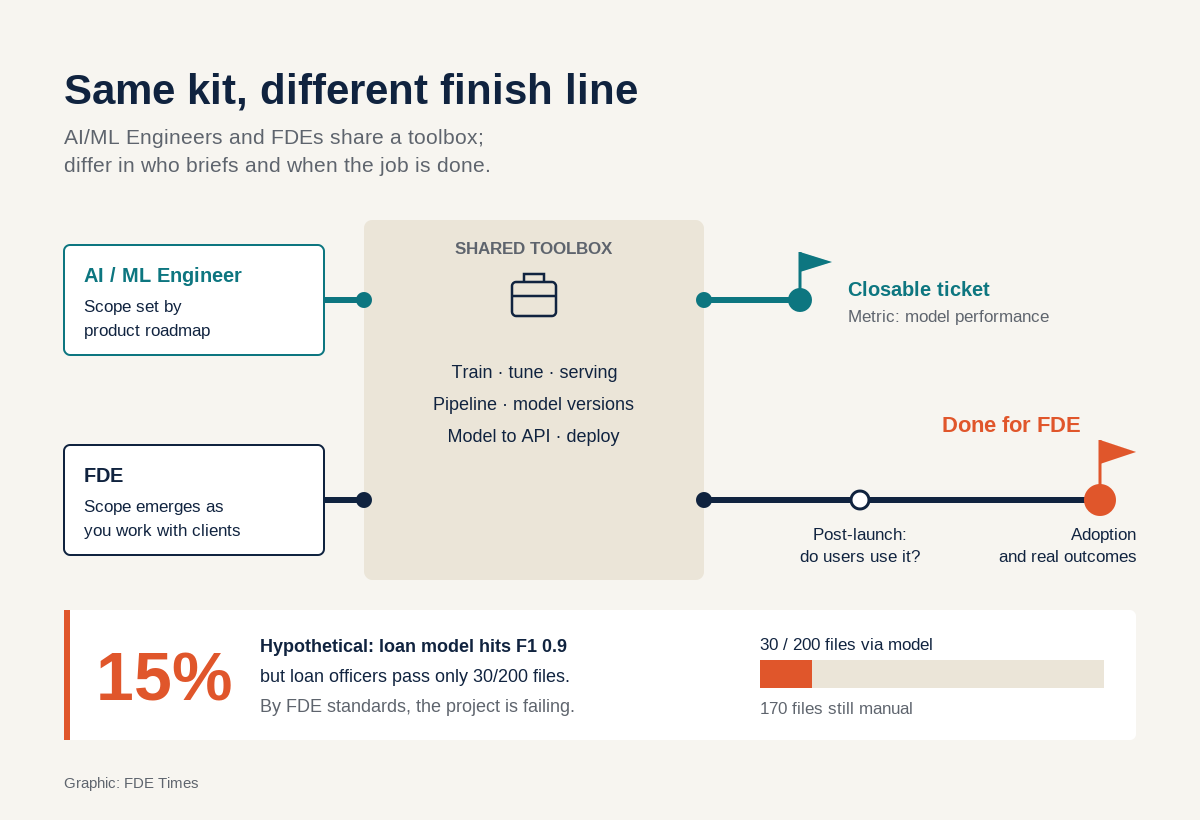
Not the stack, which is nearly identical, but who defines the problem and whether real users' results decide when the work is done.
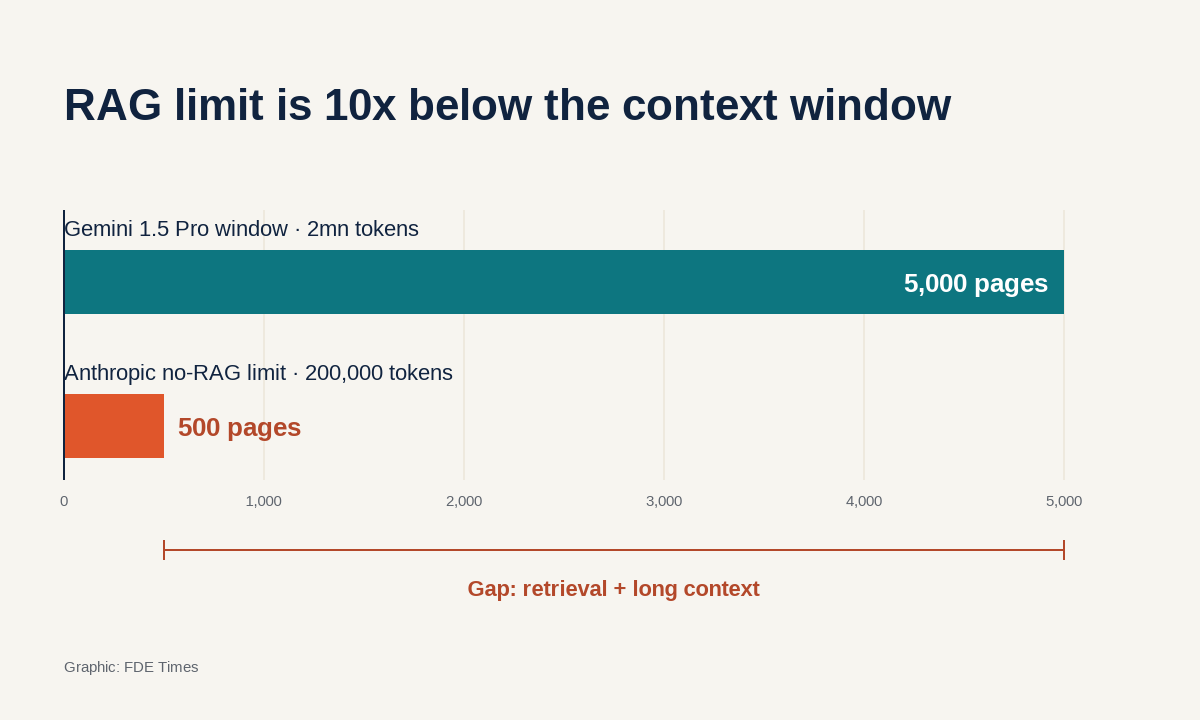
Models often miss information buried in the middle of long contexts, so FDEs have to make the case to clients on accuracy, latency and cost.
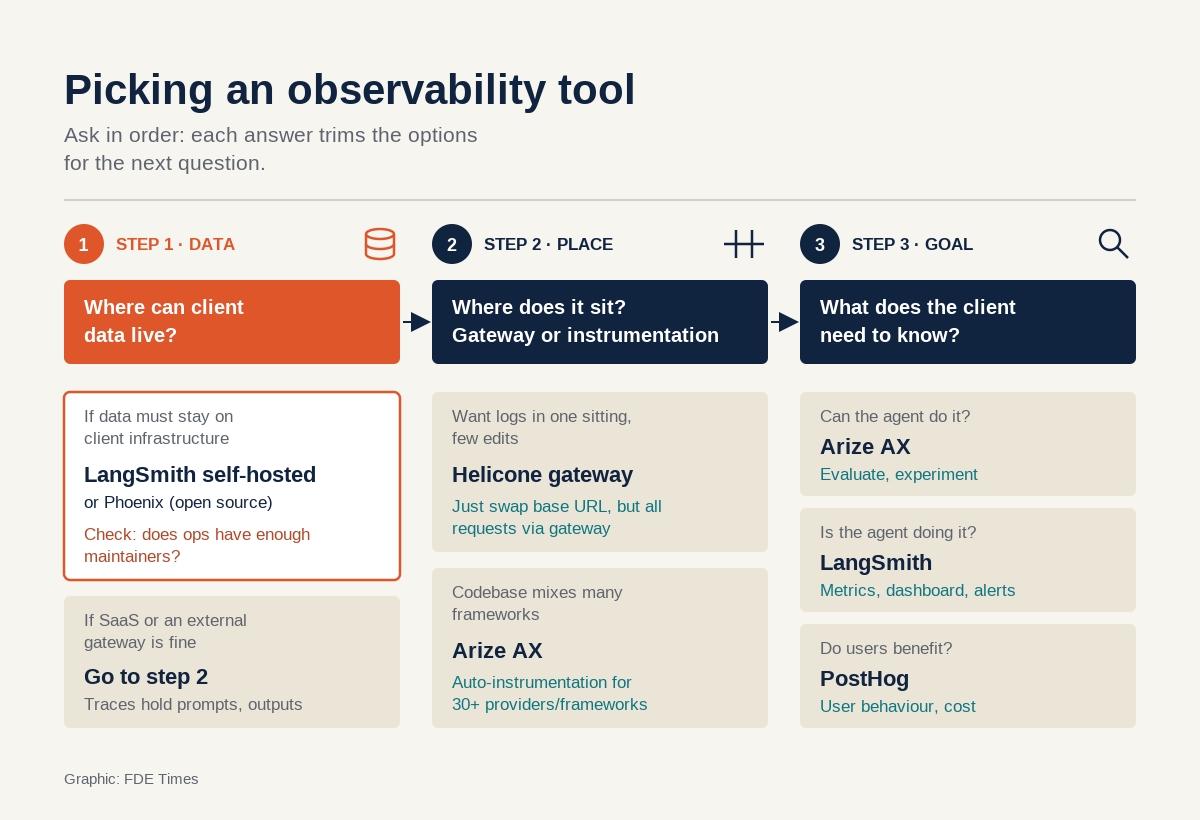
LangSmith, Arize, Helicone and PostHog all log LLM calls, but each assumes something different about data, code changes and what the client is worried about.
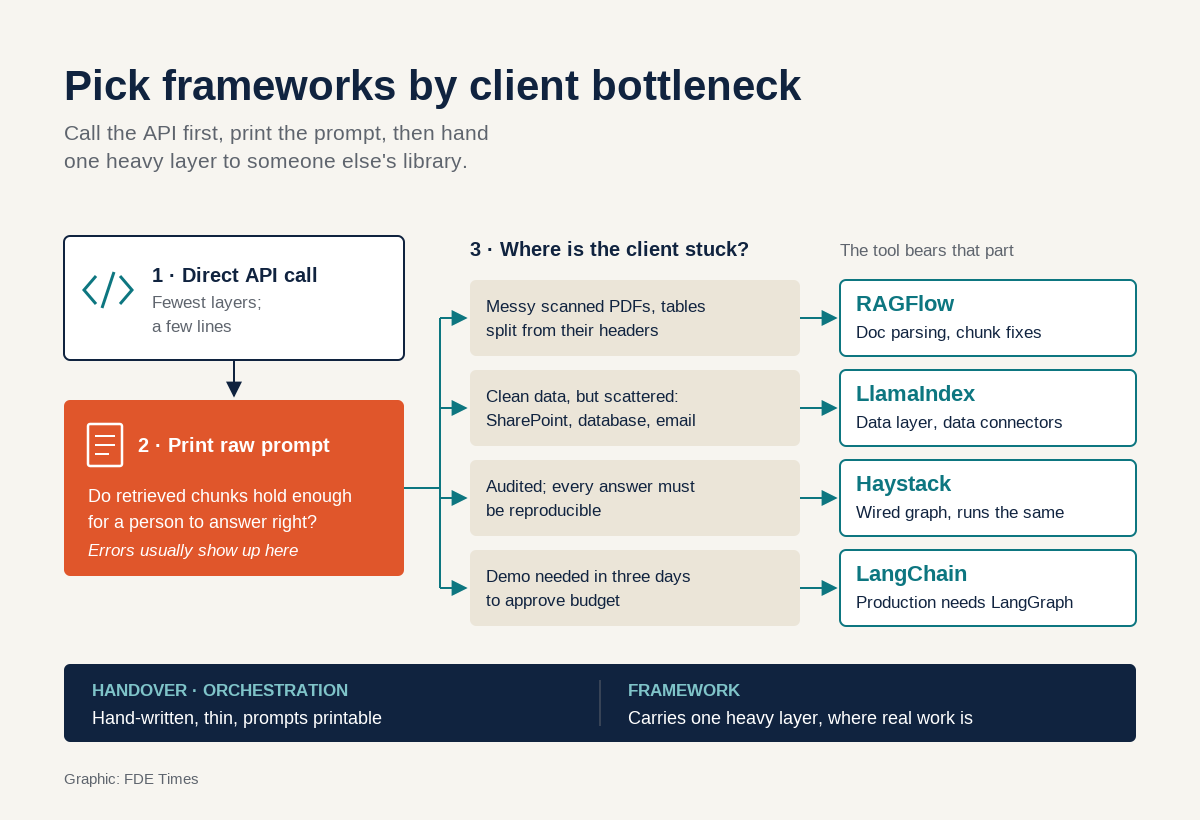
Anthropic advises starting with direct API calls, so picking LangChain, LlamaIndex or Haystack really means deciding which layer to hand to someone else's library.
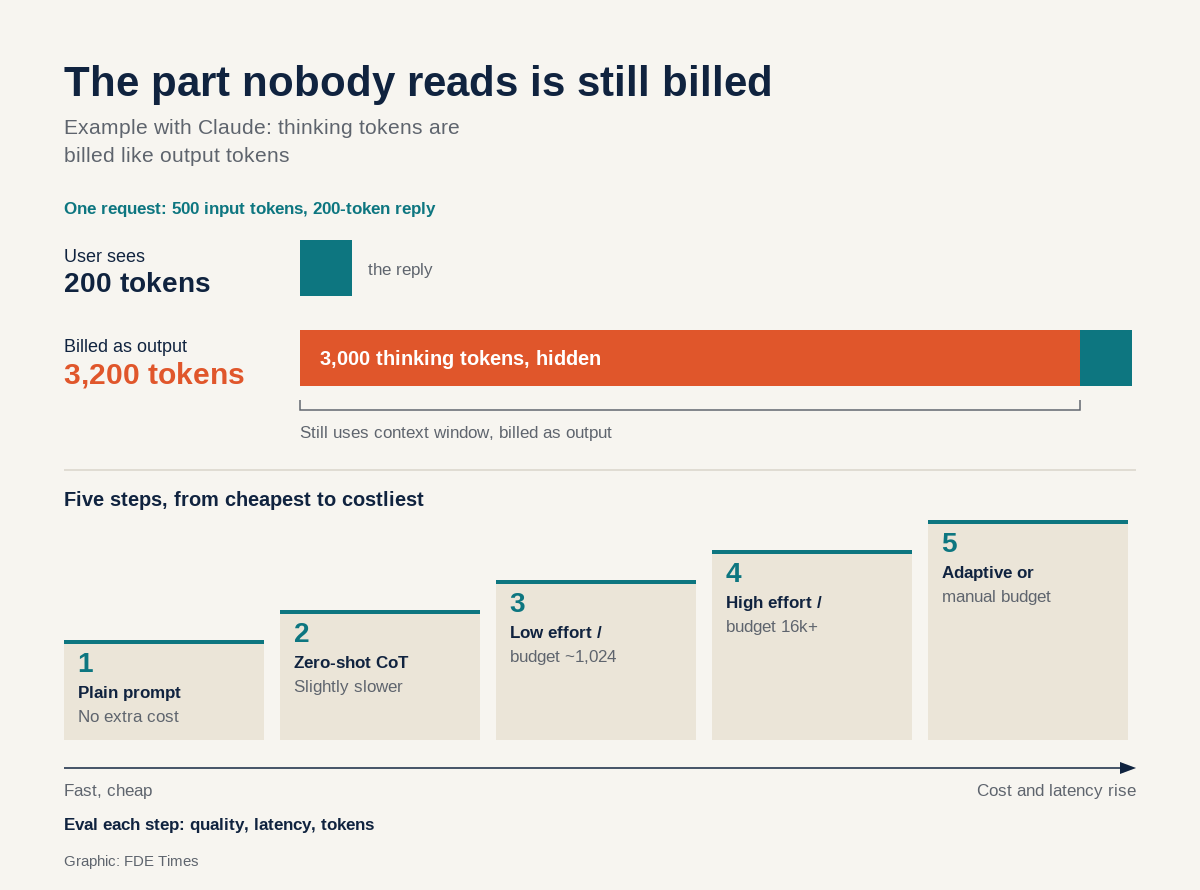
Reasoning is a dial to measure per workload, and the case that convinces a client comes from evals on its own data, not benchmarks.
Anthropic leads with 32% of enterprise LLM usage, but on site the choice turns on where data lives, how long it is kept and which contract it passes through.
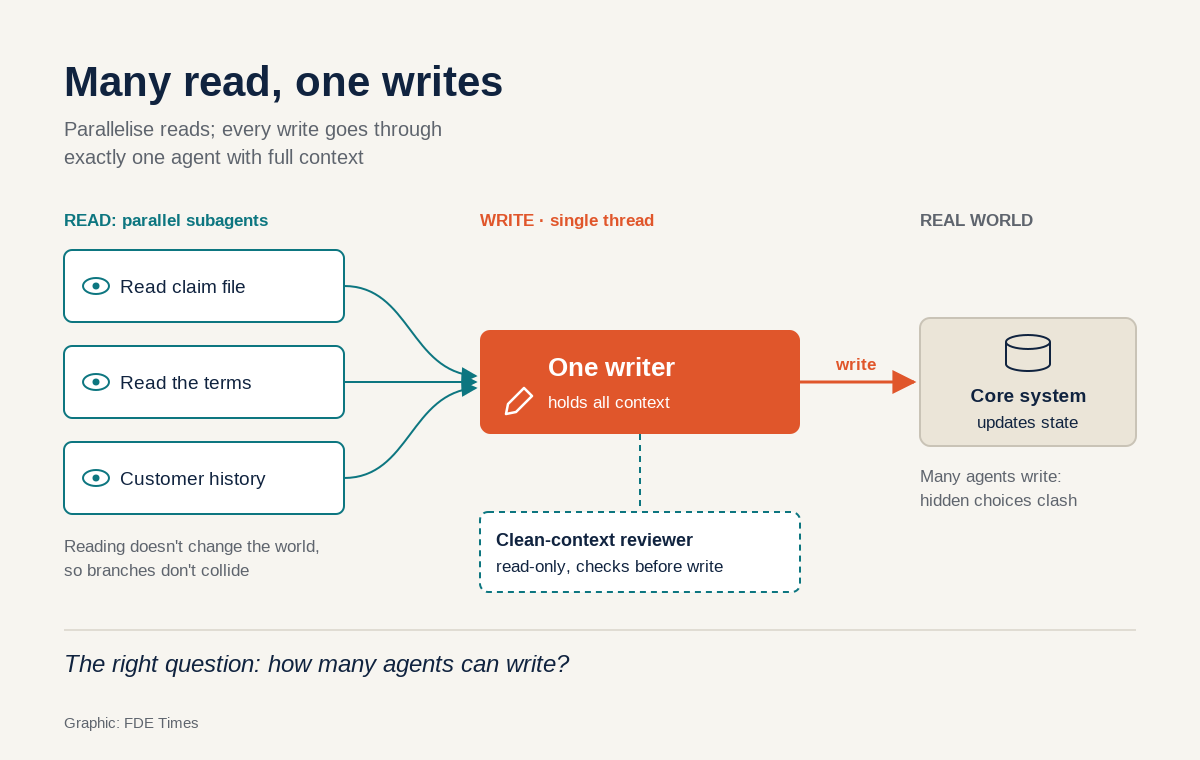
Anthropic and Cognition reached opposite verdicts a day apart, but read side by side they point to one rule: parallelize the reading, keep the writing in one thread.
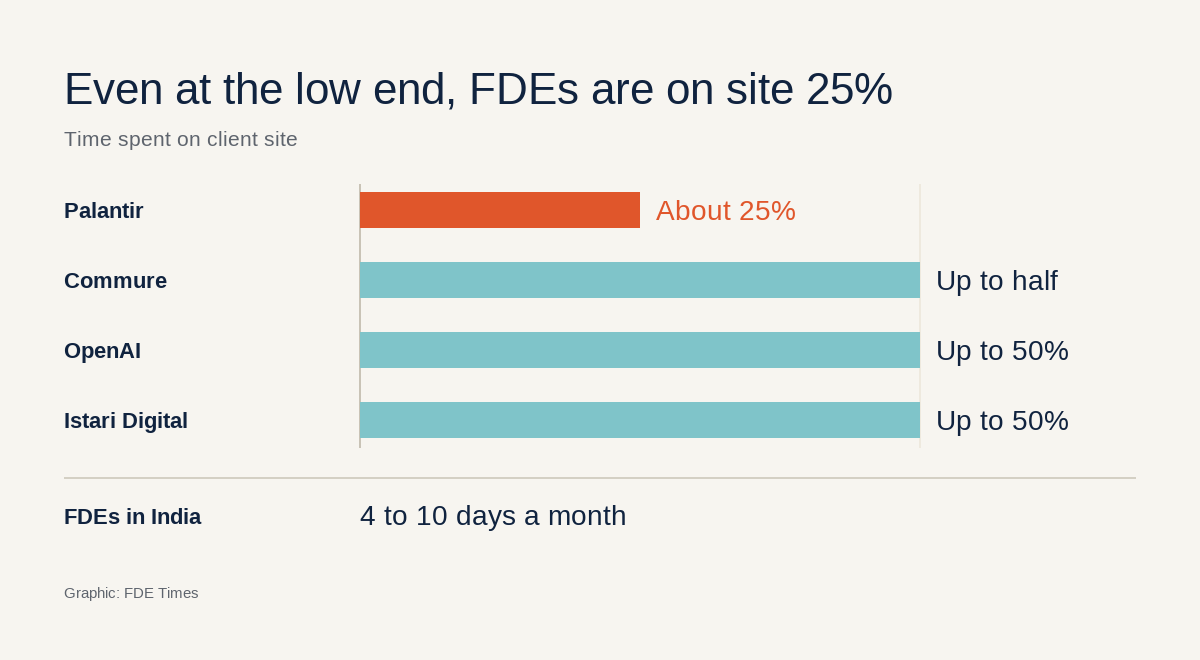
Palantir expects about 25%, Istari Digital up to 50%; the harder question is whether you have ever actually sat beside a client.
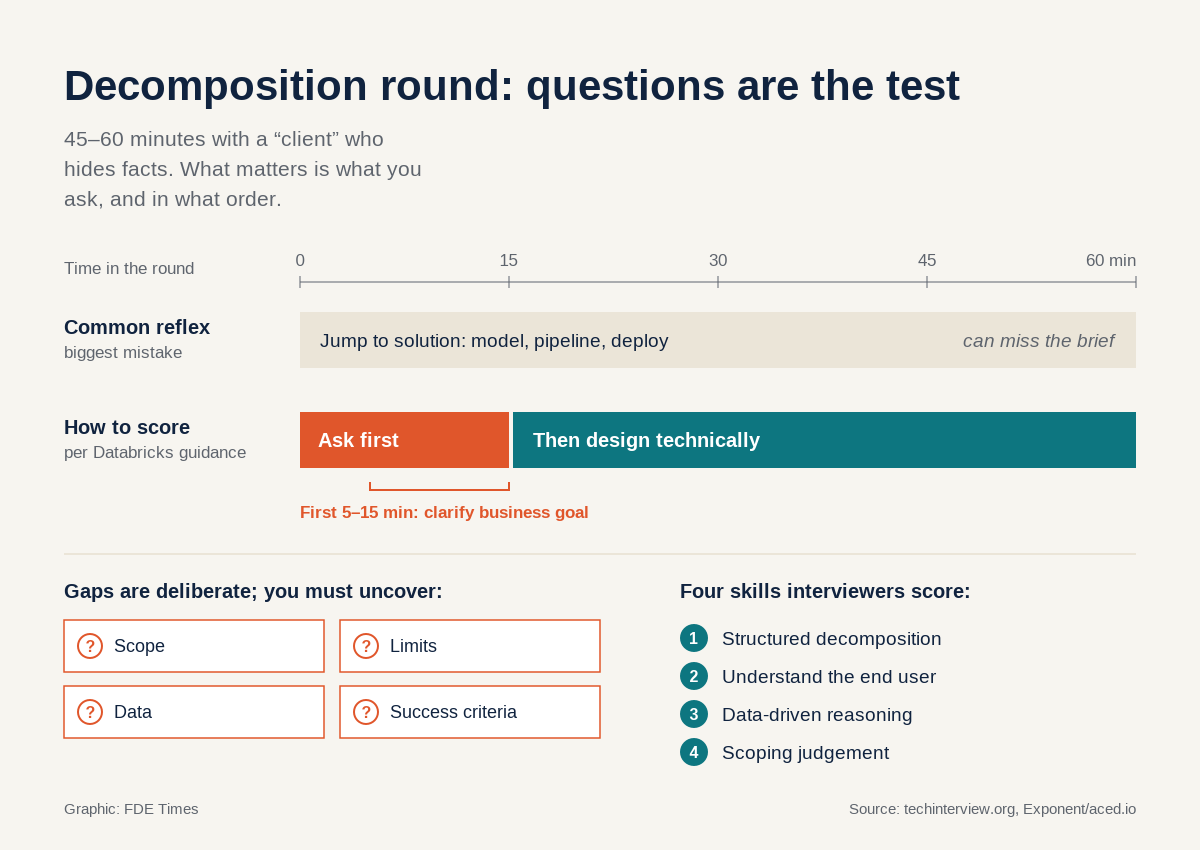
At Distyl AI and Databricks the heaviest round is 45 to 60 minutes with an interviewer playing a client who deliberately withholds information.
Anthropic wants four years in a customer-facing technical role, the half of the job your current team is set up to keep you away from.
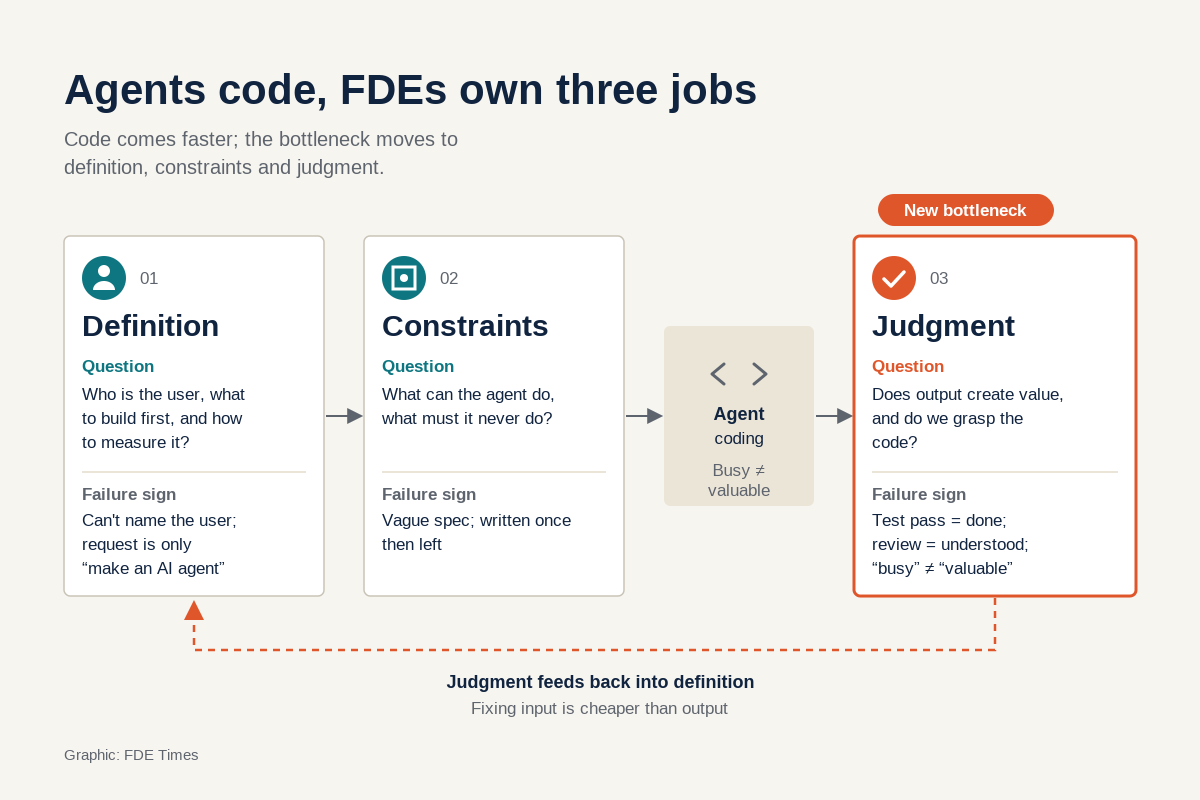
GitHub reviewed more than 2,500 agent configuration files and found most failed because they were too vague, which puts the fault with whoever set the task.
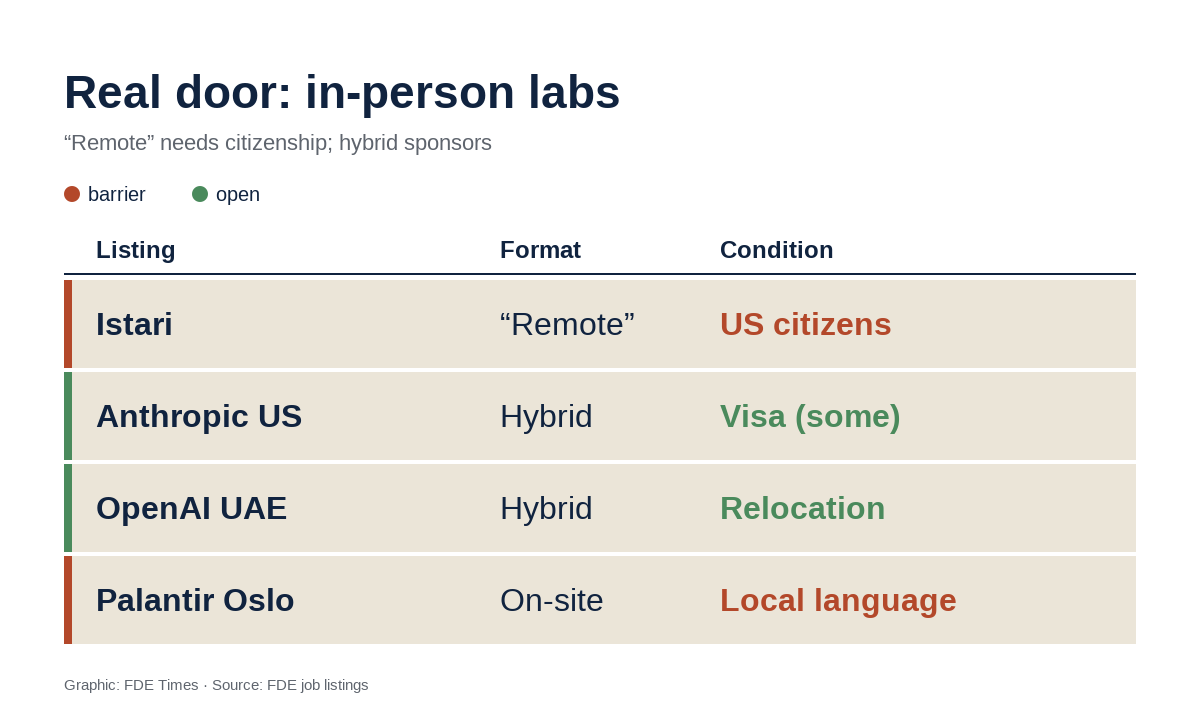
One “Remote” listing demands US citizenship, while the big AI labs that insist on office attendance are the ones offering visas or relocation.
AI companies have committed about $10bn in 12 months, and the FDEs worth keeping turn one client's solution into something the whole company reuses.
Botminds wants a hands-on CTO for each deployment and Arist adds building a whole function, so read job ads for the strategist role hidden inside.
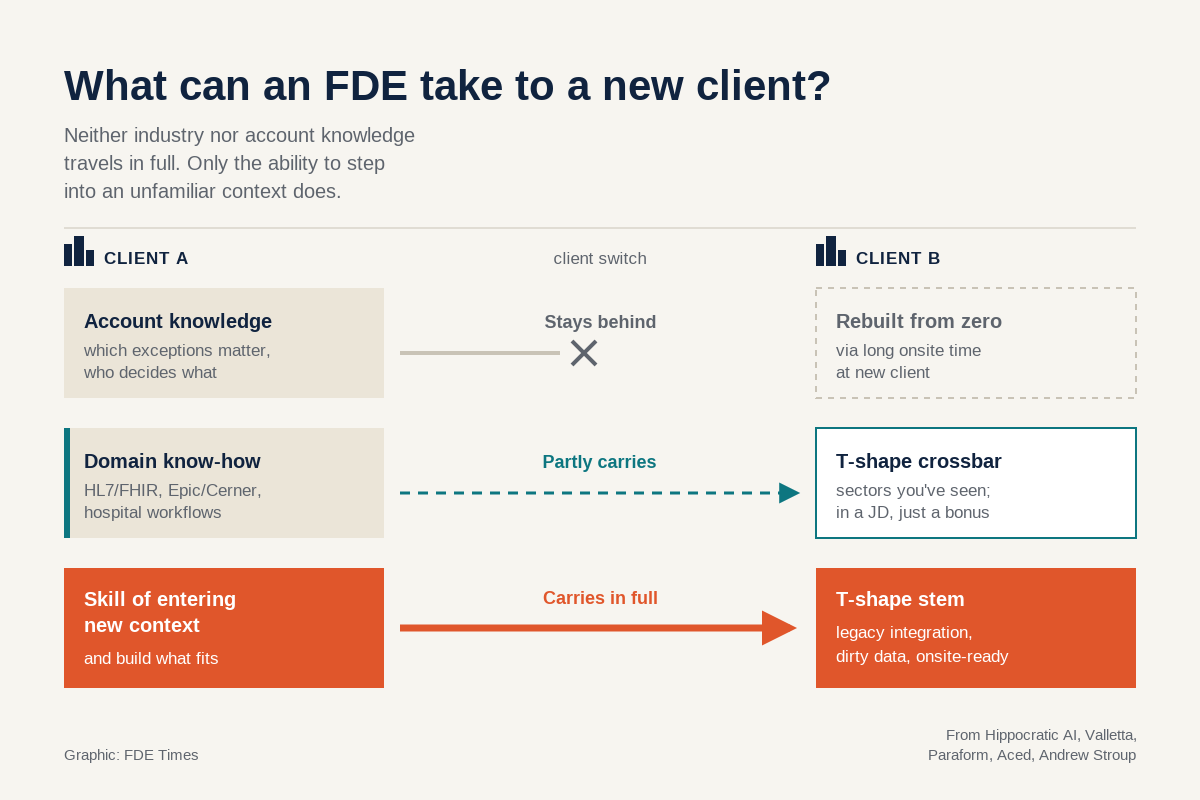
The specialist-or-generalist debate misses the point: industry and account knowledge never travel intact, but the habit of entering an unfamiliar operation does.
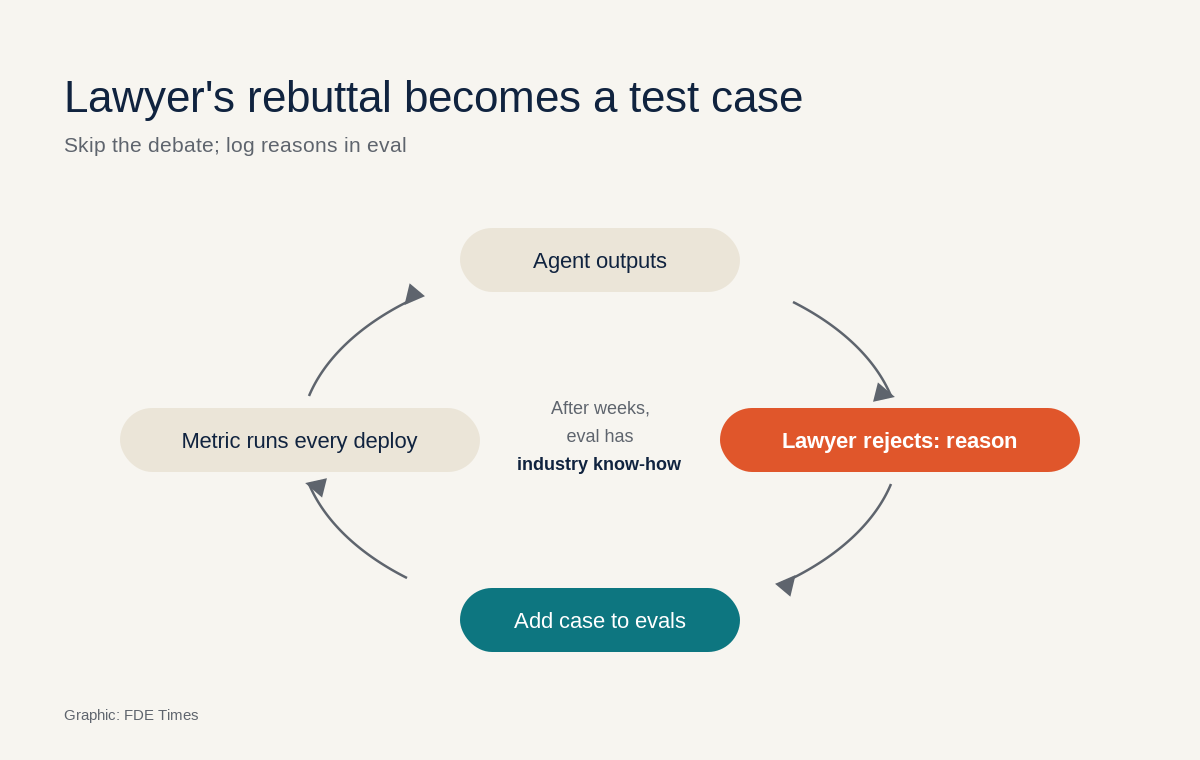
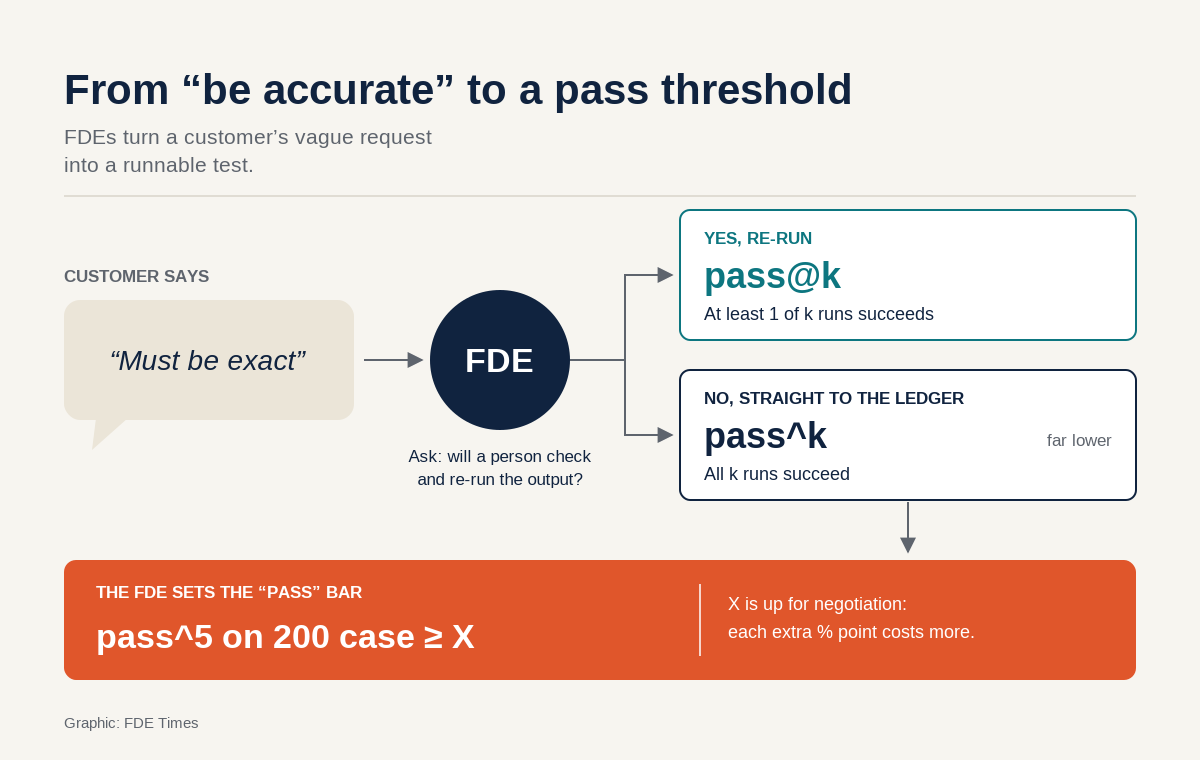
When "correct" becomes a matter of judgement, the person closest to the customer should be the one who turns it into a test that runs.
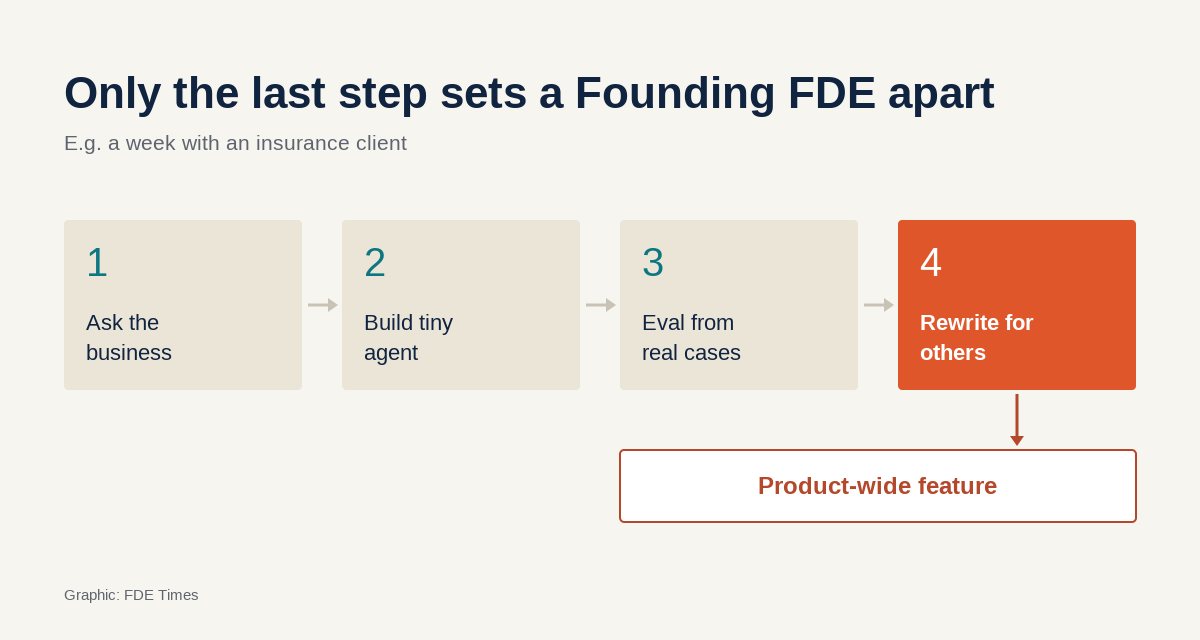
Speed and taste in tools do not set FDEs apart; what matters is whether the lessons from each deployment flow back into the product.
At the top, OpenAI's FDE manager role pays $345,000 after eight years, and from mid-level up equity pulls total pay away from base.
Adoption roles now make up 11% of Anthropic's job postings and 17% of OpenAI's, Epoch AI finds, a sign the models have outrun what companies can absorb.