The Culture Map: hear American, German and Japanese client feedback correctly before it wrecks a deployment
American clients tend to praise first and criticise second, German clients say it straight, and Japanese clients convey a lot through what they leave unsaid. Erin Meyer's book helps FDEs hear all three correctly.
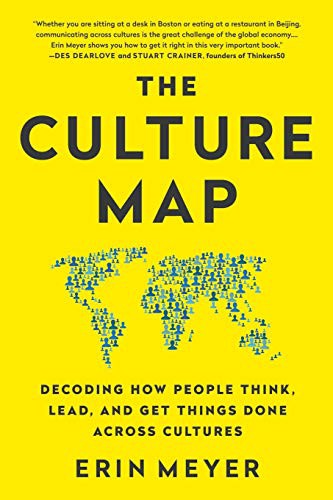
In brief
- Erin Meyer is a professor at INSEAD. The book was first published in 2014 by PublicAffairs; a 288-page international edition followed in 2016.
- The book uses eight scales to compare how cultures build trust, give feedback and make decisions.
- The FDE skill it builds: hearing client feedback correctly during demos and deployments, then delivering bad news in a way that particular client can take in.
According to the publisher’s description of the book, Americans tend to offer three compliments before delivering something negative. The French, Dutch, Israelis and Germans get straight to the point. If you are an FDE demoing to clients in both the US and Germany in the same quarter, that difference can sink a deployment.
That is why a developer moving into FDE work should read The Culture Map. The job of an FDE is to sit beside the client, hear when they are satisfied and when they are frustrated, and adjust the product accordingly. Hear it wrong, and you fix the wrong thing.
One book, eight scales
Erin Meyer, a professor at INSEAD, first published The Culture Map: Breaking Through the Invisible Boundaries of Global Business in 2014 with PublicAffairs; a 288-page international edition was released by Hachette on 5 January 2016. At the core of the book are eight scales comparing how cultures build trust, give feedback and make decisions, along with advice that can be applied straight away.
Long praise is not necessarily good news
Picture a demo of an invoice extraction system. The American product manager says: the dashboard looks great, the speed is impressive, the team has done excellent work, and the accuracy on one invoice type just needs another look. If you remember only the three compliments, you will go back and polish the dashboard. What the client actually wanted to say was in the last clause.
Now switch to a client in Germany. They say plainly that the pipeline is failing on three of their file formats and must be fixed before going live. An engineer used to indirect communication may hear that as a reprimand and start defending.
Within the book’s framework, where Germans are placed among the cultures that get straight to the point, that sentence is most likely just their everyday way of giving feedback. There is no reason yet to read it as a sign that the relationship is deteriorating.
The first thing to do on site is keep your own notes: separate the real criticism from the padding, then send it back to the client to confirm it is their top priority.
In Japan, what goes unsaid is data too
On her tools page, Meyer cites the Japanese expression “reading the air”: understanding what is not said. For an FDE, this means meeting notes capture only part of what the client wants to convey.
Imagine you are deploying a system that reads quality inspection forms for a factory in Japan. In the meeting, you propose moving processing from on-premises servers to the cloud to reduce latency. The department head nods, praises the idea, and says they will consider it further.
Now look at what nobody said. No one asked about the migration timeline. The youngest operations engineer glanced at the department head and stayed silent for the rest of the meeting. “We will consider it” came with no date attached.
It might be internal data rules; it might be that the operator fears extra work. You do not know yet, and that is exactly what you need to find out.
The next step is to send a short summary after the meeting offering two options instead of one, so the client has room to choose without having to say “no”. In parallel, find a chance to talk privately with that operations engineer, for instance while checking logs together, and ask which option would make their daily work harder.
Common mistakes with Japanese clients
The most common mistake is writing “agreed” in the ticket just because the client nodded, then spending a whole sprint going in a direction the client never wanted. The second is pressing the client for a yes or no in the meeting room, in front of their superiors, which makes it harder for them to speak honestly.
The third is assuming the silent person has no opinion, when they are often the one who will operate your system. The opposite mistake is worth avoiding too: the scales describe a culture’s tendencies, not a fixed template for every individual client.
Place both the client and yourself
Shortform’s summary lists eight axes: communicating, evaluating, persuading, leading, deciding, trusting, disagreeing and scheduling. Engineers will find this familiar, because it reads more like a set of parameters for describing a client than a list of country-by-country tips.
The greatest value of these parameters is that they force you to put the client and yourself on the same axis. A Vietnamese engineer used to softening their words may find a German client harsh, while a colleague in the Netherlands finds them perfectly normal. Nobody is wrong; the issue is the gap between the two people.
Before onboarding each new client, you can ask yourself three questions: do they give feedback directly or indirectly, how do they make decisions, and do they trust you because of your work or because of the relationship? These are also three of the things Meyer uses her scales to compare across cultures.
What order to read in, and how to put it on a CV
Start with “Navigating the Cultural Minefield”, the article Meyer published in Harvard Business Review in May 2014. It accompanies the ideas in the book, so reading it first is a good way to test whether Meyer’s approach suits you.
Then read the book, focusing on the chapters on feedback and communication, and finally use the Country Mapping Tool on Meyer’s site to compare your clients’ countries.
The book suits engineers doing outsourcing work for American, Japanese or European clients best, because you already have real situations to examine. In an FDE interview, do not write a generic “good communicator”. Describe a time you spotted the criticism buried among a client’s compliments, and what happened after you fixed exactly that.
A model can pass every test and the deployment can still fail if the team misreads what the client needs. No library does the work of hearing the client correctly, and this 288-page book helps you practise it.
6 sources
- The Culture Map (INTL ED) - Hachette Book Group · 2016-01-05
- The Culture Map: Breaking Through the Invisible Boundaries of Global Business - INSEAD · 2014
- The Culture Map - Erin Meyer (official site)
- The Culture Map tool - Erin Meyer (official site)
- The Culture Map by Erin Meyer—Review (Shortform) · 2021-10-21
- Navigating the Cultural Minefield - Harvard Business Review · 2014-05