Adam Shostack's four questions belong before the security review
The 2014 edition of his threat modeling book still holds up, and the 2027 edition adds two LLM chapters for engineers deploying agents.
In brief
- The 624-page book by Adam Shostack, who once ran threat modeling at Microsoft, is built around four short questions.
- The second edition comes out on February 2, 2027, with about half its content new or rewritten, including two chapters on LLMs.
- FDEs should draw a threat model before the security review, then work through it with the client's security team.
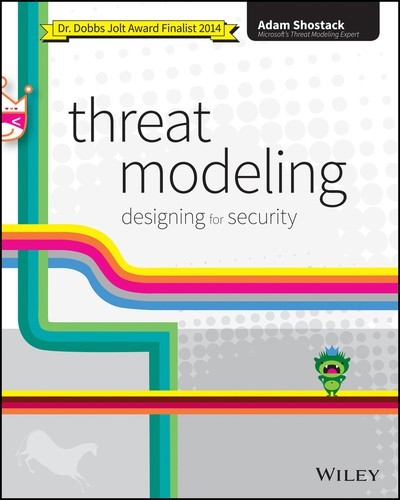
The book runs to 624 pages, but its core fits into four questions. Adam Shostack, who once ran threat modeling for the security development lifecycle at Microsoft, put those questions at the center of Threat Modeling: Designing for Security, published by Wiley in February 2014.
Every FDE eventually meets a client security team that asks where the data goes, who can touch it and what happens if it leaks. Walking in with a model already drawn puts you in a very different position from answering off the top of your head. The book teaches you to prepare that model before anyone asks.
Which edition to read takes some thought, though. The second edition, retitled Threat Modeling: Designing for Security in an AI World, is due out on February 2, 2027. According to Shostack, about half the book is new or substantially rewritten, including two entirely new chapters on LLMs. The edition on sale today is still the 2014 one.
From “you” to “we”
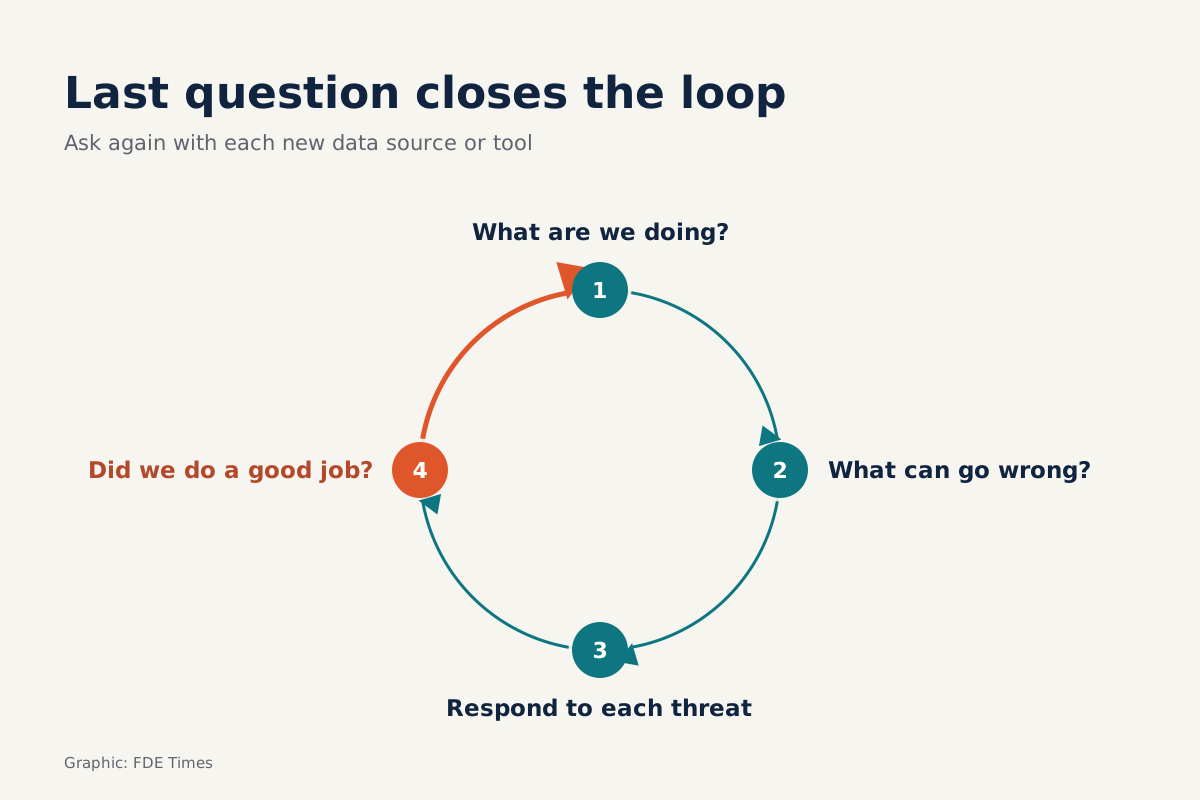
The original edition phrased the four questions in the second person. IEEE Cipher’s 2014 review quoted the first as “What are you building?”. Shostack’s 4QuestionFrame repo on GitHub now uses “we”: “What are we working on?”, “What can go wrong?”, then a question about how to respond to each threat, and finally “Did we do a good job?”.
Changing a pronoun is a small edit, but it matters to an FDE. A threat model stops being an audit that an outsider brings in to grade the product team. It becomes work both sides do together, and at a client site “we” means you sitting down with their security engineers.
Take an agent deployed to read an insurance company’s internal documents and answer employees’ questions. The first question forces you to draw the diagram: users, chat interface, agent, document store, model API. On that diagram, circle the places where data leaves the client’s network.
The second question walks along every arrow on the diagram. An employee might coax out documents they are not allowed to see. A document might hide instructions that make the agent do something else. Logs might also keep sensitive content longer than they need to.
The third question pairs each threat with a response: filter by access rights before retrieval, limit the tools the agent can call, set a retention period for logs. The fourth question checks the work: does every decision have an owner and a test, and does the diagram still match the system that is running?
The two most common mistakes in this example sit at either end of the loop. The first is jumping straight to listing threats before both sides agree on the diagram, so everyone is talking about a different system. The second is stopping at the third question: a list of mitigations exists, but nobody checks it.
Three ideas to take away
First, the model must come before the list of threats. If nobody agrees on what the system looks like, nobody can agree on what might go wrong. The author weighs this heavily himself: the second edition has a new chapter on diagrams and models, expanded from roughly a dozen pages inside the “strategies” chapter of the old edition.
Second, “What can go wrong?” is a question people outside security can answer. That lets you bring the client’s business specialists, data engineers and product managers into the same session. They often know weak spots that no architecture diagram records.
Third, the last question closes the loop. A threat model written once and left alone goes stale with every deployment. For an FDE, each new data source or new tool for the agent is the moment to ask “Did we do a good job?” again.
Which edition, and in what order?
Today, start with the 4QuestionFrame repo. It is free, short and enough to draw a first draft for the project you are on. If you need to go deeper right away, the 2014 edition is still worth reading. The IEEE Cipher reviewer concluded it is “definitely a must-read”.
If your main work is deploying LLMs and agents, waiting for the 2027 edition makes more sense. The two LLM chapters and the expanded chapter on diagrams aim squarely at what you do on client sites. The book’s page on shostack.org links to the Wiley purchase page.
For your career, a one-page threat model with the client’s name removed is a portfolio piece few candidates have. When reading job postings, watch for phrases such as security review or client security questionnaire: they signal that this work will be part of the job.
In interviews, walking through how you answered the four questions for a real system usually persuades more than listing tools.
The client’s security team will ask sooner or later. Be the one who brings the diagram into the room, so they can comment on it rather than start from a blank page.
Was this article useful?
Thanks for the feedback!