Peter Block's Flawless Consulting: the book for FDEs whose solution works but goes unused
On a client site, the hardest part is usually not the pipeline but the silent room after the demo. Peter Block wrote this book to teach you how to handle that room.
In brief
- The fourth edition of Flawless Consulting (Wiley, April 2023, 304 pages) adds material on working with remote or hybrid clients and guidance for internal consultants.
- Block argues that resistance is a natural reaction to being helped, not a rejection of your logic.
- Contracting needs mutual consent, and each side must give something real. The client has to commit to something too.
To get your expertise used, work on the relationship rather than just adding arguments.
Graphic: FDE Times
Picture this: you have just demoed an agent that processes case files for a bank’s operations team. The agent works, the accuracy is good, the slides look sharp. But the room goes quiet, the team lead says “let us look into it a bit more”, and three weeks later nobody has logged into the system.
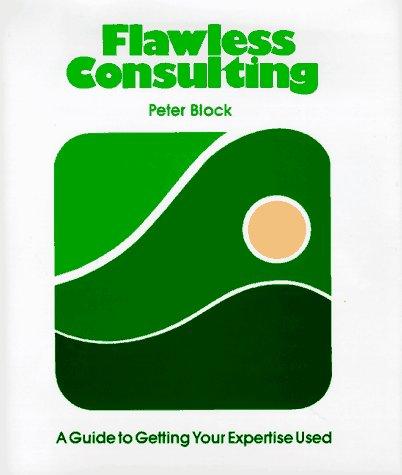
Most engineers have never been taught how to deal with this kind of failure. Peter Block’s Flawless Consulting: A Guide to Getting Your Expertise Used is about exactly that gap: how to get clients to actually use your expertise, rather than merely praise it.
If you are a developer moving into an FDE role, this book fills the missing piece. You already know how to write code. What you have not practised is sitting inside an organisation that is not your own and still getting people to change how they work.
Why read the fourth edition?
The edition to read is the fourth, published by Wiley in April 2023, at 304 pages (hardcover ISBN 978-1-394-17730-1). It adds material on staying authentic when working with clients remotely or in a hybrid setup, along with guidance for leaders and internal consultants.
Both additions map closely onto FDE work. You will often work with clients at a distance, and you will frequently end up advising teams inside your own company.
First idea: the real contract is signed in the meeting room, not in the SOW
Block borrows two elements of a legal contract for consulting work. The first is mutual consent. The second is that each party must give something real in exchange for what the other provides. Applied to FDE work, this is very concrete: if only you commit and the client commits to nothing, you do not yet have a contract.
Back to the bank. The contract for the first week can be just two columns, and those columns are each side’s part of the exchange. Your column: run the agent on 200 real case files and report the error rate by category.
The client’s column: grant read access to the data, assign a domain specialist to sit with you for two hours a week, and have the team lead make a go/no-go decision at the end of the month.
Designed Learning, the organisation Block founded to teach this approach, advises on its site that you slow down long enough to contract clearly and openly.
The engineer’s instinct is to open the laptop and start coding. The advice here runs the other way: half a day spent clarifying expectations can save you three weeks building something nobody needs.
Second idea: resistance is not a rejection of your logic
This is the most valuable idea in the book. For Block, resistance is a natural, predictable reaction when someone arrives to “help”. A silent demo room does not necessarily mean your model is wrong. Quite possibly someone is worried about their job, or afraid of losing control over their work.
The familiar engineering reflex is to add slides, add benchmarks, add arguments. Block explains why that fails: behind resistance sit feelings, and feelings cannot be argued away. His method teaches you to deal with resistance without overpowering it or avoiding it.
The book proposes three steps: recognise what form the resistance is taking, name it in a neutral sentence, then stay quiet.
Apply this to the bank. Suppose the resistance shows up as a demand for more data: every time new results arrive, the team lead asks for another month to keep looking.
Another table of numbers will not fix that. A neutral sentence might be: “I notice that each time we get more data, we seem to need one more round before deciding.” Then you stop talking.
That uncomfortable silence is often when people say what the real reason is.
Third idea: selling is not persuading, it is removing obstacles
The book treats consulting first and foremost as a matter of relationships. Designed Learning also stresses that, in Block’s teaching, building relationships and trust is the foundation. “Selling” a solution therefore means removing whatever is stopping the client from saying yes.
The book is blunt about why: people resist change imposed on them, however compelling the argument. For an FDE, what tends to work better is letting the operations team help define what “the agent got it right” means, rather than arriving with a pre-calculated accuracy figure.
Who should read it, and in what order?
If you are a backend or data engineer preparing for FDE interviews, the book gives you the vocabulary to answer situational questions such as “tell me about a time a stakeholder would not cooperate”. If you already work directly with clients, it helps you name things you previously only sensed.
Read the section on contracting first, because you can use it in your next meeting. Then read the part on resistance, and only then go back to the rest of the book on the full consulting process. Read slowly, one chapter at a time, and try things out the same week.
When reading FDE job descriptions, watch for phrases such as “manage stakeholders”, “drive adoption” or “scope ambiguous problems”. That is exactly what Block teaches, written in recruiting language. On a CV, one line describing a time you clarified scope with a client and changed the outcome as a result carries more weight than a list of frameworks.
Next time the room goes silent after a demo, do not reach for another slide. Say what you are seeing, then wait for the client to speak.